

Table of Contents
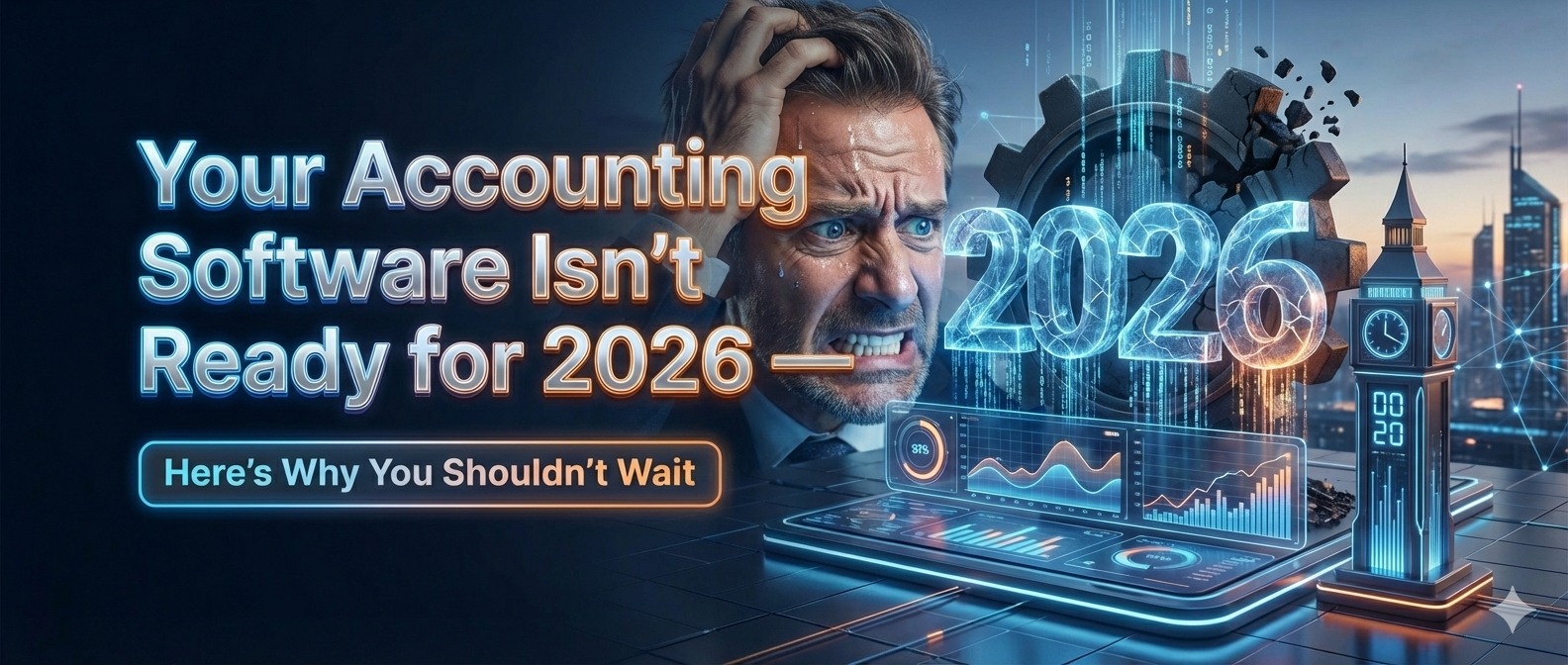
A Quiet Risk Growing Inside Your Business
Most businesses do not fail because of bad products or poor sales.
They fail because their systems cannot keep up with change.
Right now, many companies are still using accounting software that was designed for a world that no longer exists. It worked fine years ago. It still “does the job.” But under the surface, it is slowing everything down.
As we move toward 2026, accounting is no longer just about recording numbers. It is about speed, accuracy, compliance, automation, and real-time decisions. If your system cannot support these needs, it becomes a risk instead of a tool.
This blog explains why outdated accounting software is dangerous, what new features modern systems offer, and why waiting longer will cost more than upgrading now.
What Does “Outdated Accounting Software” Really Mean?
Outdated does not always mean old-looking screens.
Your accounting system may be outdated if:
- You still enter data manually
- Reports take days instead of minutes
- You rely on Excel for final numbers
- Software updates break existing work
- It does not connect with sales, inventory, or payroll
- You cannot access real-time financial data
- Compliance checks are done manually
If any of this sounds familiar, your software is not ready for 2026.
Why 2026 Will Be Different for Accounting
The business world is changing faster than ever. Governments, customers, and markets all expect speed and transparency.
Here is what is already becoming normal:
- Real-time tax reporting
- Digital invoices and e-compliance
- Multi-country tax rules
- AI-based forecasting
- Remote teams and cloud access
- Automated audits and alerts
Old accounting systems were never built for this level of demand.
The Hidden Costs of Staying on Old Systems
Many business owners say,
“Our current system works fine. Why change?”
The problem is not what you see. It is what you do not see.
1. Time Loss Every Single Day
Manual work steals hours from your team:
- Entering invoices
- Matching payments
- Fixing errors
- Preparing reports
Over a year, this becomes hundreds of lost hours.
2. Costly Human Errors
Manual data entry leads to:
- Wrong tax filings
- Duplicate payments
- Missed invoices
- Incorrect reports
These mistakes cost money and damage trust.
3. No Real-Time Visibility
By the time you see a problem, it is already too late.
Outdated systems show the past.
Modern systems show what is happening now.
4. Compliance Risks
Tax rules change often.
Old systems cannot adapt fast enough.
One mistake can lead to:
- Penalties
- Audits
- Legal trouble
What Modern Accounting Software Offers in 2026
Modern accounting systems are not just upgrades.
They completely change how finance teams work.
Here are the key features businesses are adopting now.
1. Real-Time Dashboards
Instead of waiting for month-end reports, you can:
- See cash flow instantly
- Track expenses live
- Monitor profit daily
Decision-making becomes faster and smarter.
2. Automation Everywhere
Modern systems automate:
- Invoice creation
- Bank reconciliation
- Tax calculations
- Payment reminders
This reduces manual work and errors.
3. AI-Powered Insights
New software does not just store data.
It analyzes it.
AI helps with:
- Cash flow predictions
- Expense trends
- Risk alerts
- Smart recommendations
This turns accounting into a planning tool.
4. Cloud Access from Anywhere
Your finance team can work:
- From office
- From home
- From different countries
All data stays secure and synced.
5. Easy Integration with Other Systems
Modern accounting connects smoothly with:
- CRM systems
- Inventory management
- Payroll
- E-commerce platforms
No more data duplication.
6. Built-In Compliance
Updated systems:
- Adjust to tax changes automatically
- Support regional regulations
- Generate audit-ready reports
Compliance becomes easier, not stressful.
Why Waiting Is the Most Expensive Option
Many businesses delay modernization to “save money.”
In reality, waiting costs more.
Here is why.
1. Emergency Migrations Are Costly
When systems finally fail, upgrades are rushed.
This leads to:
- Higher costs
- More downtime
- Poor decisions
Planned upgrades are always cheaper.
2. Team Resistance Grows Over Time
The longer teams use old systems, the harder change becomes.
Early upgrades allow gradual learning.
3. Competitors Are Already Moving
Your competitors are:
- Closing books faster
- Making better decisions
- Offering better pricing
Technology gives them an edge.
Signs It’s Time to Upgrade Now
You should act now if:
- Month-end closing feels painful
- Reports are always delayed
- Your team depends heavily on spreadsheets
- You struggle with audits
- Growth feels blocked by systems
These are warning signs, not small issues.
A Simple Way to Start Modernization
You do not need to replace everything overnight.
Start with:
- Assess current pain points
- Identify must-have features
- Choose a scalable cloud solution
- Migrate step by step
- Train your team gradually
Modernization should feel controlled, not chaotic.
Conclusion: 2026 Is Closer Than You Think
Accounting software is no longer just a back-office tool.
It is the backbone of decision-making.
If your system cannot support speed, automation, compliance, and growth, it is holding your business back.
Upgrading now gives you:
- Control
- Clarity
- Confidence
Waiting only increases risk.
Your accounting software isn’t ready for 2026 — but you still have time to fix it.
The best moment to modernize is before problems force your hand.




Post Comment