

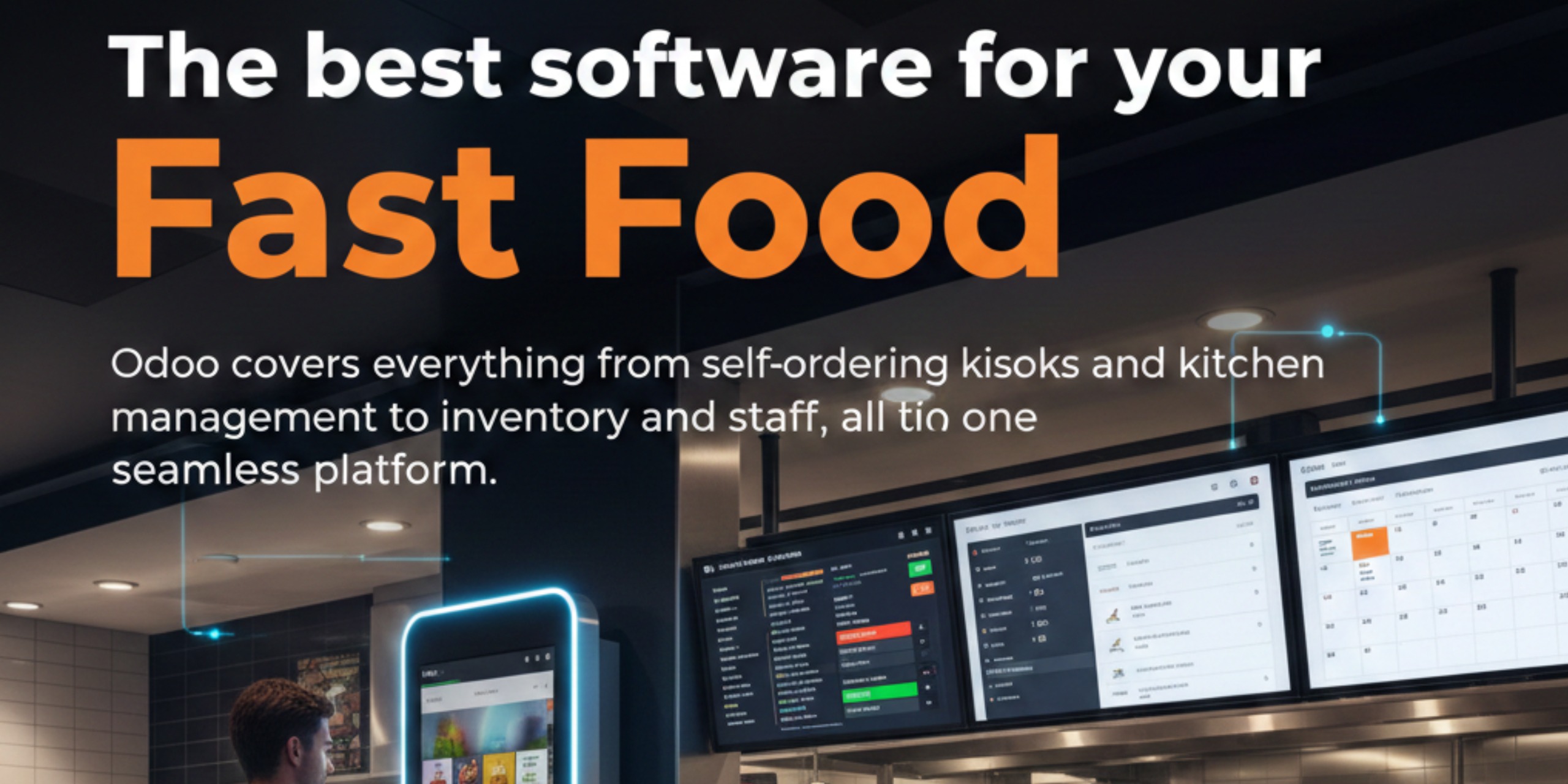
From Kitchen Chaos to Real-Time Control Across Every Outlet
Table of Contents
In the fast food industry, speed is not just service — it is survival. Quick-service restaurants (QSRs) operate on razor-thin margins, high inventory turnover, strict quality control, multi-branch coordination, and unpredictable demand spikes. For operations heads and CIOs managing growing restaurant chains, the central challenge is clear:
How do you maintain consistency, control food costs, and scale operations without losing visibility across outlets?
Many fast food businesses rely on fragmented POS systems, manual stock sheets, disconnected accounting software, and spreadsheet-driven procurement. As expansion accelerates, operational cracks widen.
The shift toward a unified restaurant ERP platform is redefining how modern QSR chains operate.
The Operational Pain Behind the Counter
Fast food chains typically struggle with:
- Inventory leakage and food wastage
- Inconsistent recipes across branches
- Manual daily sales reconciliation
- Delayed procurement planning
- Disconnected POS and accounting systems
Financial Impact Snapshot
| Operational Issue | Immediate Effect | Business Risk |
| Stock shortages | Missed sales | Customer dissatisfaction |
| Overstock | Food wastage | Margin erosion |
| Manual accounting | Errors | Compliance risk |
| Poor demand planning | Emergency purchasing | Higher cost |
| Inconsistent reporting | Poor expansion decisions | Strategic slowdown |
In QSR, operational inefficiency directly affects EBITDA.
Unified Restaurant ERP with Odoo
Odoo integrates POS, Inventory, Procurement, Accounting, HR, and CRM within one centralized database. Every sale made at the counter automatically updates inventory levels, accounting entries, and procurement forecasts.
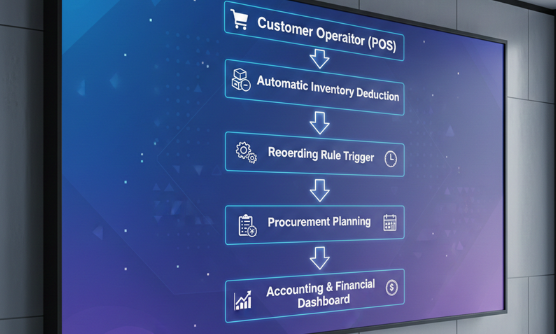
No duplication. No manual reconciliation. Real-time control.
Core Features for Fast Food Chains
| Feature | Operational Benefit |
| Integrated POS | Real-time sales tracking |
| Recipe & Bill of Materials | Ingredient-level cost control |
| Automated Reordering | Prevent stockouts |
| Multi-Outlet Management | Centralized visibility |
| Real-Time Financial Reports | Daily performance monitoring |
| Employee Scheduling | Workforce optimization |
This creates a closed-loop system where operations, finance, and procurement are synchronized.
Real-Time Case Study: Regional QSR Chain
A 12-outlet burger chain operating across two cities faced:
- 8–12% food wastage monthly
- Manual inventory reconciliation
- 48-hour delay in consolidated reporting
- Inconsistent pricing control
After implementing Odoo:
- Wastage reduced to 4% within 5 months
- Inventory variance dropped significantly
- Same-day financial consolidation
- Standardized recipes across all outlets
The key breakthrough was ingredient-level tracking integrated with POS transactions.
KPI Impact Comparison
| KPI | Before Odoo | After Odoo |
| Food Wastage | 10% | 4% |
| Reporting Time | 2 Days | Real-Time |
| Inventory Variance | High | Controlled |
| Stockout Frequency | Frequent | Reduced |
| Gross Margin Stability | Volatile | Improved |
Operations heads gained daily dashboard visibility instead of waiting for weekly summaries.
Architecture Overview
POS Terminals (All Branches)
↓
Central Odoo ERP Database
↓
Inventory + Procurement + Accounting
↓
Executive Dashboard (Sales, Cost, Margin)
This centralized architecture supports rapid expansion without increasing operational complexity.
Strategic Advantages for Expanding QSR Brands
- Centralized pricing and recipe control
- Real-time multi-branch performance comparison
- Lower inventory leakage
- Automated compliance-ready accounting
- Data-backed expansion planning
For CIOs, the value lies in simplified IT architecture and reduced integration risk.
For COOs, the value lies in operational consistency and scalability.
Why Fast Food Needs Real-Time ERP
The QSR industry is increasingly influenced by:
- Delivery aggregators integration
- Online ordering platforms
- Loyalty programs
- Multi-city franchise models
- Cost volatility in raw materials
Disconnected systems cannot support this complexity efficiently.
Odoo’s modular framework allows integration with delivery platforms, payment gateways, and advanced analytics tools.
Executive Perspective
Fast food chains are no longer just kitchens. They are data-driven operational networks.
Fragmented tools slow growth. Unified ERP accelerates it.
The transformation from spreadsheets and disconnected POS systems to a centralized Odoo ERP platform gives restaurant leaders a single source of truth.
In fast food, seconds matter. So does visibility.
The real question is:
Is your restaurant chain operating on instinct — or on real-time intelligence?




Post Comment