

Table of Contents
One Tool Is No Longer Enough
In 2026, running a business is very different from just a few years ago. Customers expect fast replies. Teams work from different cities and countries. Owners want real-time numbers, not reports that arrive late.
Because of this, businesses are no longer asking “Which software should we use?”
They are asking, “How do our tools work together?”
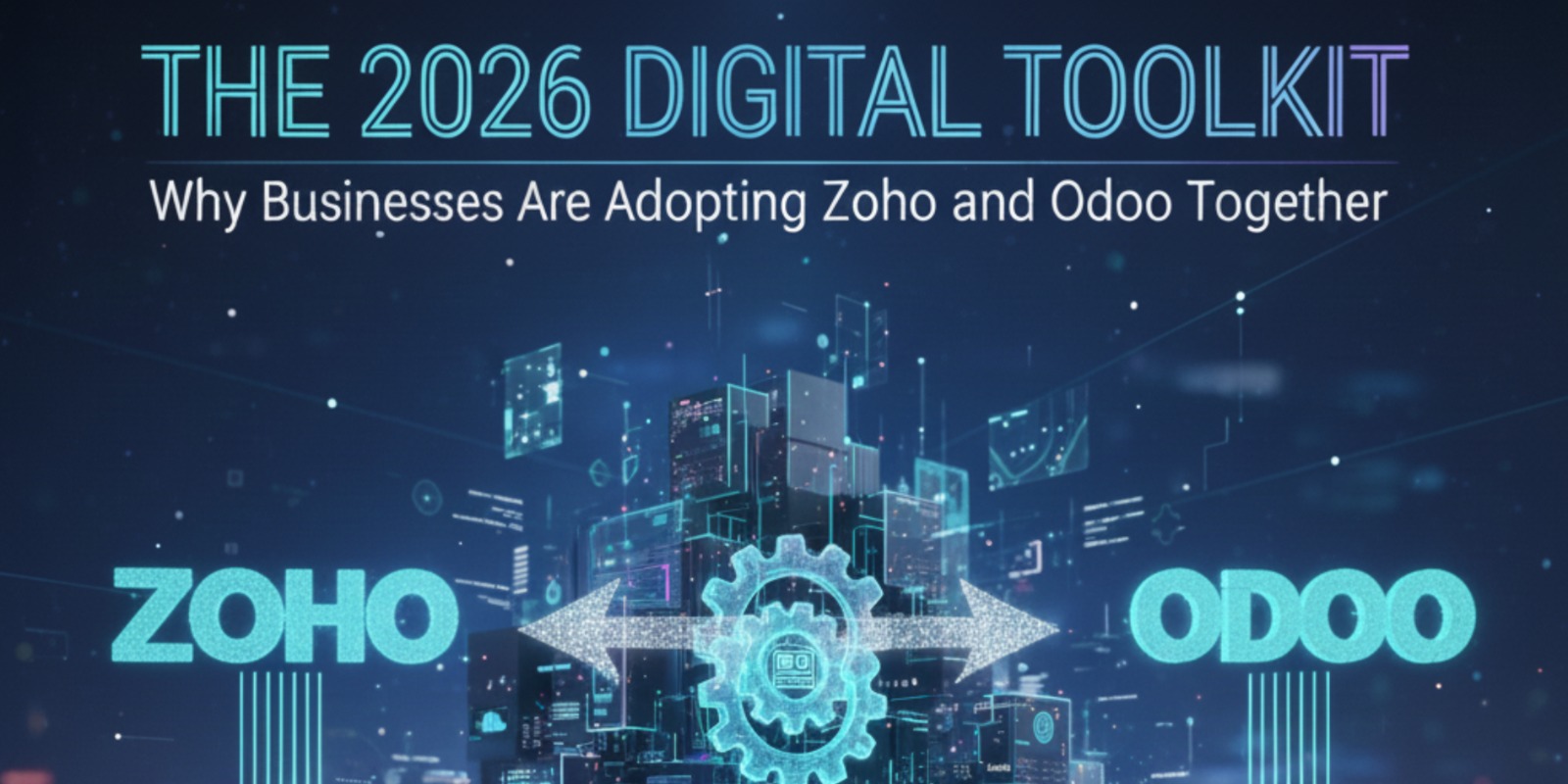
This is where Zoho and Odoo together are becoming a smart digital toolkit for growing companies. Instead of forcing one system to do everything, businesses use Zoho for customer-facing work and Odoo for core operations. The result is better control, lower cost, and smoother growth.
Let’s understand why this combination is becoming popular in 2026.
Why Businesses Are Combining Zoho and Odoo
Most businesses face three common problems today:
- Sales and marketing tools don’t talk to accounting
- Operations teams use complex systems that sales teams avoid
- Reports are delayed and scattered
Zoho and Odoo solve different parts of the same problem.
- Zoho is simple, fast, and people-friendly
- Odoo is powerful, deep, and process-driven
When combined properly, they act like one connected digital engine.
What Zoho Does Best in 2026
Zoho has grown a lot in recent years. In 2026, it is no longer just a CRM. It is a full business experience platform.
1. Smarter CRM and Sales Automation
Zoho CRM in 2026 uses AI to:
- Predict which leads are likely to convert
- Suggest the best time to call or email
- Automatically follow up with customers
Sales teams spend less time typing and more time selling.
2. Better Customer Support with AI
Zoho Desk now includes:
- AI chat replies
- Auto ticket classification
- Customer mood detection
This helps support teams respond faster and more politely, even during busy hours.
3. Simple Finance and Subscriptions
Zoho Books and Zoho Subscriptions handle:
- Invoices
- GST/VAT compliance
- Recurring billing
For startups and service companies, this reduces financial confusion.
4. Team Productivity and Collaboration
With Zoho Projects, Cliq, and WorkDrive:
- Teams track tasks clearly
- Chat and files stay organized
- Remote work feels structured
Zoho shines where people interact daily.
What Odoo Does Best in 2026
Odoo is the backbone system. It manages what happens inside the business.
1. Advanced Accounting and Compliance
Odoo Accounting in 2026 supports:
- Multi-country tax rules
- Automated journal entries
- Real-time profit and loss
It is ideal for companies operating in multiple regions.
2. Inventory and Supply Chain Control
Odoo Inventory and Purchase help businesses:
- Track stock across warehouses
- Avoid over-ordering
- Predict demand using data
This is critical for retail, manufacturing, and distribution.
3. Manufacturing and Work Orders
Odoo Manufacturing now includes:
- Real-time work order tracking
- Machine efficiency reports
- Production planning
Factories gain full visibility from raw material to final product.
4. Custom Workflows and Automation
Odoo allows:
- Custom approvals
- Role-based dashboards
- Industry-specific workflows
This flexibility is why Odoo fits complex businesses.
Why Using Only One Tool Is Not Enough
Some businesses try to use only Zoho or only Odoo. Over time, they face limits.
- Zoho is easy, but it can feel limited for deep operations
- Odoo is powerful, but it can feel heavy for sales and marketing
Using them together avoids compromise.
How Zoho and Odoo Work Together
In a smart setup, both systems stay connected but focused.
A Simple Example
- A lead comes into Zoho CRM
- The deal is closed by the sales team
- Customer data syncs to Odoo
- Odoo creates invoices, inventory updates, and accounting entries
- Payment status flows back to Zoho
Sales teams stay in Zoho. Operations teams stay in Odoo.
Management sees one clear picture.
New 2026 Benefits of Using Them Together
1. Faster Decisions
Data moves automatically. Reports are real-time.
2. Lower Software Cost
Companies avoid paying for large all-in-one systems they don’t fully use.
3. Easier Team Adoption
Each team uses tools designed for them.
4. Scalable Growth
Start small, then add more modules as the business grows.
Industries Using Zoho + Odoo in 2026
This combination is popular across many sectors:
- Retail and eCommerce
- Manufacturing
- Construction
- IT services
- Logistics
- Healthcare support services
Any business with both customers and operations benefits.
Common Mistakes to Avoid
While this toolkit is powerful, mistakes can reduce its value.
- No clear integration plan
- Duplicate data entry
- Poor role definition
- No training for teams
This is why implementation matters more than software choice.
Final Thoughts: The Smart Way Forward
In 2026, success is not about using the most famous software.
It is about using the right tools together.
Zoho and Odoo are not competitors. They are partners in a modern digital setup.
Zoho handles people, customers, and speed.
Odoo handles systems, data, and control.
Together, they form a digital toolkit that is flexible, affordable, and future-ready.
Businesses that understand this early are not just surviving—they are growing with confidence.


