

Table of Contents
In 2026, the world is moving faster than ever. Businesses now depend on digital tools to work smarter, reduce mistakes, and grow without limits. Whether it is a small shop in a local town or a large company serving customers worldwide, one thing is clear: the future belongs to businesses that adopt strong, flexible, and smart ERP systems.
Two platforms leading this global shift are Zoho and Odoo. Both ERPs are helping companies become more organized, more data-driven, and more ready for the economy of tomorrow. This blog explains how these systems are growing in 2026, what new features they offer, and why choosing the right ERP can change the future of any business.
Why ERPs Matter in 2026
Modern economies depend on speed and clear information. Businesses cannot rely on paper files, disconnected software, or manual work anymore. Customers expect fast service, quick delivery, real-time updates, and smooth communication.
ERPs solve these problems by bringing everything—sales, finance, HR, inventory, marketing, manufacturing—into one connected system.
In 2026, Zoho and Odoo are not just tools. They are powerful digital partners helping businesses:
- Save time
- Reduce errors
- Improve customer satisfaction
- Understand data better
- Make smart decisions
- Work anytime, anywhere
Both platforms are improving every year and adding features to support global, digital, and AI-powered environments.
How Zoho Is Powering Business Growth in 2026
Zoho has become one of the most trusted cloud ERP platforms in the world. It is simple, affordable, and designed for companies that want all tools together in one ecosystem.
1. New AI Upgrades
In 2026, Zoho has introduced improved AI features using Zia, its intelligent assistant. Now businesses can get:
- Predictive reports
- Automated reminders
- Smart email summaries
- Inventory forecasting
- Customer sentiment analysis
This helps teams make better and faster decisions.
2. Stronger Finance & GST Tools
Zoho has upgraded its accounting platform with:
- Real-time tax updates
- Automated reconciliation
- Faster invoice tracking
- Expense automation
- Multi-country compliance support
This is especially helpful for businesses working across borders.
3. Better Collaboration Tools
Zoho Workplace and Zoho Projects now offer:
- New team chat features
- Video meetings inside the ERP
- Connected task and document tools
Teams can work from anywhere without slow communication.
4. Industry-Specific Solutions
In 2026, Zoho is offering smarter solutions for industries like:
- Retail
- Manufacturing
- Logistics
- Real estate
- Healthcare
- Education
Each solution includes custom modules, workflows, analytics, and automation.
How Odoo Is Transforming Global Operations in 2026
Odoo is known for its flexibility and open-source power. Businesses can customize it deeply, making it one of the most scalable ERP systems.
1. Odoo AI 2026: Smarter and Faster
Odoo has introduced new AI tools in every module:
- Auto-generated content for emails, product descriptions, and websites
- AI-based demand forecasting
- Automated vendor selection
- Smart reminders for approvals and tasks
- AI chatbots for customer service
Businesses can now automate daily tasks with almost no manual effort.
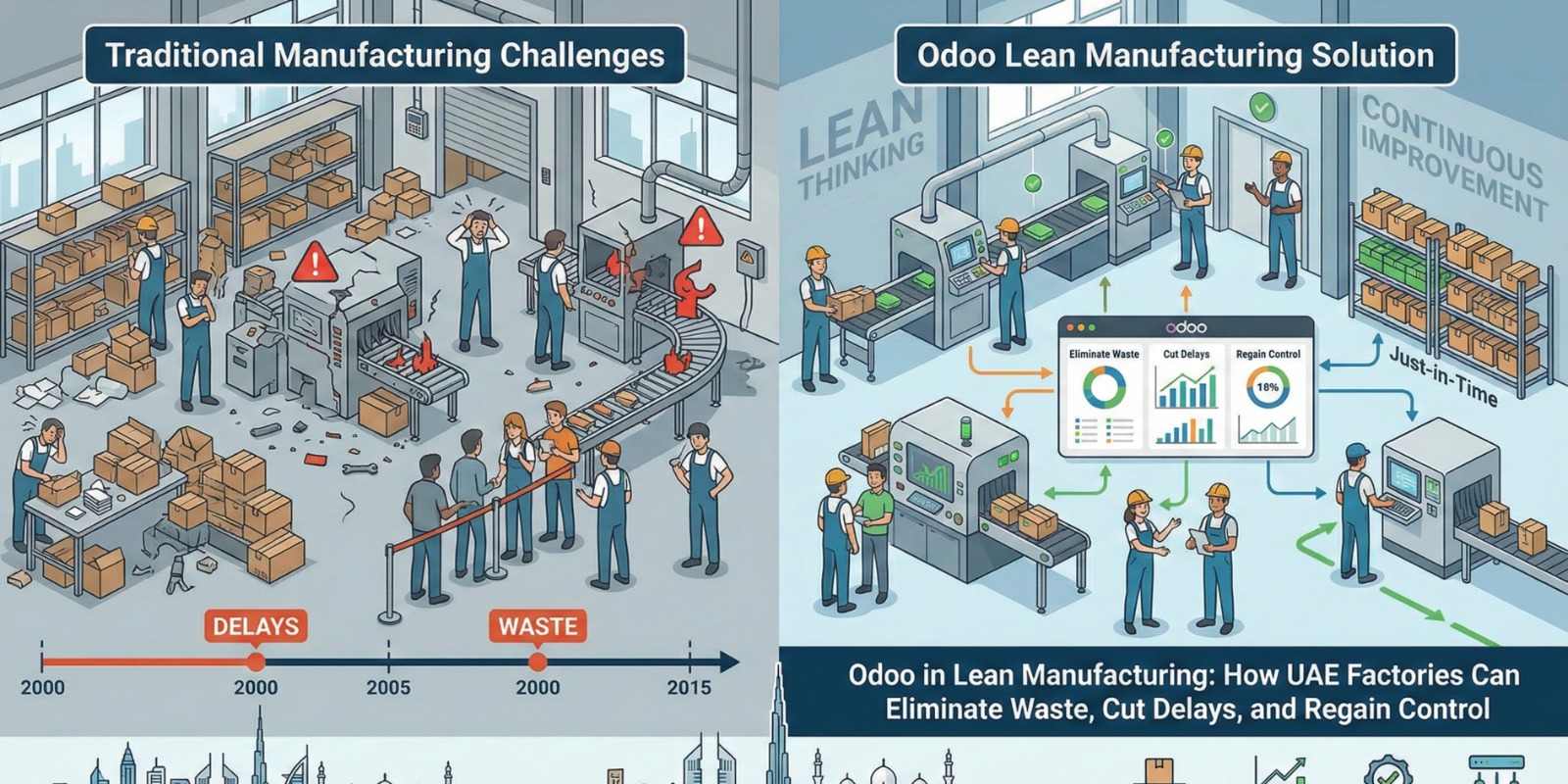
2. Advanced Manufacturing & Supply Chain Features
For industries like logistics, warehouse management, and factories, Odoo now supports:
- Real-time barcode scanning
- Automated quality checks
- Route optimization
- Fleet tracking dashboards
- Supplier scorecards
This reduces waste, delays, and costs.
3. Unified Website + eCommerce + Marketing
Odoo 2026 combines all digital channels in one place:
- Website builder
- App builder
- Marketing automation
- Social media posting
- Email campaigns
This helps businesses reach and convert more customers online.
4. Faster Integrations and App Store Growth
More third-party apps are available for:
- Payments
- Shipping
- POS
- CRM
- HR tools
This makes Odoo even more powerful and flexible.
Zoho vs Odoo: Which Is Right for 2026?
Both ERPs are strong, but they fit different business needs.
Choose Zoho if you want:
- All apps in one simple ecosystem
- Fast setup
- Easy-to-use interface
- Affordable pricing
- Strong CRM & sales automation
Zoho is perfect for small to medium businesses.
Choose Odoo if you want:
- Deep customization
- Advanced workflows
- Strong manufacturing or logistics tools
- Flexibility to add or remove modules
- A powerful open-source platform
Odoo is ideal for medium to large companies.
Global 2026 Trends Driving ERP Adoption
Here are the main reasons more companies are choosing Zoho and Odoo in 2026:
1. Remote and Hybrid Work
Businesses need cloud-based tools that employees can access 24/7.
2. AI and Automation
Companies want systems that reduce manual work and provide insights.
3. Faster Customer Expectations
Real-time tracking, fast service, and smooth communication are essential.
4. Cross-Border Business
Many companies are expanding globally and need multilingual and multi-currency tools.
5. Cost Optimization
ERPs help businesses cut waste and reduce unnecessary expenses.
6. Compliance and Security
2026 brings more digital tax laws, data protection rules, and cybersecurity needs.
Zoho and Odoo are both upgrading their systems to support these new demands.
Conclusion: Smart ERPs Build Smart Economies
In 2026, digital transformation is no longer optional. It is the foundation of every modern business. Zoho and Odoo are helping companies around the world work faster, serve customers better, and adapt to changing markets.
Whether a business wants simple tools or advanced systems, these two ERPs offer powerful solutions that support growth and innovation.
Smart ERPs do more than manage data—they help build smart economies. And the businesses that adopt them today are the ones that will lead tomorrow.



Post Comment