

Table of Contents
The SMEs Reality Today

Small and medium-sized enterprises (SMEs) operate in a difficult middle ground. They are no longer small enough to manage operations with Excel sheets and disconnected tools, yet not large enough to afford or tolerate complex, expensive enterprise ERP systems.
As businesses grow, common problems start to appear:
- Sales data doesn’t match accounting numbers
- Inventory levels are inaccurate
- Invoices are delayed
- Management decisions are made on outdated information
This is where an ERP system becomes essential. However, not all ERP systems are built for SMEs. Over the past decade, Odoo has emerged as the first ERP choice for small businesses worldwide, because it solves real operational problems without enterprise-level complexity.
What SMEs Actually Need from an ERP (Not Marketing Promises)
Before understanding why Odoo fits SMEs so well, it’s important to define what SMEs truly need.
| SME Requirement | Why It Matters |
| Affordable pricing | Limited budgets, high ROI expectations |
| Simple implementation | Cannot afford year-long ERP projects |
| Modular system | Start small, scale gradually |
| Integrated operations | One source of truth |
| Local compliance | VAT, tax, currency, language |
| Ease of use | Teams are not ERP experts |
Many traditional ERPs fail here. Odoo was designed around these exact needs.
What Makes Odoo Different for SMEs
1. Modular ERP: Pay Only for What You Use
Odoo is not a single monolithic system. It is a modular ERP, meaning businesses can activate only the modules they need.
Common SME starting modules:
- CRM
- Sales
- Accounting
- Inventory
As the business grows, they can add:
- Manufacturing
- HR & Payroll
- POS
- Project Management
- eCommerce
[Diagram Placeholder: Odoo Modular ERP Architecture for SMEs]
This modular approach significantly reduces upfront cost and risk.
2. One Integrated System, Not Multiple Tools
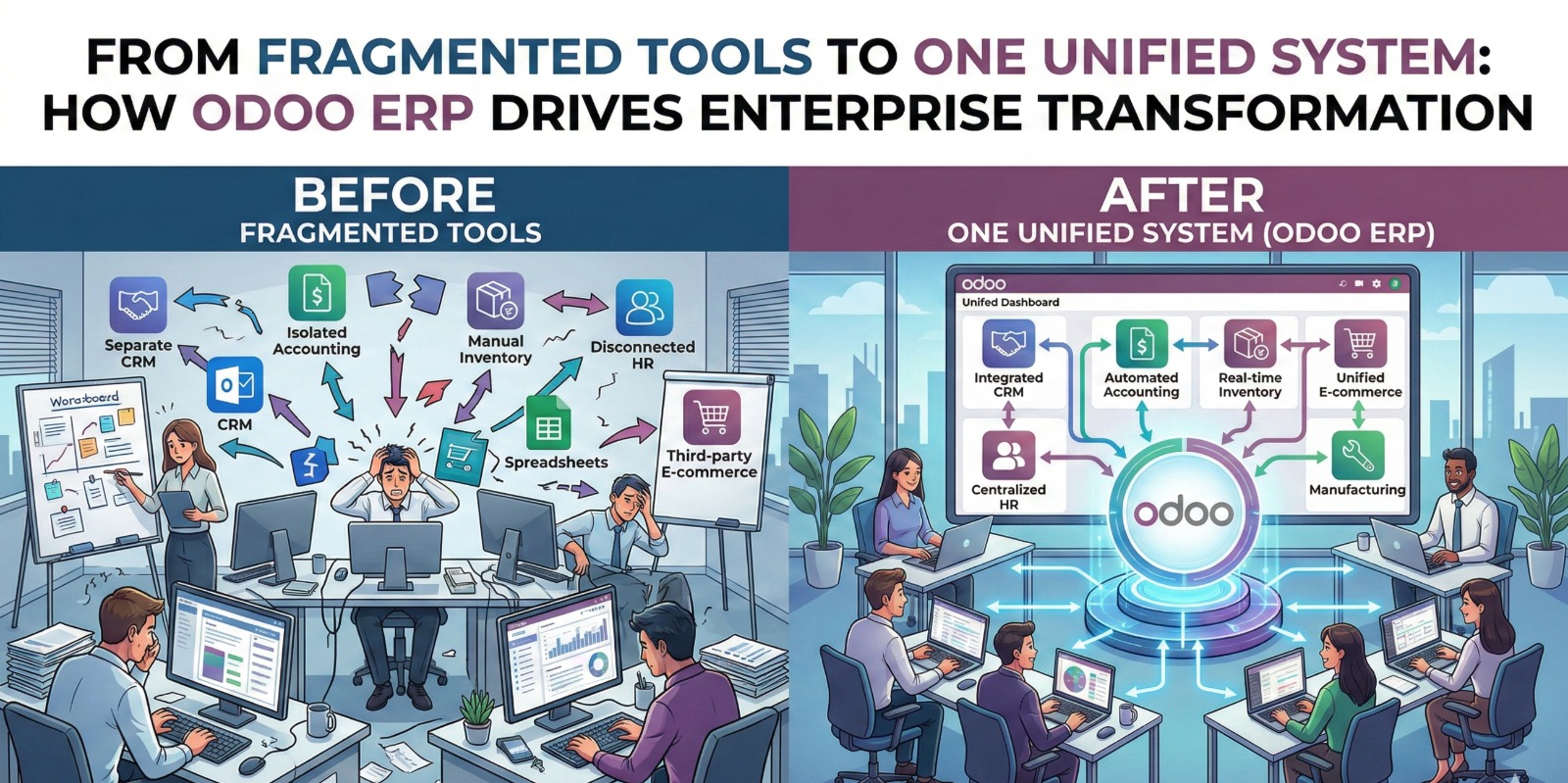
Most SMEs run on a patchwork of software:
- Excel for inventory
- Accounting software for finance
- WhatsApp for customer follow-ups
- Separate POS or billing tools
This creates data silos and manual work.
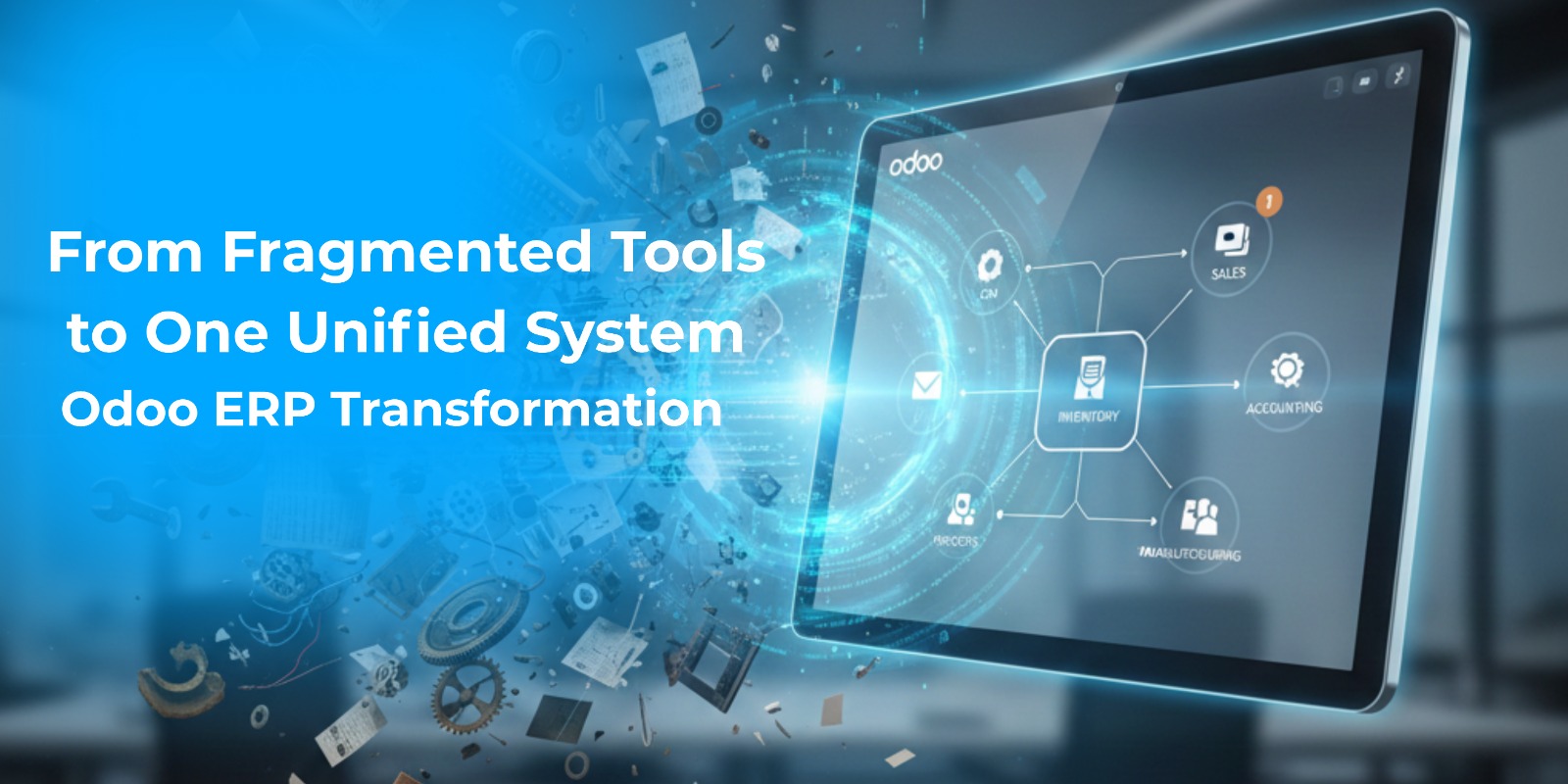
Odoo solves this by offering one integrated platform:
- A sales order automatically updates inventory
- Inventory movements reflect in accounting
- Invoices are generated without re-entry
Result: fewer errors, faster operations, and real-time visibility.
Odoo vs Traditional ERP vs Accounting Software
Practical Comparison for SMEs
| Feature | Accounting Software | Traditional ERP | Odoo ERP |
| Cost | Low | Very High | Affordable |
| Inventory | Limited | Advanced | Advanced |
| CRM & Sales | Basic | Complex | Built-in |
| Customization | Minimal | Expensive | Flexible |
| Scalability | Low | High | High |
| Ease of Use | High | Low | High |
Accounting software is too limited. Traditional ERP is too heavy.
Odoo sits exactly in the middle, which is where SMEs operate.
Real-Life SME Case Study (Practical Example)
Case: Trading Company with 15 Employees
Before Odoo
- Orders tracked in Excel
- Stock mismatches every month
- Invoices created manually
- The owner depended on the accountant for reports
After Odoo Implementation
- Sales, inventory, and accounting connected
- Real-time stock visibility
- Invoices generated automatically
- Daily profit and cash-flow reports
Outcome (within 3 months):
- 40% reduction in manual work
- Faster invoicing cycle
- Better purchasing decisions
- Clear business visibility for management
[Chart Placeholder: Before vs After Odoo Operational Efficiency]
This pattern repeats across industries — trading, manufacturing, retail, and services.
Why SMEs Prefer Odoo Over Big ERP Brands
1. Lower Total Cost of Ownership
Odoo’s licensing and implementation costs are significantly lower than SAP or Oracle. SMEs get enterprise-grade features without enterprise-grade bills.
2. Faster Go-Live
Typical SME Odoo implementations go live in weeks, not years.
3. Flexibility Without Lock-In
Odoo is open-source at its core. Businesses are not locked into a single vendor forever.
4. Scales with the Business
Start with 5 users. Scale to 50 or 500 users without changing systems.
Industries Where Odoo Dominates the SME Segment
Odoo is widely adopted by SMEs in:
- Trading & Distribution
- Manufacturing
- Retail & POS
- Professional Services
- eCommerce
- Logistics
[Diagram Placeholder: Industries Using Odoo ERP – SME Focus]
Its flexibility allows the same platform to adapt across industries.
Common SME ERP Myths (And the Reality)
| Myth | Reality |
| ERP is only for big companies | SMEs benefit the most |
| ERP is too complex | Odoo is user-friendly |
| ERP is expensive | Odoo is cost-effective |
| ERP limits flexibility | Odoo increases it |
1. Is Odoo ERP suitable for small businesses in Dubai?
Yes. Odoo is designed for SMEs and is widely used in Dubai due to its affordability, modular structure, and ease of implementation.
2. Does Odoo support UAE VAT compliance?
Yes. Odoo supports UAE VAT rules, including VAT-ready invoicing, tax reports, and audit-friendly accounting.
3. How much does Odoo ERP cost in the UAE?
Odoo is cost-effective compared to traditional ERP systems. Businesses pay only for the modules and users they need.
4. Can Odoo handle trading and distribution businesses in Dubai?
Yes. Odoo is widely used by trading companies in Dubai for inventory management, multi-warehouse operations, and accounting.
5. Is Odoo better than SAP or Zoho for UAE SMEs?
For SMEs, Odoo offers a better balance of cost, flexibility, and functionality compared to SAP (too complex) and Zoho (limited ERP depth).
Why Odoo Becomes the “First ERP” for SMEs
Most SMEs don’t want to experiment with ERP multiple times. They want one system that grows with them.
Odoo becomes the first ERP because:
- It starts simple
- It grows naturally
- It doesn’t force rigid processes
- It adapts to the business, not the opposite
Once SMEs adopt Odoo, they rarely need to switch again.
ERP That Matches the SME Journey
Odoo is not popular among SMEs by accident. It fits the real-world journey of small businesses — from early growth to operational maturity.
For SMEs looking to:
- Move beyond Excel
- Gain control over operations
- Improve decision-making
- Prepare for scalable growth
Odoo is not just an ERP — it is a business operating system.



Post Comment