

Table of Contents
How Mobile POS Is Transforming Quick Checkout and In-Store Experience
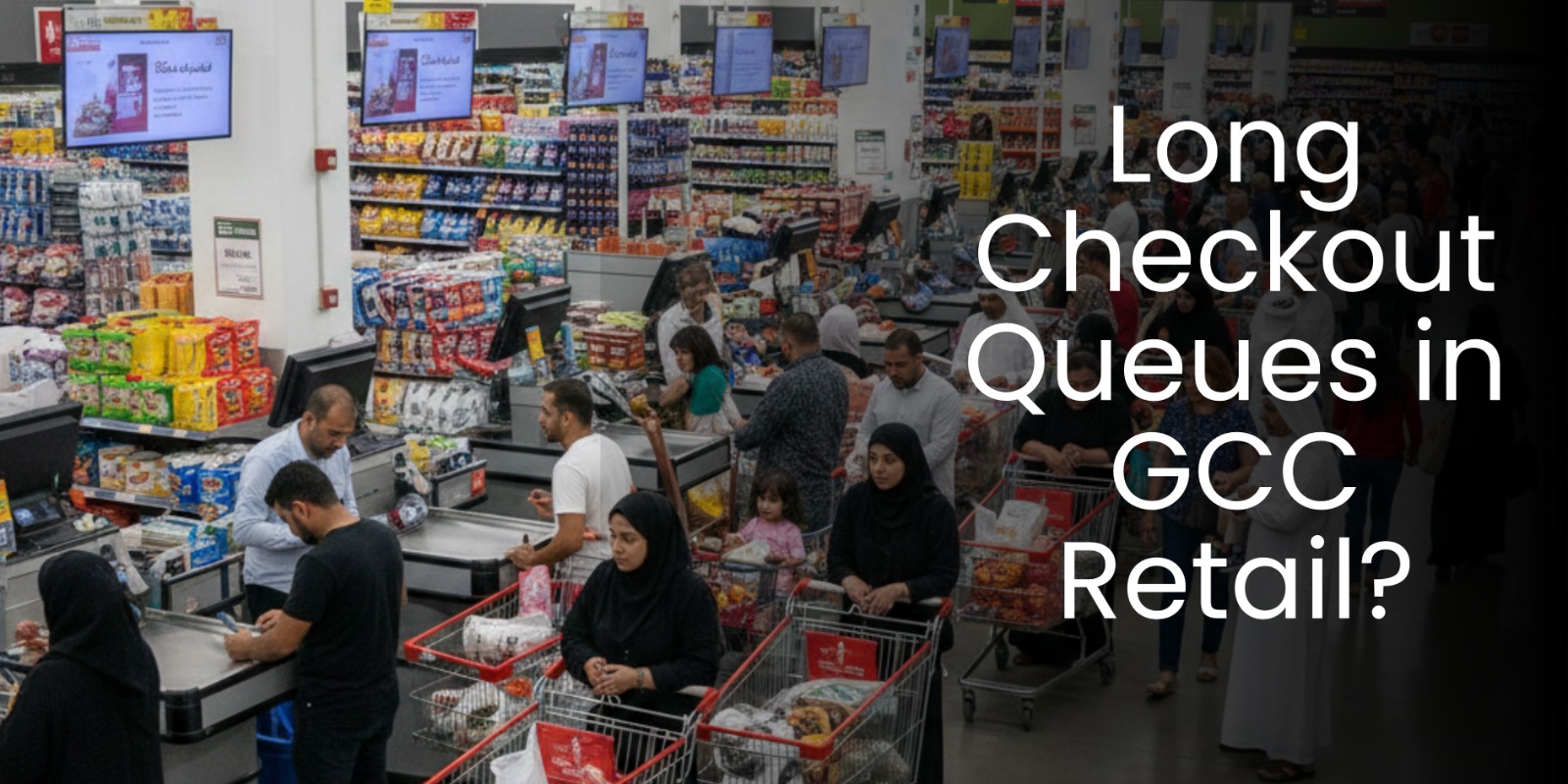
Retail in the GCC region moves at speed. From high-traffic malls in Dubai and Doha to premium retail outlets in Riyadh and Kuwait City, customers expect fast service, seamless checkout, and frictionless payment options. Yet many retail stores still rely on fixed counter-based POS systems that create bottlenecks during peak hours.
For retail tech leads, the challenge is clear: how do you reduce checkout time without increasing hardware complexity or operational cost?
Mobile POS implementation—powered by platforms such as Odoo POS—has emerged as a practical solution. It brings checkout directly to the customer, instead of forcing customers to wait in line.
The Core Retail Pain Point: Checkout Delays
Traditional retail checkout setups often result in:
- Long queues during peak hours
- Limited billing counters
- Slow transaction processing
- Inventory mismatches
- Customer frustration
In GCC markets, where shopping malls experience seasonal spikes during holidays and promotions, queue management directly impacts sales conversion and brand perception.
Retail tech leaders must balance speed, system integration, and real-time data accuracy.
Mobile POS: The Modern Checkout Model
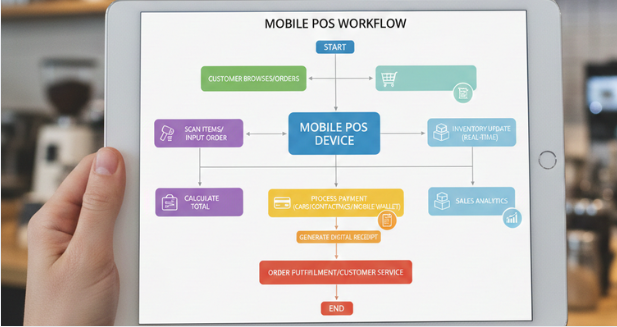
Customer Browsing
→ Staff Initiates Mobile POS
→ Product Scan via Tablet
→ Payment Processing (Card / Wallet / Cash)
→ Instant Inventory Update
→ Digital Receipt
The checkout becomes decentralized. Sales associates complete transactions anywhere inside the store.
Traditional POS vs Mobile POS
| Area | Fixed Counter POS | Mobile POS |
| Checkout Location | Single counter | Anywhere in store |
| Queue Management | Centralized | Distributed |
| Hardware | Dedicated terminal | Tablet-based |
| Inventory Sync | Real-time (if integrated) | Real-time |
| Customer Experience | Reactive | Proactive |
Mobile POS improves customer flow without compromising backend integration.
Real-Time Inventory & Multi-Branch Sync
In GCC retail chains operating across multiple cities, stock synchronization is critical. When a sale is completed via mobile POS:
- Inventory updates instantly
- Other branches reflect updated quantities
- E-commerce stock adjusts automatically
- Replenishment alerts trigger when thresholds are met
Retail tech teams gain centralized visibility while empowering store-level flexibility.
Case Study: GCC Fashion Retail Chain
A regional fashion retailer operating across UAE and Saudi Arabia experienced severe checkout congestion during weekend sales events.
Before Mobile POS
- Average checkout time: 6–8 minutes
- Long queues during peak hours
- Missed impulse purchases
- Staff are underutilized away from counters
After Implementing Mobile POS
- Associates completed transactions directly on the floor
- Checkout time reduced by 35%
- The queue length reduced significantly
- Increased conversion during high-traffic periods
Customer satisfaction scores improved, and revenue per square meter increased.
Integrated Payment Flexibility
Mobile POS solutions in GCC retail must support:
- Contactless card payments
- Digital wallets
- QR payments
- Cash handling
- VAT-compliant invoicing
Integration ensures that mobile devices remain fully synchronized with accounting systems and VAT regulations across the region.
Omnichannel Integration
Modern retail is omnichannel. Mobile POS integrates with:
- E-commerce platforms
- Central warehouse systems
- CRM loyalty programs
- Accounting & finance
This ensures that a purchase made in-store can be returned online, and loyalty points accumulate automatically.
Retail operations become unified instead of siloed.
Retail Tech Leader Benefits
For retail technology leads, mobile POS implementation delivers:
- Reduced infrastructure cost compared to multiple fixed terminals
- Flexible scaling during seasonal demand
- Faster deployment in pop-up stores or events
- Simplified device management
- Centralized real-time analytics
Deployment is modular and adaptable to store size and traffic volume.
Operational Analytics & Store Intelligence
Mobile POS dashboards provide:
- Sales per associate
- Peak hour analytics
- Transaction time metrics
- Payment method breakdown
- Branch-level comparison
Instead of reacting to operational challenges, retail leaders can proactively optimize staffing and layout.
Why GCC Retail Is Moving to Mobile POS
Retail environments in the GCC are characterized by:
- High customer expectations
- Large shopping destinations
- International brand presence
- Rapid digital adoption
Mobile POS aligns with this market dynamic by combining mobility, speed, and centralized intelligence.
Retailers no longer ask whether checkout should be digital.
They ask how fast and how flexible it can become.
Final Perspective
Mobile POS implementation is not merely a hardware upgrade. It is a structural shift in retail experience management. By decentralizing checkout and integrating transactions with real-time inventory and accounting systems, GCC retailers enhance speed without sacrificing control.
For retail tech leads, the opportunity lies in building infrastructure that is scalable, flexible, and data-driven.
In competitive retail markets, faster checkout is not a convenience.
It is a revenue strategy.
1. What is Mobile POS in retail?
Mobile POS is a tablet or handheld-based checkout system that allows staff to complete transactions anywhere inside the store instead of using fixed billing counters.
2. How does Mobile POS reduce queues in GCC retail stores?
By decentralizing checkout, multiple staff members can process payments on the floor, reducing congestion at traditional counters.
3. Is Mobile POS suitable for multi-branch retail chains in the GCC?
Yes. Integrated systems sync inventory, accounting, and reporting across all branches in real time.
4. Does Mobile POS support VAT compliance in GCC countries?
Yes. Modern systems automatically apply VAT rules and generate compliant invoices.




Post Comment