

From Rigid Systems to Real-Time, AI-Ready Manufacturing
Table of Contents
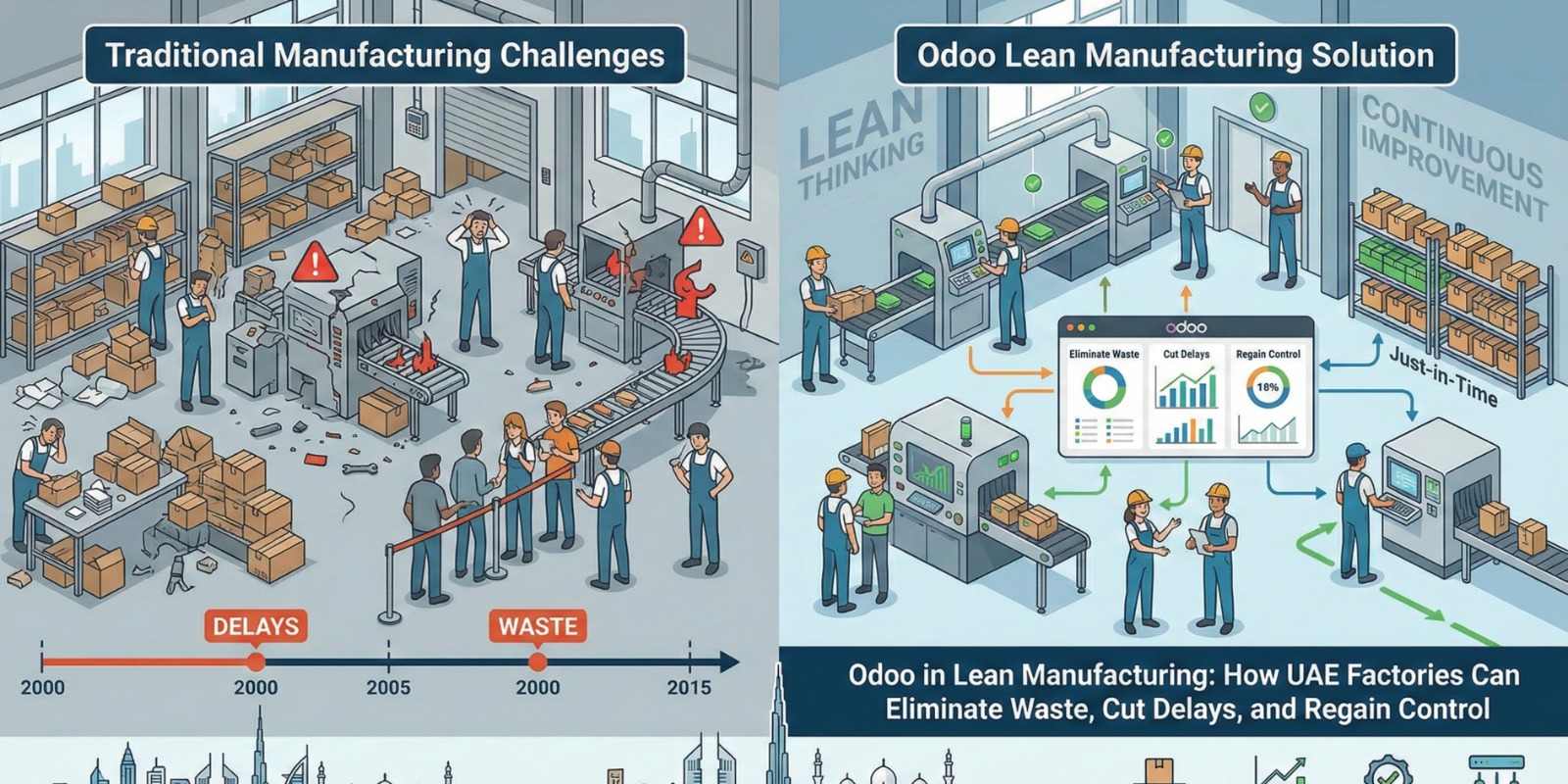
Manufacturing leaders across the UAE, GCC, Africa, and global markets are facing a structural shift. Rising raw material costs, VAT compliance, supply chain volatility, multi-warehouse complexity, and real-time production visibility are no longer optional challenges—they are operational realities. Yet many manufacturers are still operating on legacy ERP systems built 10–20 years ago.
The result? Fragmented data. Delayed decisions. Expensive customizations. Zero agility.
This blog explores why manufacturers are strategically moving from traditional ERP systems to Odoo—and what that transition really delivers.
The Legacy ERP Problem: Where It Breaks
Legacy ERP systems were designed for stability, not flexibility. They often suffer from:
- Heavy on-premise infrastructure
- Complex licensing structures
- Slow customization cycles
- Poor UI/UX adoption
- Limited integration with modern tools
- High upgrade costs
Common Pain Points in Manufacturing
| Pain Area | Legacy ERP Limitation | Business Impact |
| Production Planning | Static scheduling | Frequent bottlenecks |
| Inventory Control | Manual reconciliation | Stockouts / Overstock |
| Reporting | Delayed batch reports | Reactive decision-making |
| Integration | Difficult API connectivity | Siloed operations |
| Cost | High annual maintenance | Reduced ROI |
Manufacturers today require dynamic MRP, predictive analytics, IoT integration, and multi-company visibility. Most legacy platforms were never designed for this scale of digital transformation.
The Shift Toward Odoo: Modular, Agile, Scalable
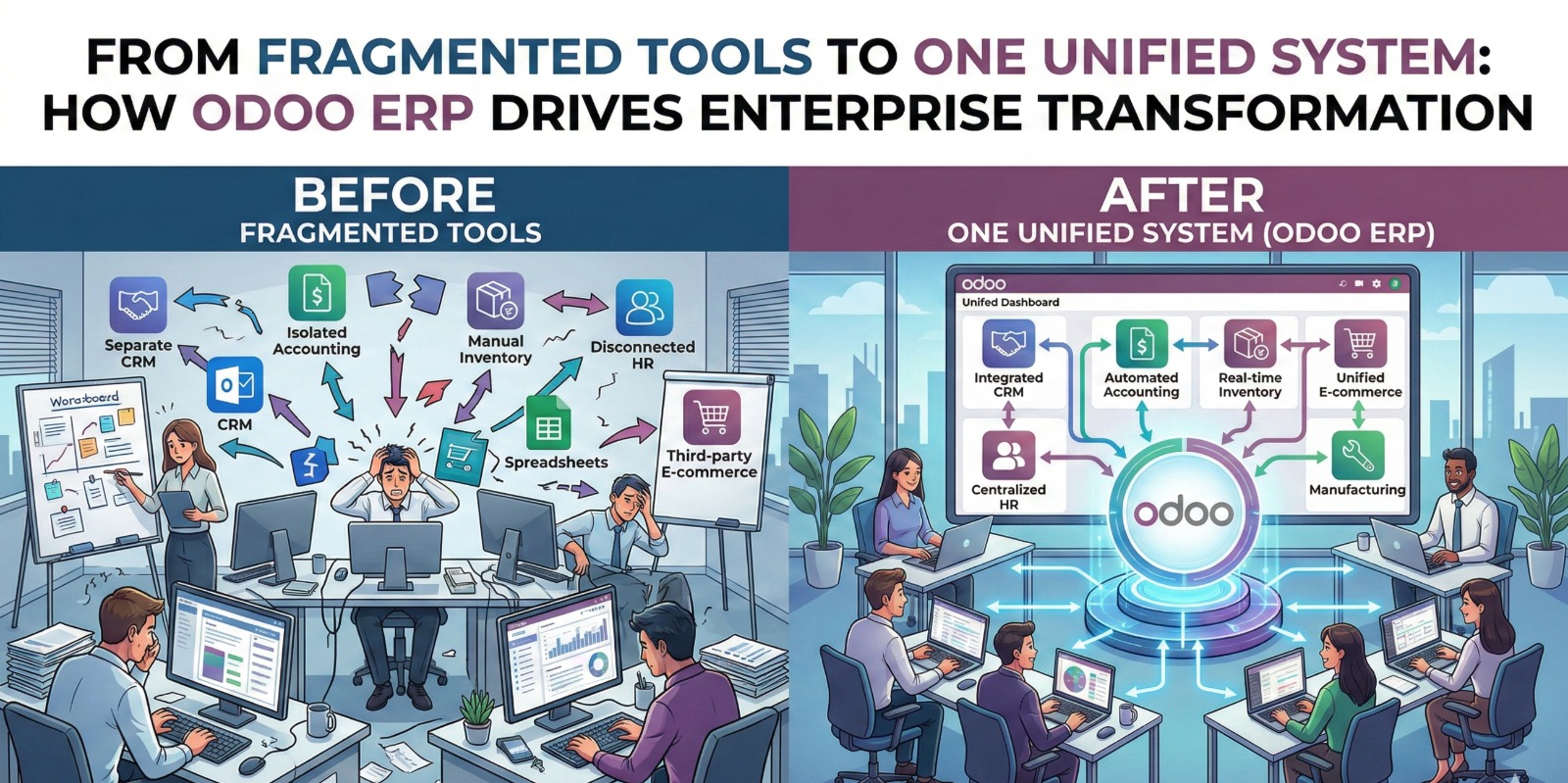
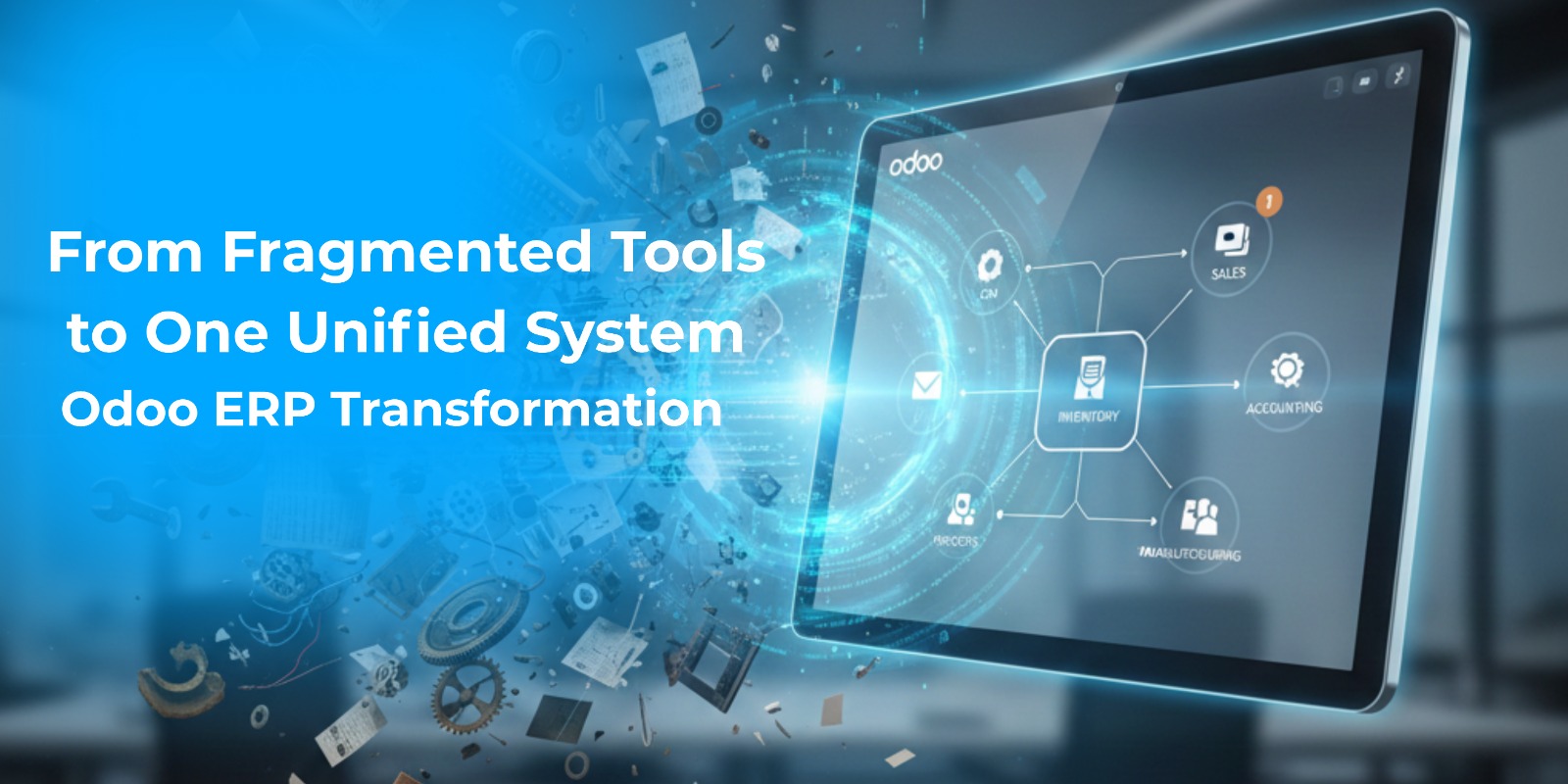
Odoo introduces a fundamentally different architecture. Instead of a rigid monolithic ERP, it operates as a modular ecosystem where applications like Manufacturing (MRP), Inventory, Purchase, Accounting, Quality, Maintenance, and Sales integrate seamlessly.
How Odoo Changes the Game
- Real-Time Production Control
Odoo MRP enables live work order tracking, automated BoM management, and capacity planning. - Integrated Inventory Intelligence
Barcode-enabled warehouse management reduces manual mismatch errors. - Cost-Effective Licensing
Transparent subscription pricing compared to heavy legacy licensing models. - Cloud or On-Prem Flexibility
Manufacturers can choose deployment based on compliance and scalability needs. - Faster Customization
Open-source flexibility reduces vendor lock-in.
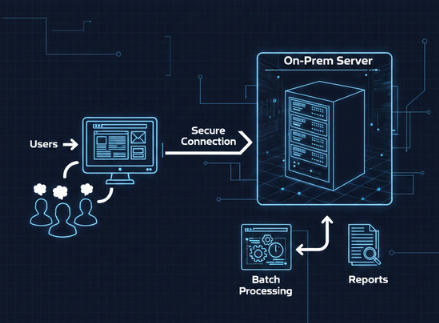
Architecture Comparison
Odoo Model
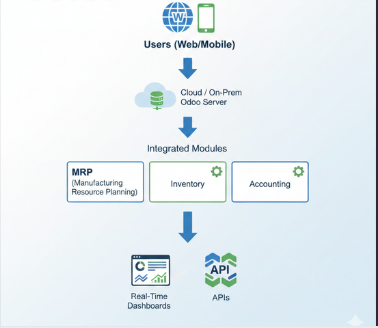
The difference lies in latency and accessibility. Odoo provides live operational visibility across departments.
Case Study: Mid-Sized Manufacturer in the UAE
A Dubai-based packaging manufacturer operating across 3 warehouses faced:
- 12% inventory variance
- 3–5 day production reporting delays
- Manual VAT reconciliation
- 20% higher maintenance cost for ERP upgrades
After migrating to Odoo:
- Inventory variance reduced to 2%
- Production dashboard updated in real time
- Automated VAT calculation (UAE compliant)
- ERP maintenance cost reduced by 35% annually
The transition period was 4 months, with phased module deployment (Inventory → MRP → Accounting → BI).
Financial Comparison Snapshot
| Parameter | Legacy ERP | Odoo |
| Upfront License | High | Moderate |
| Customization Cost | Expensive | Controlled |
| Upgrade Complexity | High | Seamless |
| User Training Time | Long | Short (Modern UI) |
| ROI Timeline | 2–4 Years | 12–18 Months |
Odoo’s ROI acceleration is primarily due to reduced operational friction and real-time data accuracy.
AI & Industry 4.0 Readiness
Manufacturing today is moving toward predictive maintenance, AI-based demand forecasting, and IoT-enabled tracking. Legacy ERP often requires expensive third-party connectors.
Odoo integrates more fluidly with:
- IoT gateways
- E-commerce platforms
- CRM systems
- Business Intelligence tools
- AI recommendation engines
This creates a connected digital factory rather than a static accounting system.
Strategic Drivers Behind Migration
- Cost rationalization
- Need for real-time analytics
- Scalability across multiple units
- Regulatory compliance (VAT, multi-country)
- User-friendly adoption across shop floors
- Integration with cloud ecosystem
Manufacturers are no longer evaluating ERP purely as software. They view it as a strategic operating system.
Executive Insight: It’s Not Just About Software
The shift from legacy ERP to Odoo is less about replacing technology and more about redefining operational agility.
Manufacturers that delay modernization often experience:
- Decision latency
- Excess working capital tied in inventory
- Poor production visibility
- Integration silos
Those who transition early build:
- Data-driven production
- Lean inventory models
- Faster market responsiveness
- AI-enabled optimization
Final Perspective
In an era where manufacturing margins are tightening and supply chains are volatile, legacy ERP systems are becoming operational liabilities.
Odoo offers a modern, modular, scalable alternative designed for digital manufacturing environments. It empowers organizations to move from reactive reporting to proactive control.
For manufacturing leaders evaluating ERP modernization, the question is no longer “Should we upgrade?”
It is “How long can we afford to operate without real-time intelligence?”



Post Comment