

Table of Contents
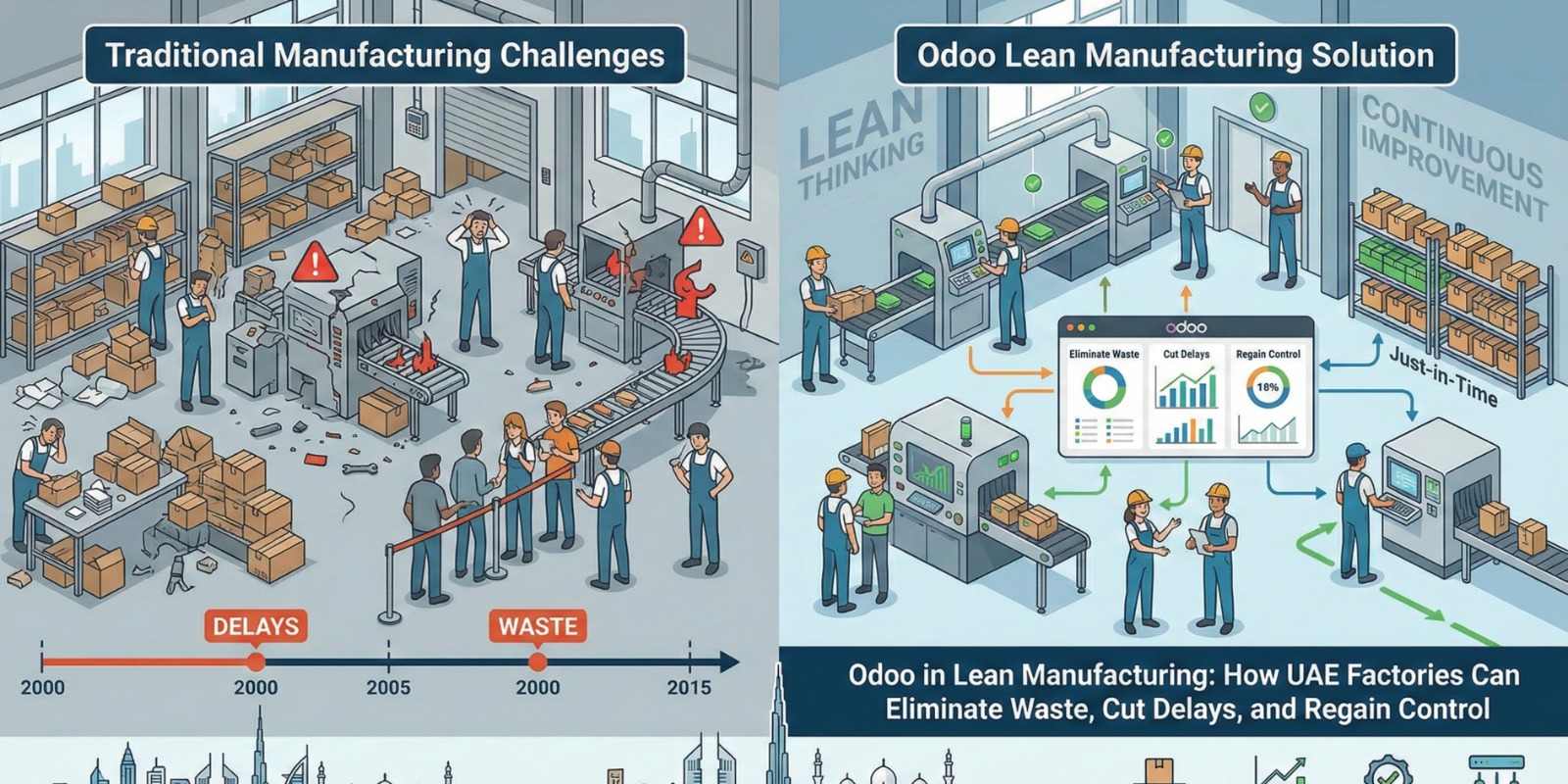
Lean transformation teams across the UAE are facing a recurring frustration: Kaizen workshops are conducted, value stream maps are created, and improvement initiatives are launched—yet operational waste quietly creeps back. The root cause is rarely a lack of Lean intent. It is the absence of real-time system enforcement. In fast-moving manufacturing environments across Dubai, Abu Dhabi, and Sharjah, manual coordination, disconnected tools, and spreadsheet-driven planning silently reintroduce Muda (waste), Mura (unevenness), and Muri (overburden).
This is where Odoo ERP becomes a Lean enabler—not just a software platform.
The Lean Problem in UAE Factories
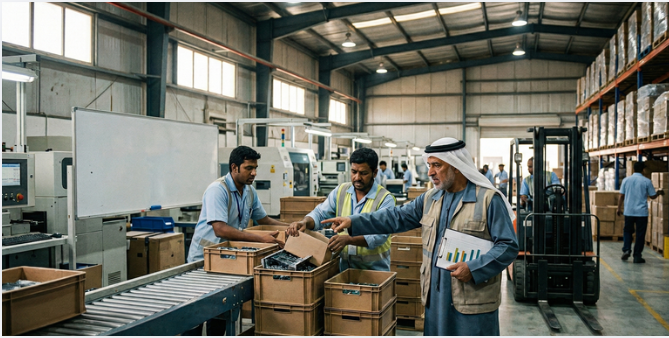
Lean waste in UAE manufacturing environments commonly appears in the following forms:
| Lean Waste Type | Real UAE Factory Scenario | Financial Impact |
| Overproduction | Producing without confirmed sales orders | Working capital lock-in |
| Waiting | Production delays due to stock mismatch | Reduced OEE |
| Excess Inventory | Overstocking imported raw material | Storage + expiry cost |
| Motion | Manual approvals between departments | Lost labor productivity |
| Defects | Late quality detection | Rework & scrap cost |
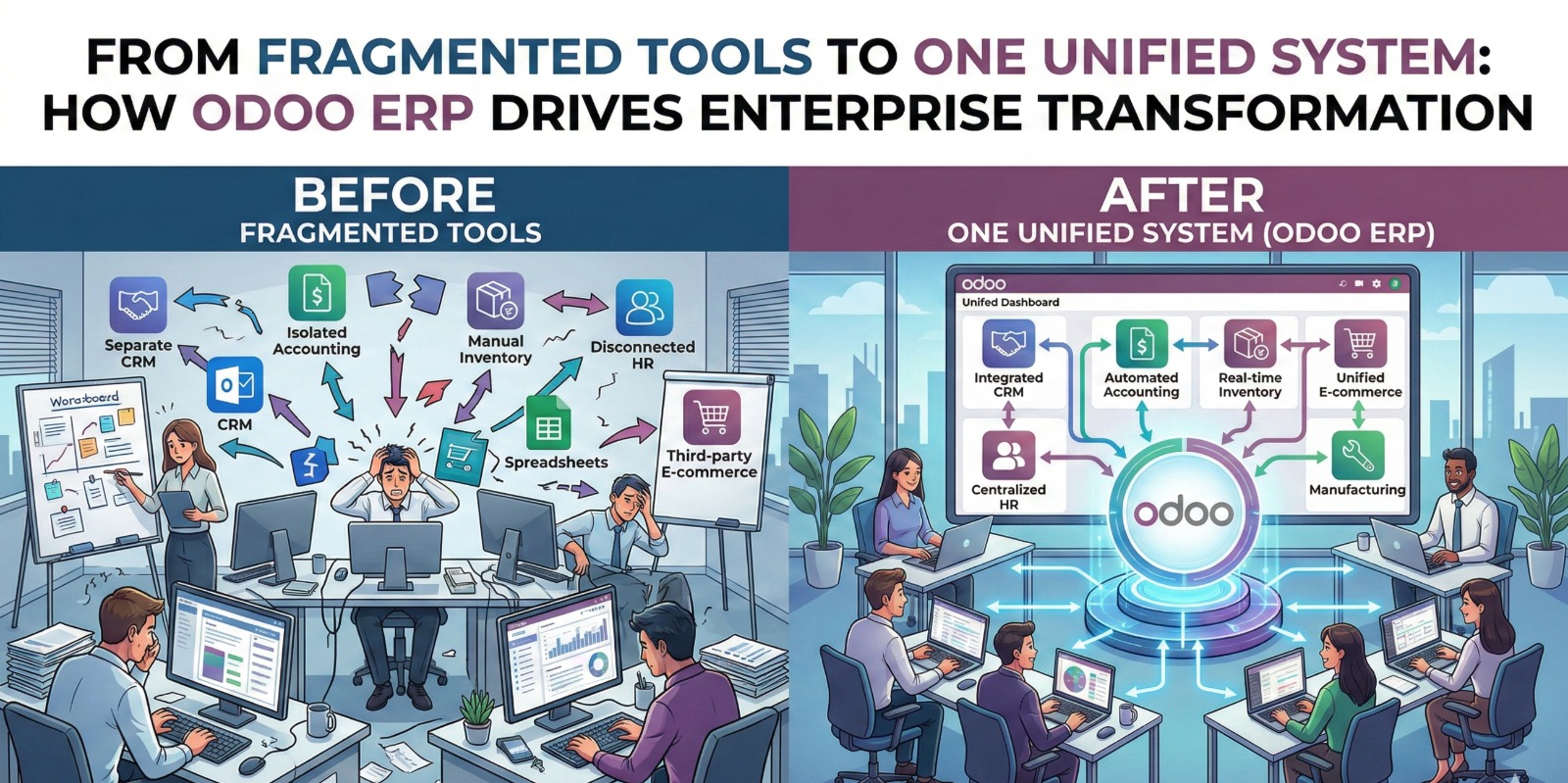
Many factories rely on siloed systems—Excel for planning, WhatsApp for coordination, standalone accounting software for finance. Lean cannot survive in fragmentation.
How Odoo Digitally Enforces Lean
Odoo integrates Manufacturing (MRP), Inventory, Sales, Quality, Maintenance, and Accounting into one synchronized workflow. Instead of relying on discipline alone, Lean becomes system-driven.
1. Just-in-Time (JIT) Through Real-Time Demand
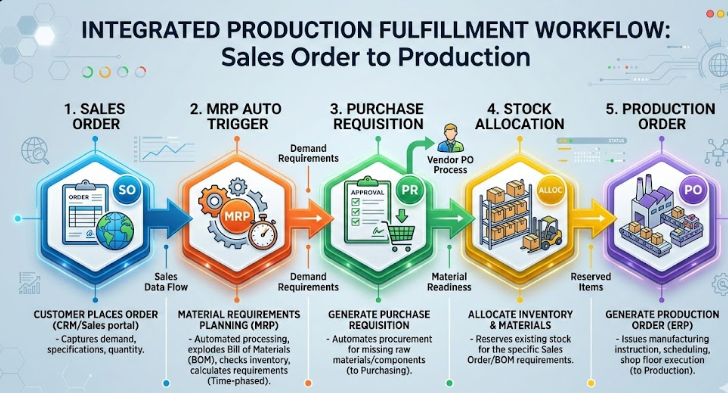
Odoo’s Make-to-Order and Reordering Rules ensure materials are procured only when needed. This reduces excess imports—critical for UAE factories dependent on international suppliers.
2. Digital Kanban & Production Visibility
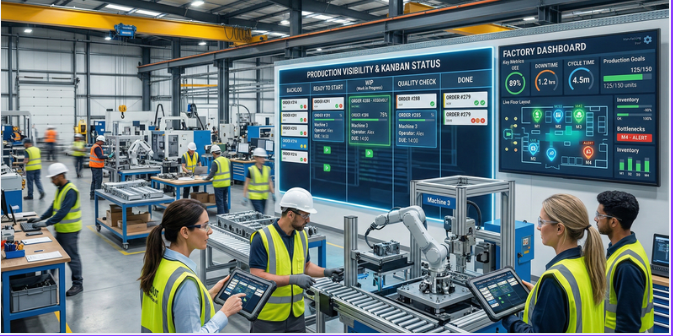
| Traditional Lean Board | Odoo Digital Kanban |
| Manual card movement | Automated stage tracking |
| No real-time updates | Live production visibility |
| Human error risk | Barcode + IoT integration |
| Static reporting | Dynamic dashboards |
Odoo’s work center control panels provide live OEE tracking, cycle time monitoring, and bottleneck alerts.
3. Cycle Time Reduction with Data Visibility
Cycle Time Formula:
Cycle Time = Total Production Time / Units Produced
With Odoo:
- Automated routing reduces idle time
- Work center load balancing prevents overburden
- Maintenance scheduling prevents breakdown delays
Before vs After Odoo Lean Implementation
| Metric | Before Odoo | After Odoo |
| Inventory Accuracy | 82% | 98% |
| Production Delays | Frequent | Reduced by 35% |
| Stock Visibility | Manual checks | Real-time dashboard |
| Scrap Rate | 7–9% | 3–4% |
| Decision Speed | Reactive | Predictive |
Real UAE Case Example: Food Manufacturing (Dubai)
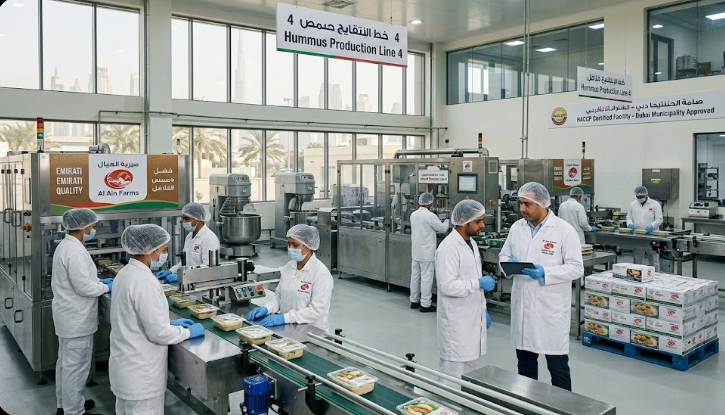
A mid-sized food processing unit in Dubai faced:
- Expiry-based wastage due to overstocking
- Manual batch tracking
- Frequent line stoppages
Lean-Odoo Intervention:
- Implemented lot & serial tracking
- FIFO automation
- Automated reordering rules
- Quality checkpoints per batch
Results in 6 Months:
| KPI | Improvement |
| Inventory Holding Cost | ↓ 22% |
| Expiry Loss | ↓ 40% |
| Production Efficiency | ↑ 18% |
| Audit Readiness | 100% digital traceability |
The transformation was not cultural alone—it was system-supported.
Lean Architecture with Odoo
Customer Demand
↓
Sales Module
↓
MRP Engine
↓
Inventory + Procurement
↓
Production Execution
↓
Quality Control
↓
Accounting & Costing
Every stage feeds real-time data into dashboards accessible by Lean transformation teams. No blind spots.
Key Odoo Features Enabling Lean
| Odoo Feature | Lean Principle Enabled |
| Reordering Rules | Just-in-Time |
| Work Center Capacity Planning | Load Balancing |
| Maintenance Module | TPM (Total Productive Maintenance) |
| Quality Checks | Built-in Poka-Yoke |
| Barcode Scanning | Motion Waste Reduction |
| Automated Costing | Real-Time Cost Visibility |
Visualizing Waste Reduction
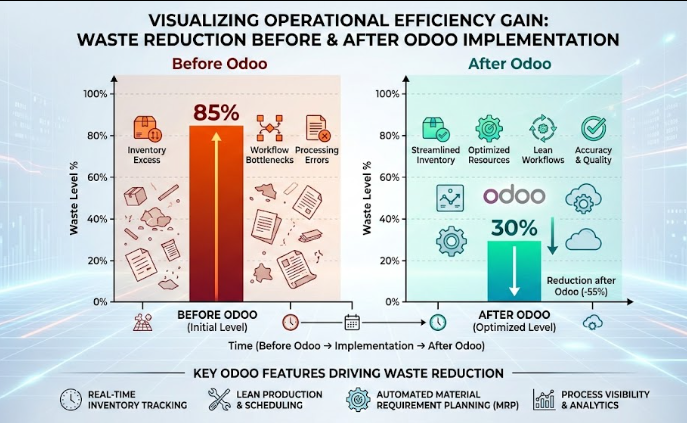
Lean is sustainable only when data enforces discipline.
Why Lean Teams in UAE Need ERP Integration
UAE manufacturing operates under:
- VAT compliance requirements
- Import-heavy supply chains
- High labor cost sensitivity
- Strict quality audits
Without ERP-backed Lean, compliance risk and inefficiencies increase.
Odoo integrates financial impact into operational decisions. For example:
- Real-time margin analysis per production order
- Actual vs planned cost variance tracking
- Waste cost visibility by product line
This moves Lean from operational improvement to strategic profitability.
Executive Perspective
Lean initiatives often stall because they depend heavily on people remembering processes. Odoo embeds Lean into workflows, approvals, and inventory logic.
Instead of asking, “Did we follow the process?”
You ask, “Did the system allow deviation?”
That shift changes everything.
Conclusion: Lean Without a System Is Temporary
For UAE factories committed to continuous improvement, Lean cannot rely on whiteboards and monthly reviews. It must operate in real-time.
Odoo transforms Lean from philosophy into measurable execution.
It connects demand to production, production to cost, and cost to profitability.
If your Lean team is battling:
- Uncontrolled inventory
- Production unpredictability
- Hidden cost leakages
Then the issue is not commitment—it is infrastructure.
Lean thinking needs Lean systems.
And Odoo is the digital backbone that sustains it.




Post Comment