
Why Modern Small and Mid-Sized Businesses Are Moving From Tools to Unified Business Systems
Table of Contents
Global SMEs today operate in an environment defined by constant change. Customer expectations evolve rapidly, markets shift, supply chains fluctuate, and competition emerges from unexpected directions. In such conditions, agility is no longer a competitive advantage—it is a survival requirement.
Yet many SMEs still rely on fragmented systems: spreadsheets for reporting, separate tools for CRM, accounting software disconnected from inventory, and manual workflows connecting everything. These setups may work in the early stages, but as businesses grow, they create operational bottlenecks.
The result is a common pattern:
Businesses want to move fast, but their systems slow them down.
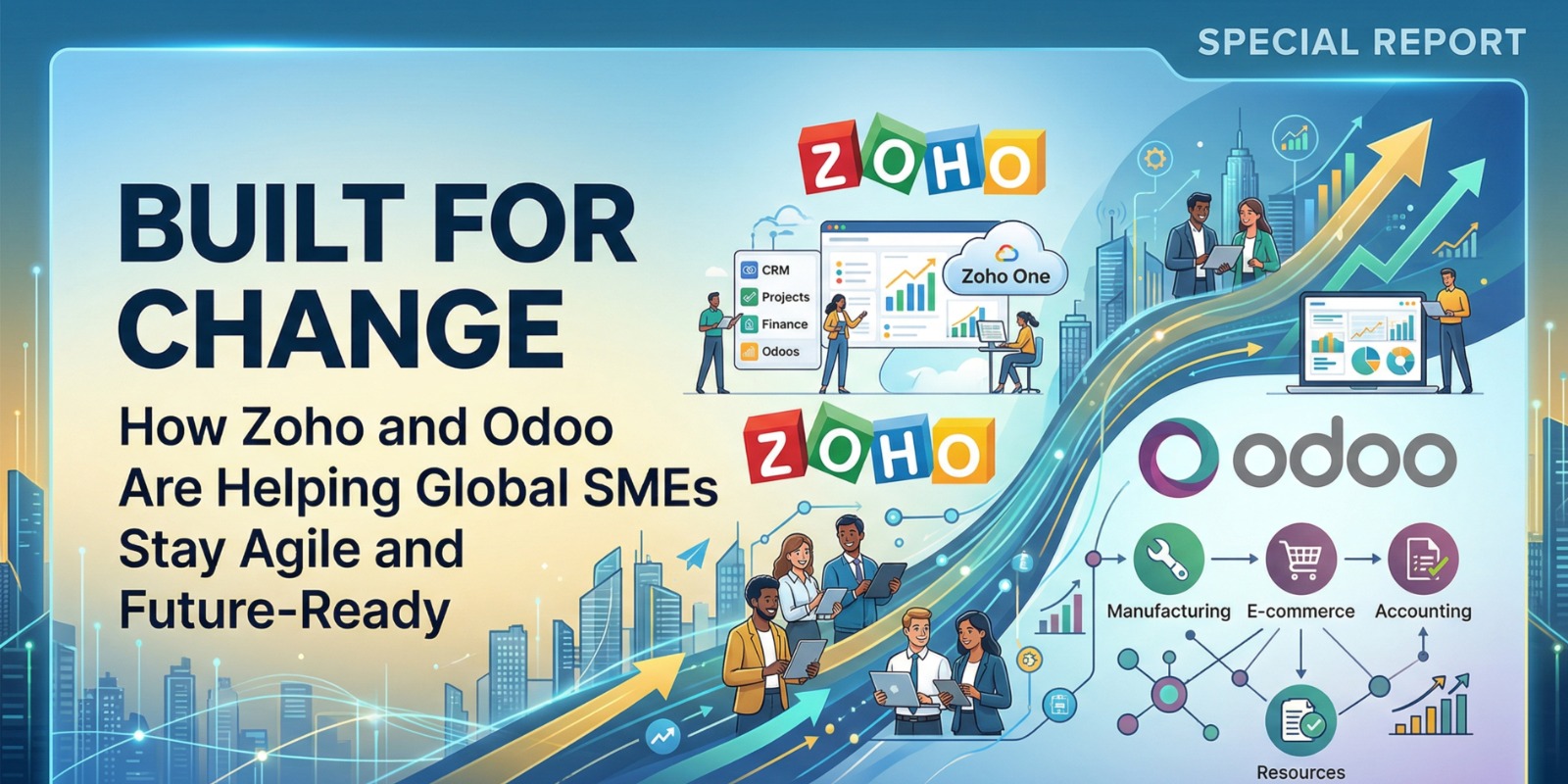
This is where platforms like Zoho and Odoo are transforming how SMEs operate—by enabling flexibility, automation, and end-to-end visibility.
The Real Pain Point: SMEs Need Agility, But Systems Are Rigid
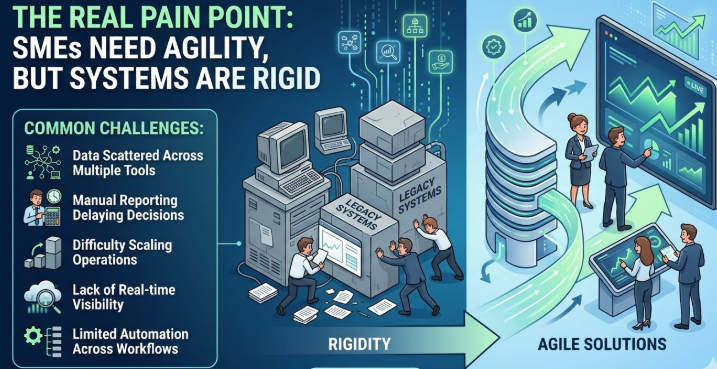
Unlike large enterprises, SMEs must adapt quickly. They cannot afford long decision cycles or complex operational delays. However, outdated systems make agility difficult.
Common challenges include:
- Data scattered across multiple tools
- Manual reporting delaying decisions
- Difficulty scaling operations
- Lack of real-time visibility
- Limited automation across workflows
These challenges prevent SMEs from responding quickly to market changes.
What Agility Actually Means for SMEs
Agility is not just about speed. It is about visibility, flexibility, and control.
Agile businesses can:
- Launch new products quickly
- Expand into new markets
- Adjust pricing dynamically
- Scale operations efficiently
- Make decisions based on real-time data
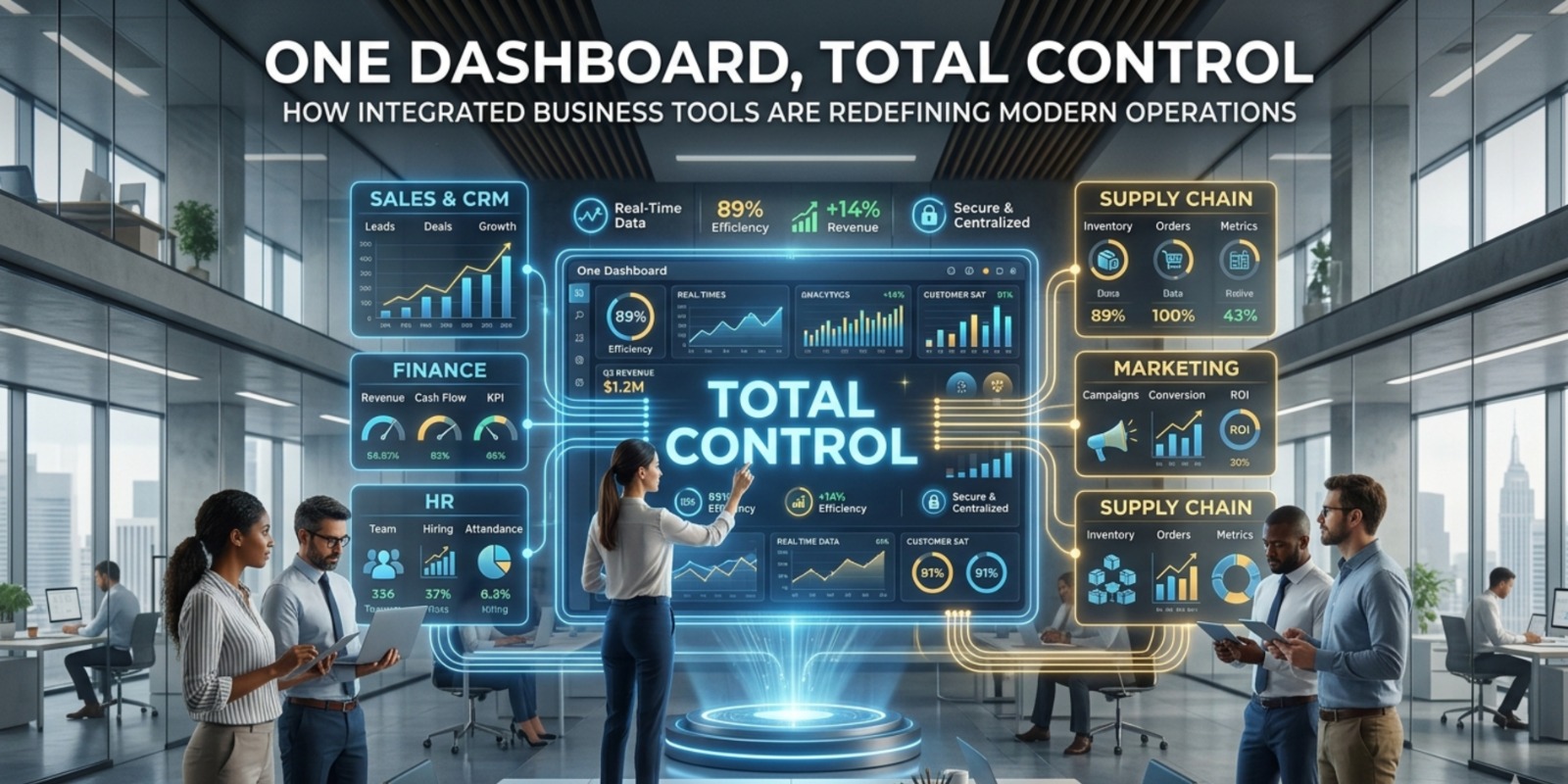
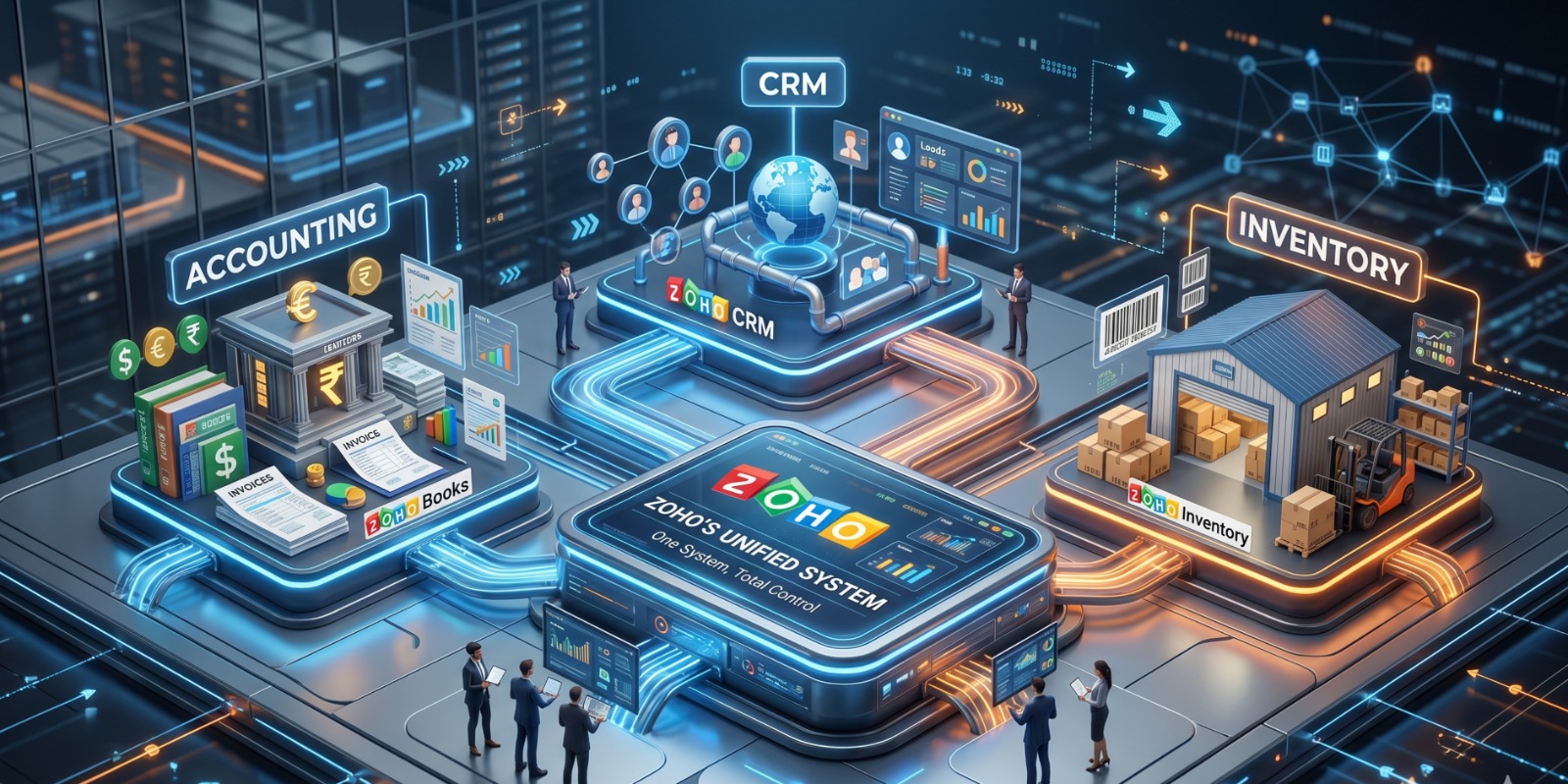
Zoho and Odoo enable this by connecting business functions into a unified system.
Zoho vs Odoo: Supporting Agile Business Models
Both platforms provide flexibility, but their strengths vary depending on business needs.
| Factor | Zoho | Odoo |
|---|---|---|
| Best Fit | Service businesses, startups | Manufacturing, trading, complex operations |
| Implementation Speed | Faster | Moderate |
| Customization | Limited | Highly flexible |
| Ecosystem | SaaS-first suite | Modular ERP framework |
| Scalability | High | Very high |
This flexibility allows SMEs to choose the platform that aligns with their operational complexity.
Before vs After: SME Operations Transformation
| Area | Traditional Setup | Zoho / Odoo |
|---|---|---|
| Data | Scattered | Centralized |
| Reporting | Manual | Real-time |
| Workflows | Manual handoffs | Automated |
| Decision Speed | Slow | Fast |
| Scalability | Limited | High |
The difference is operational clarity.
Real Case Study: E-commerce SME Expansion
A mid-sized e-commerce company operating in multiple countries faced challenges as it expanded globally. They used separate tools for inventory, accounting, and order management.
Problems included:
- Inventory mismatches across locations
- Delayed order processing
- Manual financial reconciliation
- No unified reporting
After implementing Odoo:
| Metric | Before | After |
|---|---|---|
| Order Processing Time | 2 hours | 20 minutes |
| Inventory Accuracy | 78% | 96% |
| Reporting Time | 1 day | Real-time |
| Operational Visibility | Limited | Centralized |
The company was able to expand into new markets without increasing operational complexity.
Automation: The Backbone of Agile SMEs
One of the biggest advantages of Zoho and Odoo is workflow automation. Instead of relying on manual coordination, processes run automatically.
Examples include:
- Lead to invoice automation
- Inventory auto-updates
- Automated approval workflows
- Real-time financial reporting
- Customer lifecycle automation
Automation reduces dependency on manual processes and increases operational speed.
Real Case Study: Service Company Scaling Operations
A consulting firm managing clients across regions struggled with project tracking, billing, and reporting.
Challenges:
- Manual project tracking
- Delayed invoicing
- Fragmented customer data
- Slow decision-making
After implementing Zoho:
| Metric | Before | After |
|---|---|---|
| Invoice Generation | Manual | Automated |
| Project Visibility | Limited | Real-time |
| Customer Data | Scattered | Unified |
| Decision Time | Delayed | Faster |
The business improved operational efficiency and scaled without hiring additional staff.
Why SMEs Prefer Zoho and Odoo
Both platforms are designed with flexibility in mind, which is critical for SMEs.
Key advantages include:
- Modular implementation
- Cloud-based access
- Real-time dashboards
- Automation capabilities
- Scalability for growth
This enables SMEs to start small and expand as needed.
Future-Ready Business Model
Being future-ready means building systems that adapt to change. Zoho and Odoo support this by offering:
- AI-driven insights
- Workflow automation
- Integration capabilities
- Multi-country support
- Scalable architecture
These features allow SMEs to evolve without replacing their systems.
Signs Your SME Needs an Agile System
If your business is experiencing the following, it may be time to upgrade:
- Teams switching between multiple tools
- Manual processes are slowing operations
- Difficulty scaling operations
- Lack of real-time insights
- Operational chaos during growth
These are indicators that your systems are limiting agility.
Final Thoughts
Global SMEs face a unique challenge: they must operate at the speed of startups while maintaining the structure of enterprises. This requires systems that are flexible, scalable, and intelligent.
Zoho and Odoo provide this balance by combining automation, integration, and real-time visibility into a unified platform.
Businesses that adopt these systems become more agile, more responsive, and more future-ready.
Those who continue with fragmented tools struggle to adapt to changing market demands.
The future belongs to SMEs that can move quickly without losing control.
And that starts with the systems they choose.



Post Comment