

Table of Contents
The Software That Built an Era
For decades, Tally has been one of the most recognized accounting tools for businesses across India and neighboring markets. From small trading firms to established enterprises, Tally became a trusted companion for bookkeeping, taxation, inventory management, and financial reporting.
It earned that trust because it solved real problems at a time when digital accounting itself was a major shift.
But business has changed dramatically.
Today’s companies are no longer operating from a single office with a single accountant managing entries manually. Businesses now deal with remote teams, multiple branches, online payments, eCommerce platforms, real-time customer expectations, and fast-moving operations.
And this is where many organizations are beginning to realize something important:
Traditional accounting software alone is no longer enough.
The Problem Is Not Tally — It’s the Changing Business Environment
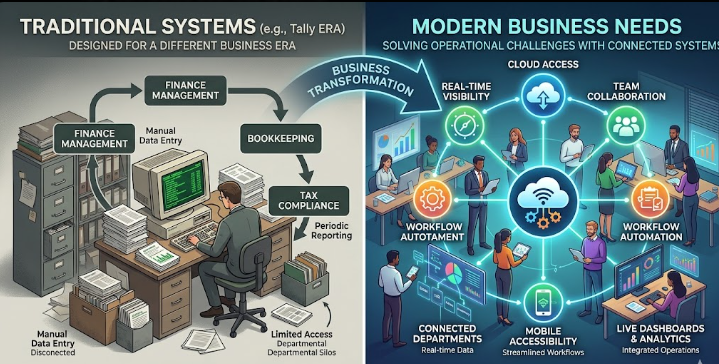
It is important to understand that the issue is not whether Tally is “good” or “bad.” The real issue is that many businesses are trying to solve modern operational challenges using systems designed for a different business era.
Modern companies need:
- Real-time visibility
- Cloud access
- Team collaboration
- Workflow automation
- Connected departments
- Mobile accessibility
- Live dashboards and analytics
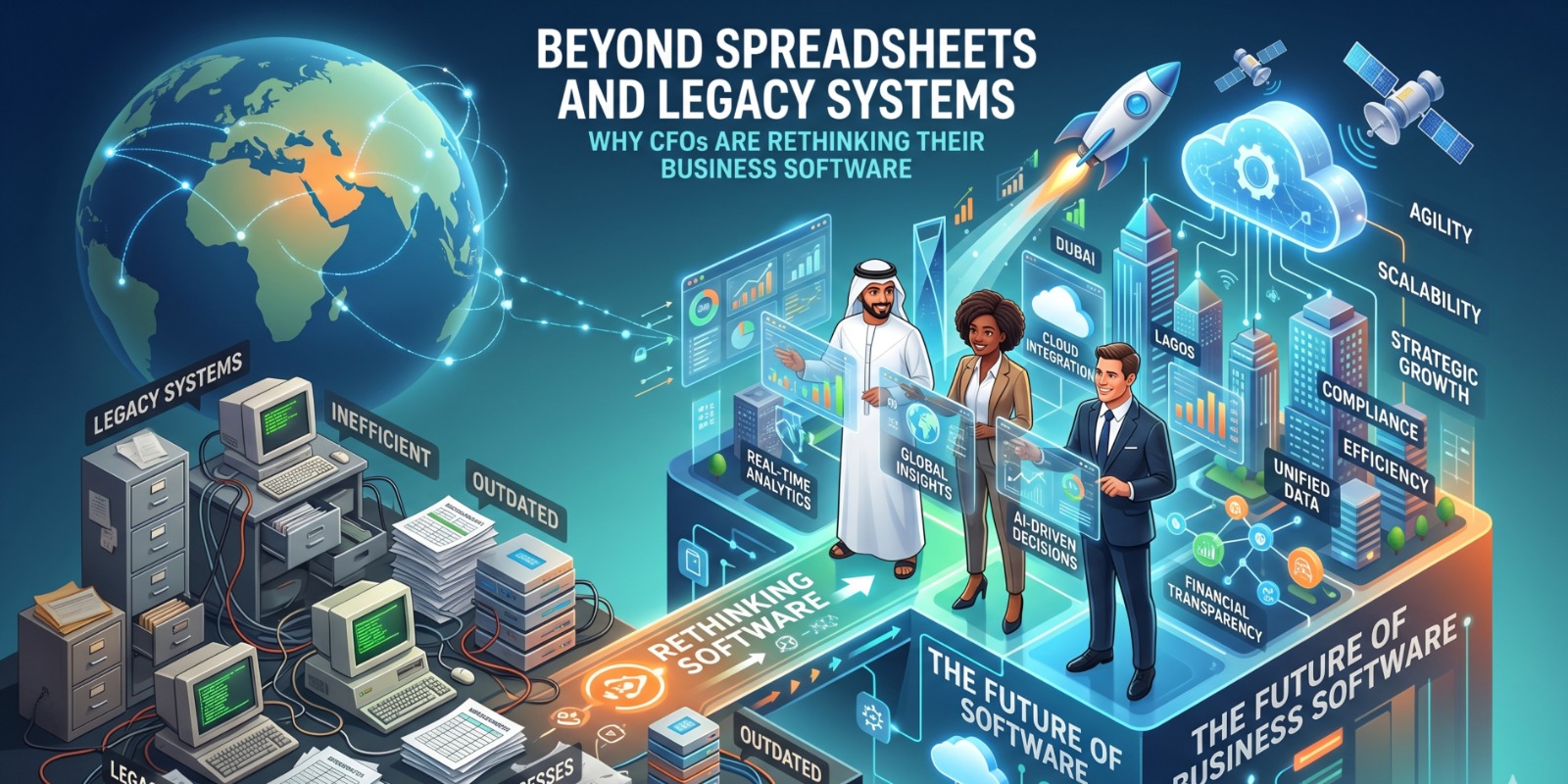
Traditional accounting tools primarily focus on financial management. Modern businesses, however, require systems that connect finance with the rest of the organization.
This difference is changing how companies choose software.
The Rise of Connected Business Platforms
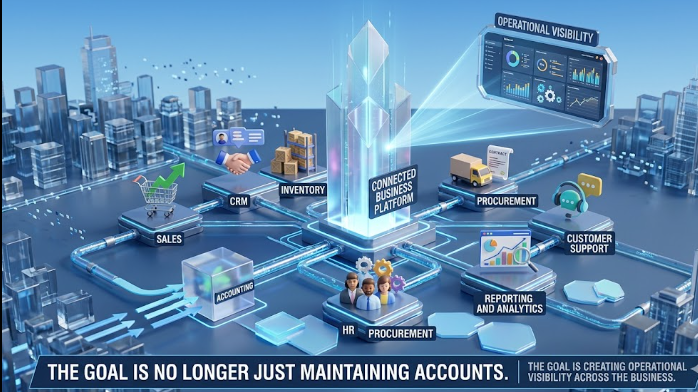
Businesses are now moving toward integrated cloud platforms like Zoho and Odoo because they go beyond accounting.
Instead of working as isolated finance tools, these systems connect:
- Sales
- CRM
- Inventory
- HR
- Procurement
- Customer support
- Reporting and analytics
The goal is no longer just maintaining accounts.
The goal is to create operational visibility across the business.
Why Businesses Are Breaking the “Tally Habit”
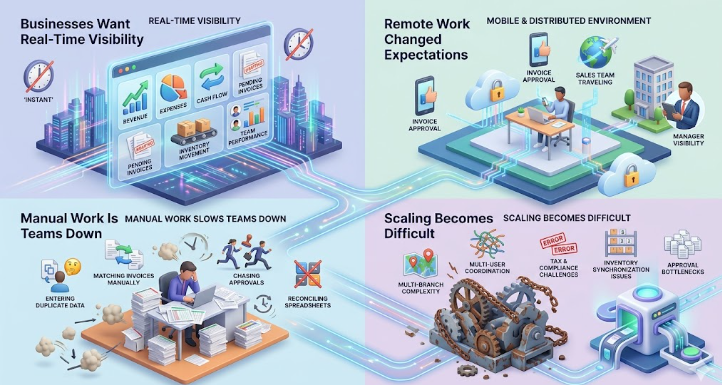
1. Businesses Want Real-Time Visibility
Traditional accounting systems often rely heavily on manual processes and periodic reporting. By the time reports are generated, the situation may already have changed.
Modern platforms provide live dashboards where business owners can instantly monitor:
- Revenue
- Expenses
- Cash flow
- Pending invoices
- Inventory movement
- Team performance
This shift from reactive reporting to proactive decision-making is one of the biggest reasons companies are upgrading.
2. Remote Work Changed Expectations
Today’s business environment is mobile and distributed.
Owners want to approve invoices from their phones. Sales teams need access to customer information while traveling. Managers expect visibility even when outside the office.
Cloud platforms make this possible.
Instead of depending on office-based systems, businesses can operate securely from anywhere.
3. Manual Work Is Slowing Teams Down
Many finance teams spend hours:
- Entering duplicate data
- Matching invoices manually
- Chasing approvals
- Reconciling spreadsheets
This not only wastes time but also increases the risk of errors.
Modern systems automate repetitive workflows, allowing teams to focus on analysis and decision-making instead of routine administrative work.
4. Scaling Becomes Difficult with Legacy Processes
What works for a small business often fails when operations expand.
As businesses grow, they begin facing:
- Multi-branch complexity
- Multi-user coordination
- Tax and compliance challenges
- Inventory synchronization issues
- Approval bottlenecks
Disconnected systems create operational confusion.
Integrated platforms are designed to scale with business growth instead of becoming barriers to it.
Case Study: Retail Business Modernizes Operations
A retail distributor operating across three cities relied heavily on Tally for accounting and spreadsheets for inventory and sales tracking.
Initially, the setup worked well. But as operations expanded, problems started appearing:
- Different reports from different departments
- Delayed stock updates
- Lack of real-time visibility
- Slow management approvals
- Increasing operational confusion
The company migrated to a connected ERP platform.
Within Five Months:
- Inventory tracking became real-time
- Finance and sales data synchronized automatically
- Management gained live dashboards
- Approval processes became faster
- Team productivity improved significantly
Most importantly, leadership finally had operational clarity.
The change was not only technological—it transformed how the business functioned daily.
Modern Accounting Is No Longer Just Accounting
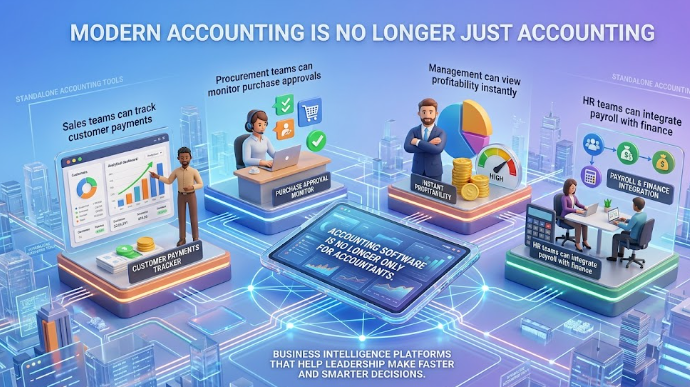
One of the biggest mindset shifts happening today is this:
Accounting software is no longer only for accountants.
Modern systems are becoming business intelligence platforms that help leadership make faster and smarter decisions.
For example:
- Sales teams can track customer payments
- Procurement teams can monitor purchase approvals
- Management can view profitability instantly
- HR teams can integrate payroll with finance
This level of visibility was difficult to achieve using standalone accounting tools.
The Human Side of Better Systems
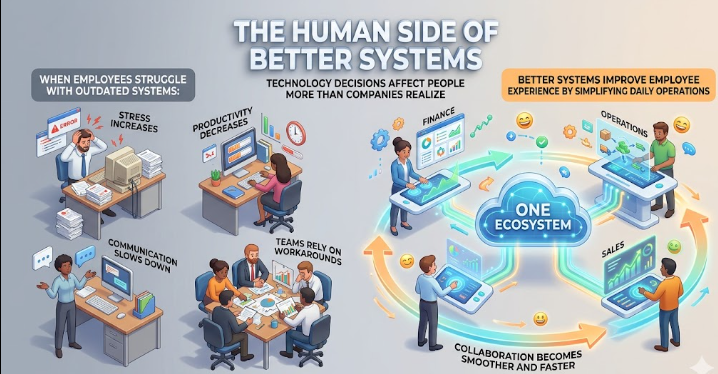
Technology decisions affect people more than companies realize.
When employees struggle with outdated systems:
- Stress increases
- Productivity decreases
- Communication slows down
- Teams rely on workarounds
Better systems improve employee experience by simplifying daily operations.
When finance, sales, and operations work together inside one ecosystem, collaboration becomes smoother and faster.
That operational calmness is often underestimated—but it has a major impact on business performance.
Signs Your Business Has Outgrown Traditional Accounting Software
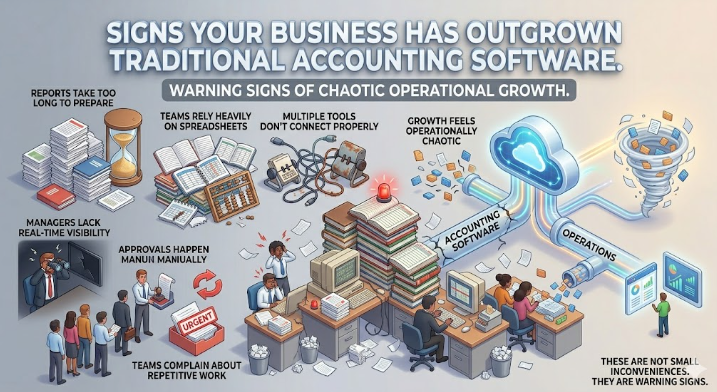
You may need a modern system if:
- Reports take too long to prepare
- Teams rely heavily on spreadsheets
- Multiple tools don’t connect properly
- Managers lack real-time visibility
- Approvals happen manually
- Teams complain about repetitive work
- Growth feels operationally chaotic
These are not small inconveniences. They are warning signs.
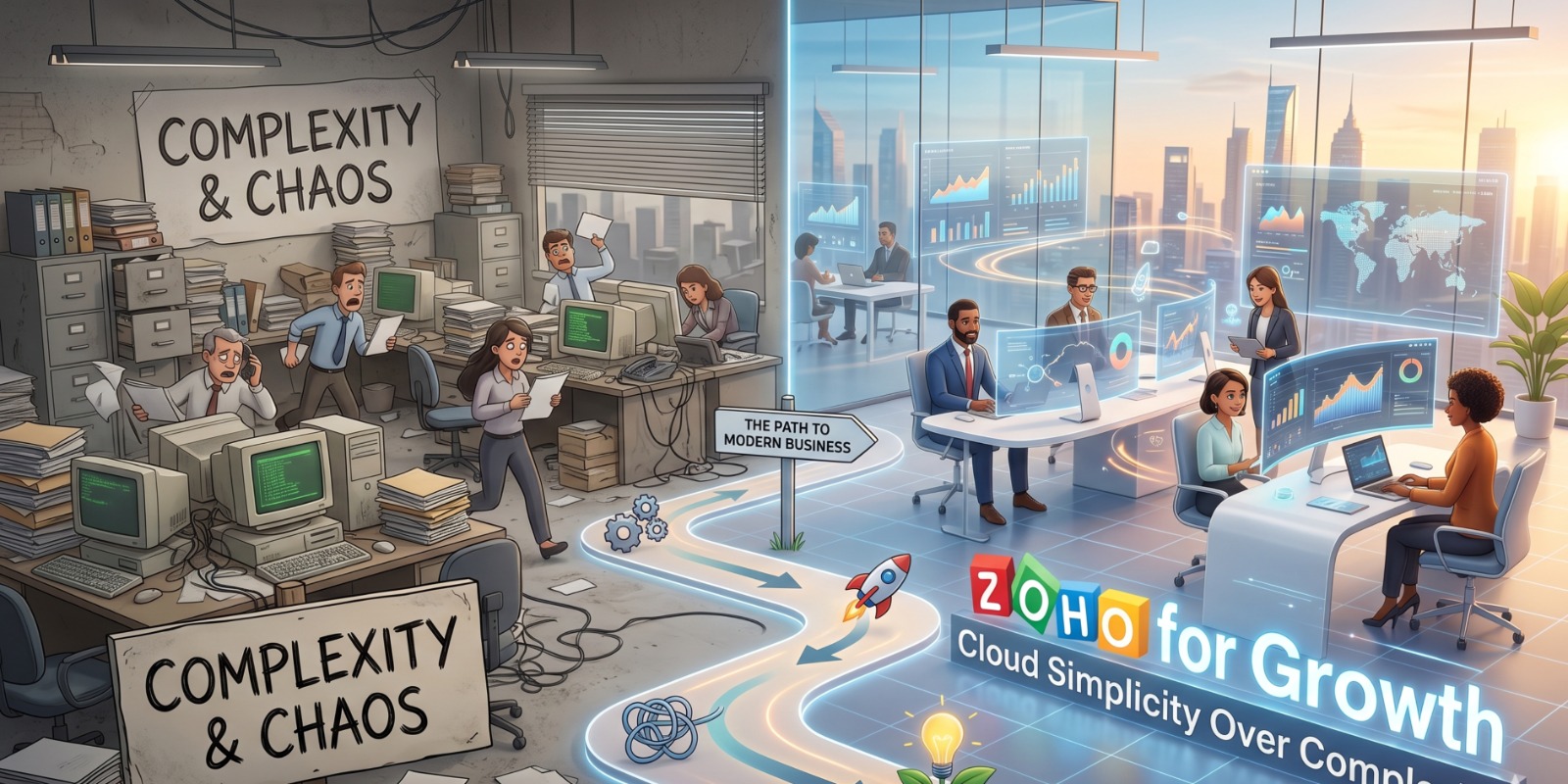
Why Businesses Are Choosing Simplicity Over Complexity
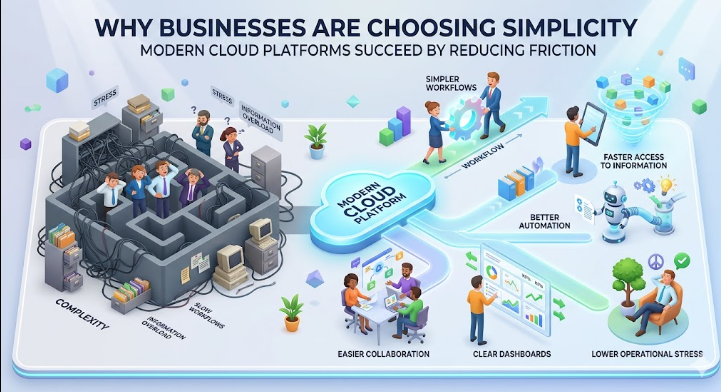
Interestingly, businesses are not looking for more complicated systems.
They want:
- Simpler workflows
- Faster access to information
- Better automation
- Easier collaboration
- Clear dashboards
- Lower operational stress
Modern cloud platforms succeed because they reduce friction instead of increasing it.
Conclusion: The Future Belongs to Connected Businesses
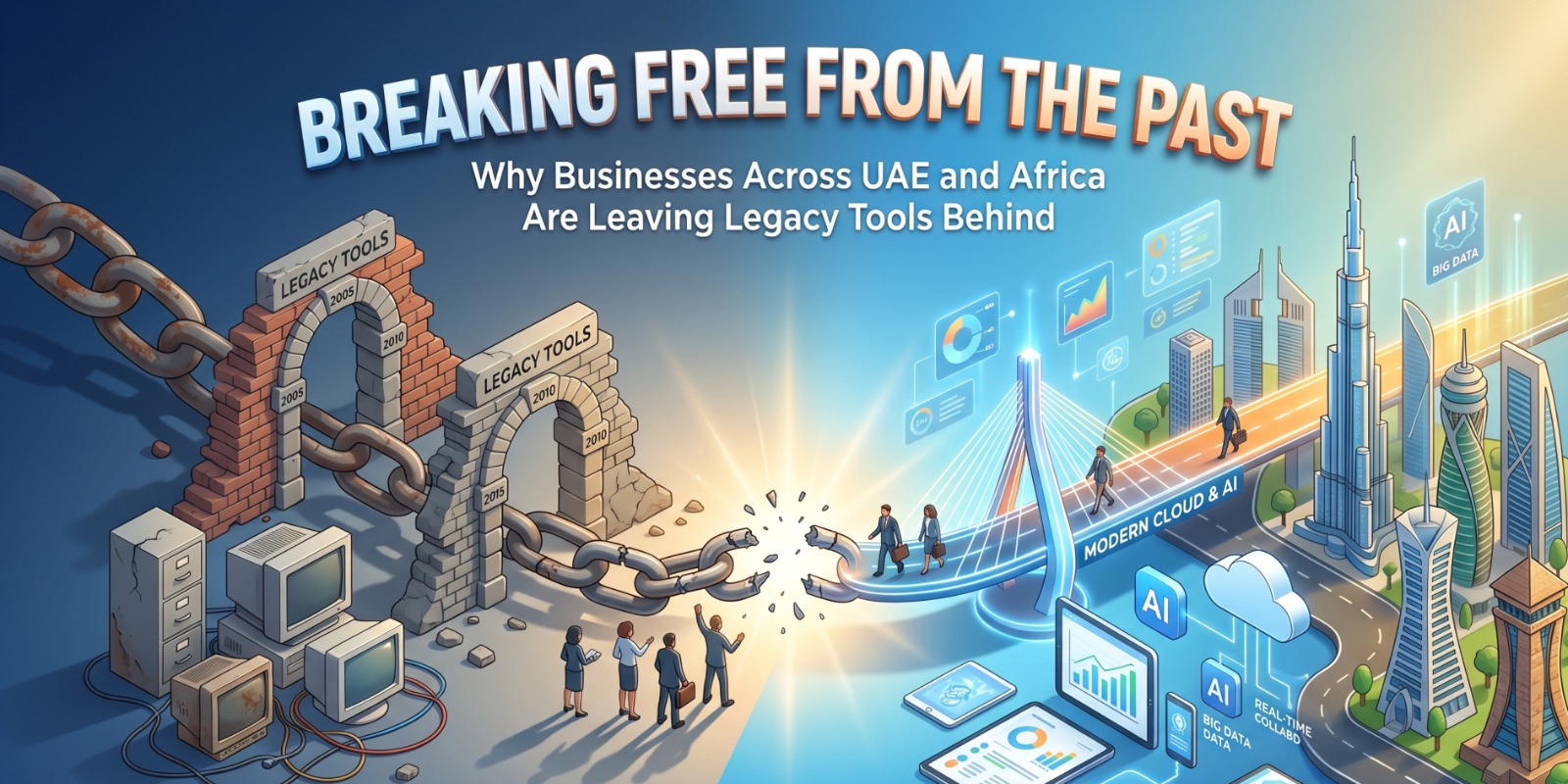
Tally played an important role in helping businesses digitize accounting. But the modern business environment demands more than bookkeeping.
Today’s companies need systems that connect operations, improve visibility, and support growth in real time.
That is why many organizations are gradually moving toward integrated platforms like Zoho and Odoo.
This transition is not about abandoning the past.
It is about preparing for the future.
And the future belongs to businesses that can move faster, operate smarter, and make decisions with clarity.



Post Comment