
Table of Contents
Growth Is Outpacing Old Systems
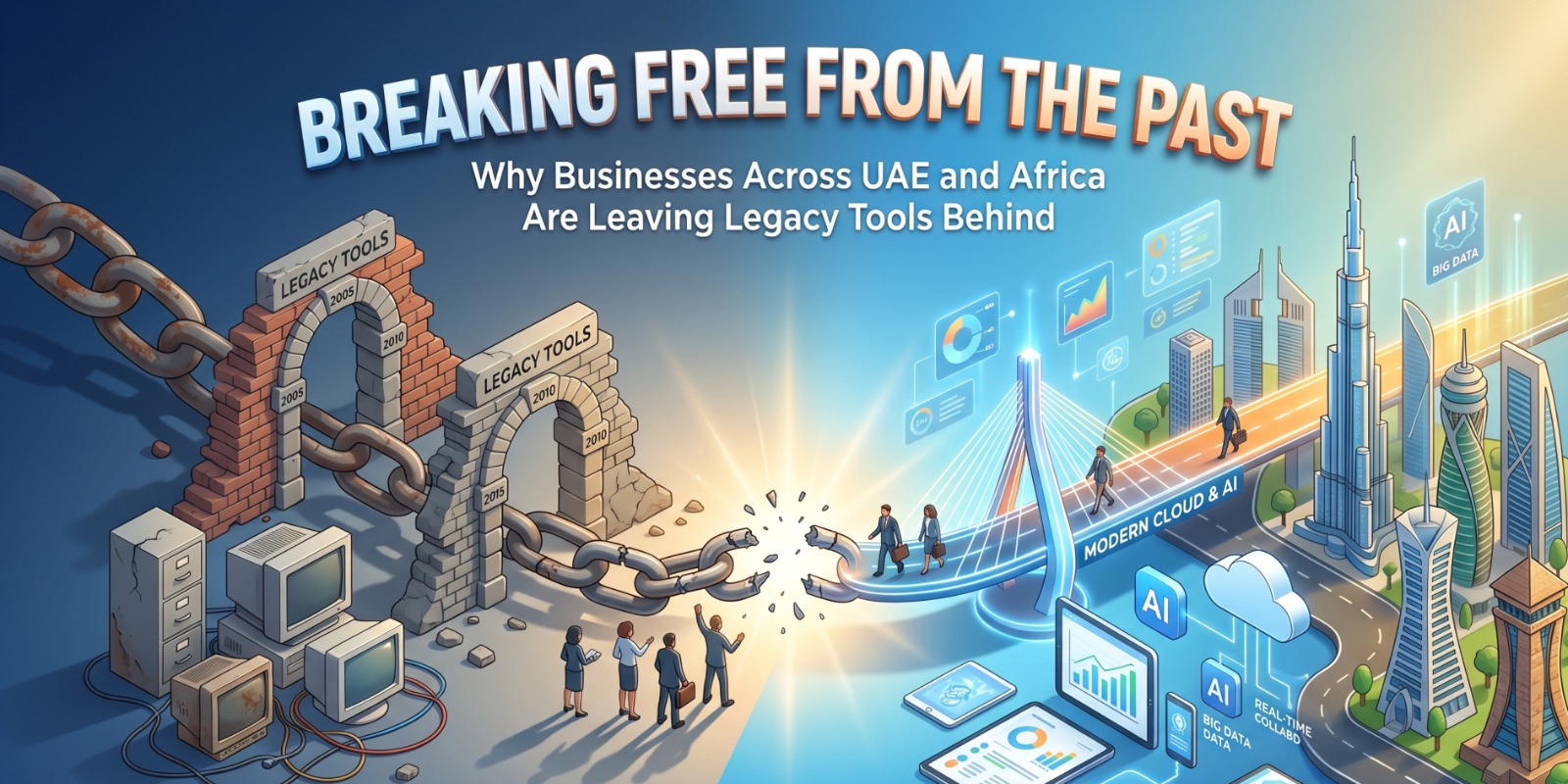
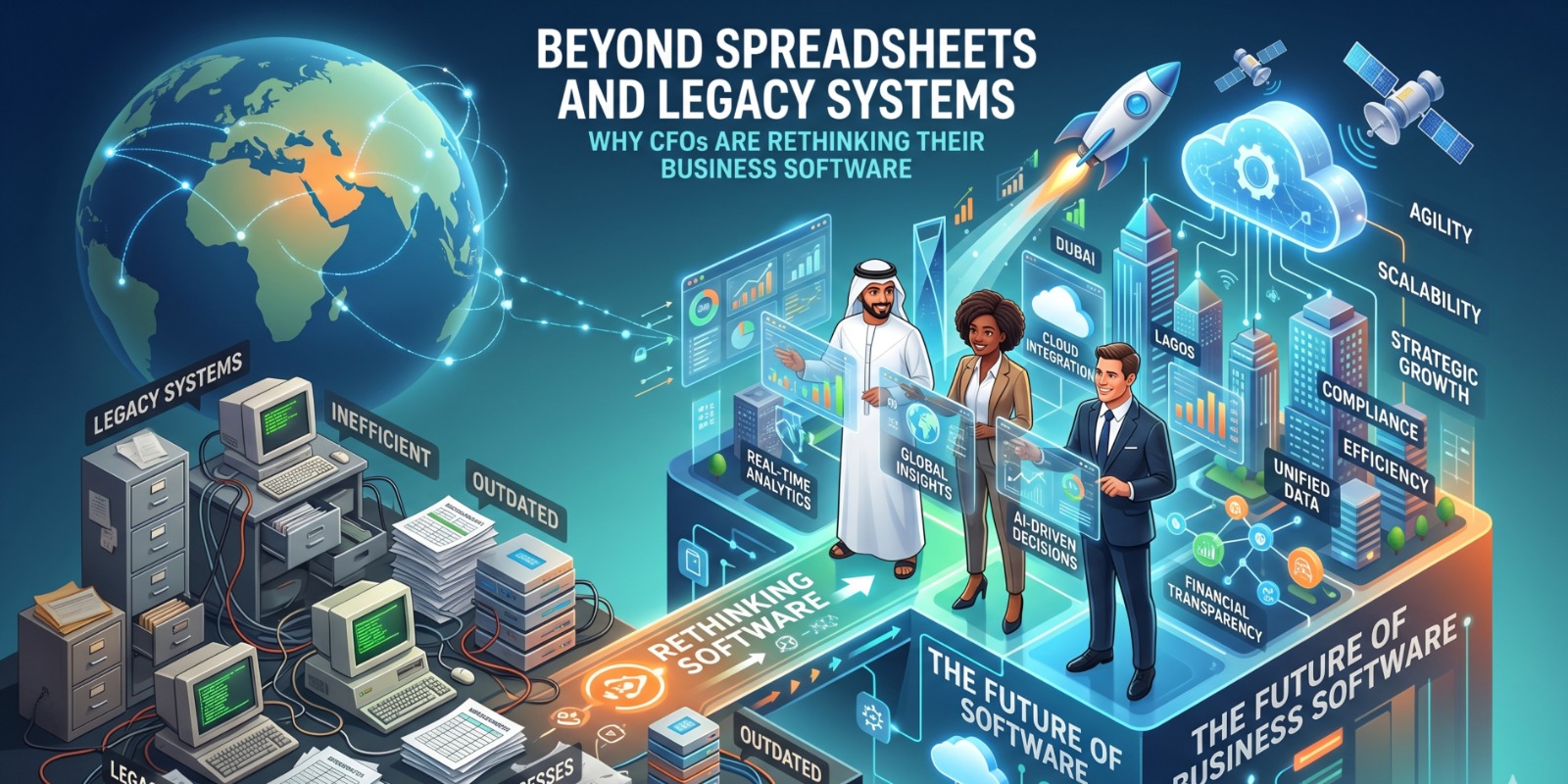
Across the UAE and Africa, businesses are expanding faster than ever. New markets are opening, digital adoption is accelerating, and competition is becoming more intense. But behind this growth, many companies are facing a quiet challenge—outdated systems that can no longer support modern operations.
For years, legacy tools helped businesses manage accounting, inventory, and basic workflows. But what worked in the past is now slowing companies down. Delayed reports, disconnected systems, and manual processes are creating bottlenecks at a time when speed and clarity are critical.
This is why more organizations are moving away from legacy systems and adopting modern platforms like Zoho—not just to upgrade technology, but to unlock growth.
The Legacy Problem: Systems Built for a Different Era
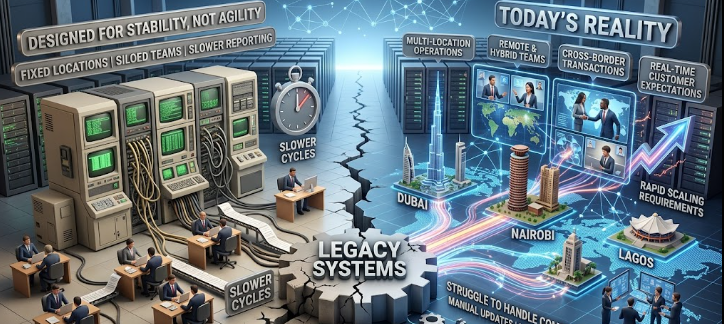
Legacy tools were designed for stability, not agility. They were built when businesses operated in fixed locations, teams worked in silos, and reporting cycles were slower.
Today’s reality is very different.
Businesses in Dubai, Nairobi, Lagos, and across emerging markets are dealing with:
- Multi-location operations
- Remote and hybrid teams
- Cross-border transactions
- Real-time customer expectations
- Rapid scaling requirements
Legacy systems struggle to handle this complexity. They often require manual updates, lack integration, and fail to provide real-time insights.
The result is not just inefficiency—it is missed opportunities.
Pain Points Driving the Shift
1. Lack of Real-Time Visibility
Business owners want to know what is happening today, not last month. But many legacy systems still rely on delayed reporting.
This creates uncertainty in decision-making. Leaders are forced to act on outdated information, which can affect revenue, operations, and customer experience.
2. Disconnected Tools and Data Silos
In many organizations, sales, finance, HR, and operations use different tools that do not communicate with each other.
This leads to:
- Duplicate data entry
- Inconsistent reports
- Communication gaps
- Time wasted in reconciliation
Instead of working as one system, the business operates in fragments.
3. High Maintenance and Hidden Costs
Legacy systems often require:
- On-premise infrastructure
- IT support for maintenance
- Expensive upgrades
- Limited flexibility
While they may appear cost-effective initially, the long-term expenses can be significant.
4. Slow Adaptation to Market Changes
Markets in the UAE and Africa are dynamic. Businesses need to adapt quickly to changing regulations, customer demands, and economic conditions.
Legacy tools, however, are rigid. Making changes can take weeks or even months, which slows down innovation.
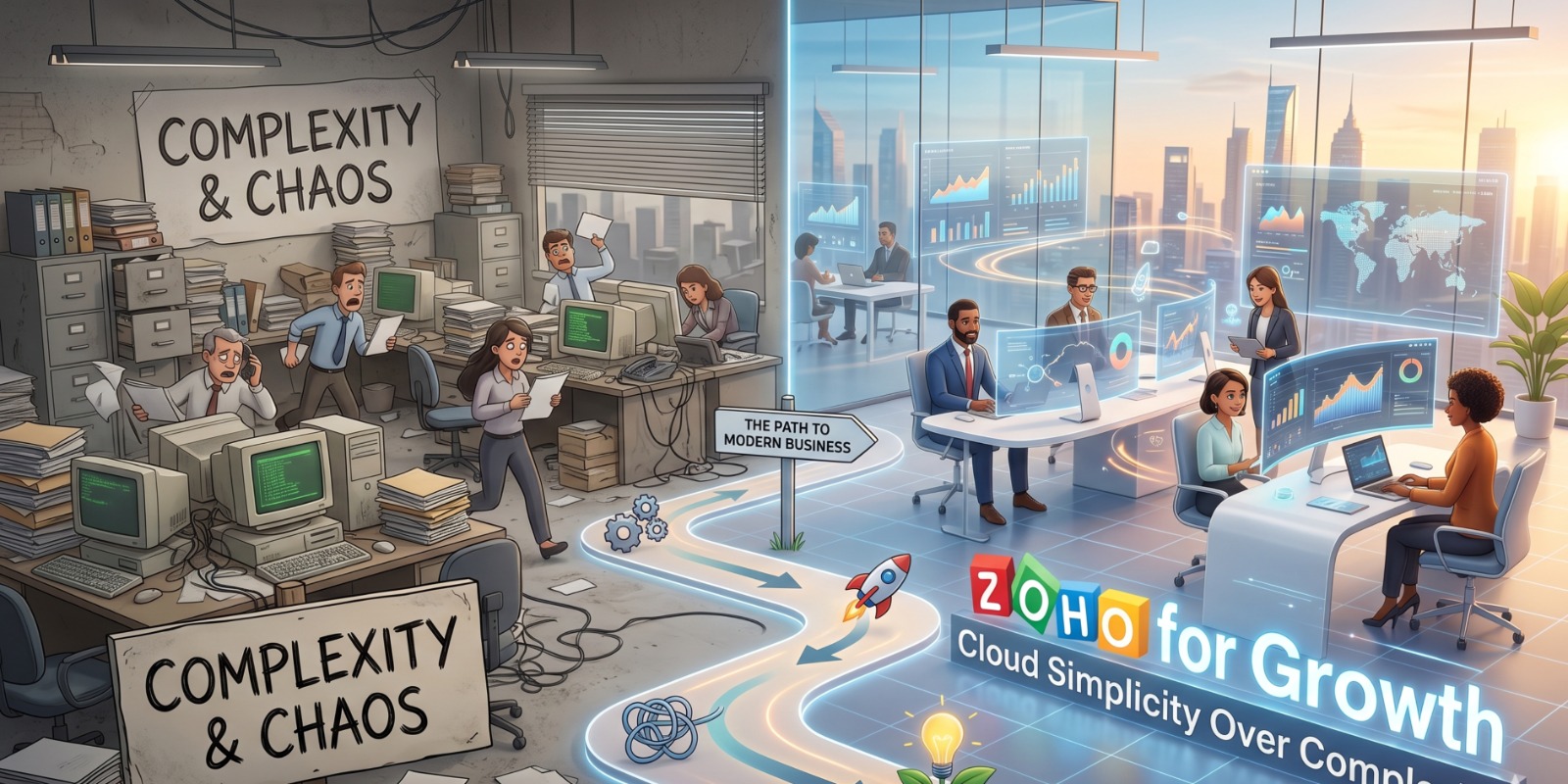
The Shift to Cloud Simplicity
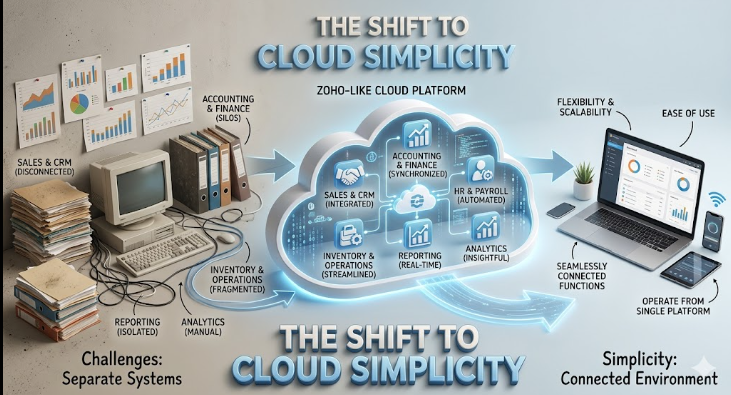
To overcome these challenges, businesses are adopting cloud-based platforms that offer flexibility, scalability, and ease of use.
Solutions like Zoho provide a connected environment where different business functions work together seamlessly.
Instead of managing separate systems, companies can operate from a single platform that integrates:
- Sales and CRM
- Accounting and finance
- HR and payroll
- Inventory and operations
- Reporting and analytics
This shift is not just about technology—it is about simplifying how businesses operate.
Case Study: Retail Business in UAE Transforms Operations
A mid-sized retail company in Dubai was using separate systems for sales tracking, accounting, and inventory management. Each department operated independently, leading to frequent discrepancies in data.
Challenges included:
- Stock mismatches between systems
- Delayed financial reporting
- Manual reconciliation processes
- Limited visibility into overall performance
After moving to a cloud-based integrated platform:
Within Four Months:
- Inventory accuracy improved significantly
- Financial reports became real-time
- Sales and finance teams aligned better
- Decision-making speed increased
- Operational errors reduced
The business was able to focus more on expansion rather than fixing internal inefficiencies.
Why UAE and Africa Are Leading This Transition

Digital-First Growth
Many businesses in these regions are skipping traditional phases and moving directly to modern digital systems. This allows them to adopt advanced tools without being tied to outdated infrastructure.
Cost Sensitivity with High Expectations
Companies want powerful systems but also need cost efficiency. Cloud platforms provide enterprise-level capabilities without heavy upfront investment.
Mobile-Driven Workforce
In many African markets and parts of the UAE, mobile access is essential. Cloud tools allow teams to work from anywhere, improving productivity and collaboration.
Rapid Market Expansion
Businesses are scaling quickly across cities and countries. They need systems that can grow with them without requiring complete overhauls.
The Human Impact: Less Stress, Better Productivity
The transition away from legacy tools is not just a technical upgrade—it directly affects people.
When systems improve:
- Employees spend less time on repetitive tasks
- Managers get faster approvals
- Teams collaborate more effectively
- Leadership gains confidence in data
This leads to a healthier work environment where teams can focus on meaningful work instead of struggling with processes.
Signs It’s Time to Move On from Legacy Systems
Businesses should consider upgrading if they experience:
- Frequent delays in reporting
- Multiple tools for different departments
- High dependency on spreadsheets
- Limited visibility into operations
- Slow approval processes
- Increasing maintenance costs
- Difficulty scaling operations
These are clear indicators that the current system is holding the business back.
The Competitive Advantage of Modern Systems
In today’s environment, efficiency is a competitive advantage.
Companies that adopt modern platforms can:
- Respond faster to market changes
- Improve customer experience
- Optimize internal operations
- Make data-driven decisions
- Scale without operational chaos
Those that remain on legacy systems risk falling behind.
Conclusion: The Future Belongs to Agile Businesses
The shift away from legacy tools is no longer optional—it is necessary for growth.
Businesses across the UAE and Africa are recognizing that outdated systems cannot support modern ambitions. By moving to integrated, cloud-based platforms like Zoho, they are not just upgrading technology—they are transforming how they operate.
In a fast-moving market, the ability to adapt quickly, make informed decisions, and operate efficiently defines success.
Legacy systems belong to the past.
The future belongs to businesses that are ready to move forward.



Post Comment