


Table of Contents
Across the GCC—Saudi Arabia, UAE, Qatar, Kuwait, Bahrain, and Oman—businesses are undergoing rapid digital transformation. Expansion across borders, regulatory pressure, cost control, and speed-to-market have made traditional on-premise ERP systems increasingly unfit for purpose. As a result, Cloud ERP has become the default choice for forward-looking GCC organizations.
This article explains why the shift is accelerating, what problems legacy ERP can no longer solve, and how modern cloud ERP platforms—most notably Odoo—are enabling scalable, compliant, and cost-efficient growth in the GCC.
The GCC Businesses Reality Has Changed
GCC companies today operate in a fundamentally different environment than a decade ago:
- Multi-country operations (UAE ↔ KSA ↔ Qatar)
- Multi-currency transactions
- Rapid regulatory updates (VAT, e-invoicing, compliance)
- Distributed teams and branches
- Pressure to reduce IT cost while increasing agility
Traditional ERP systems—installed on local servers and managed internally—were not designed for this pace.
Why On-Premise ERP Is Losing Relevance in the GCC
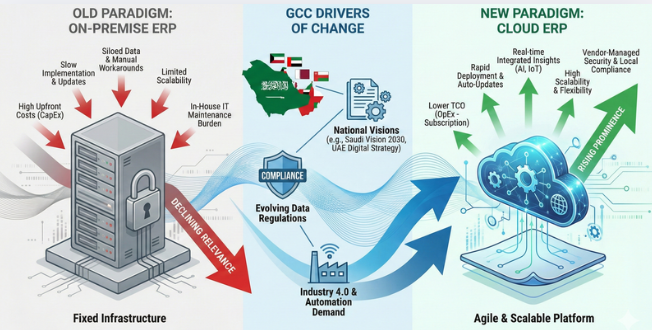
1. High Infrastructure and Maintenance Cost
On-premise ERP requires:
- Local servers
- Dedicated IT teams
- Regular upgrades and security patches
- Downtime planning
In the GCC, where businesses scale quickly, this model becomes expensive and inflexible.
2. Limited Scalability Across Countries
Adding a new country or branch often means:
- New servers
- Complex integrations
- Data consolidation delays
This slows expansion—especially problematic for GCC groups operating across multiple markets.
3. Compliance and Security Risk
Regulations such as:
- UAE VAT
- KSA ZATCA e-invoicing
- Data protection requirements
require frequent system updates. Cloud ERP providers roll these updates centrally and faster.
Cloud ERP: Built for the GCC Growth Model
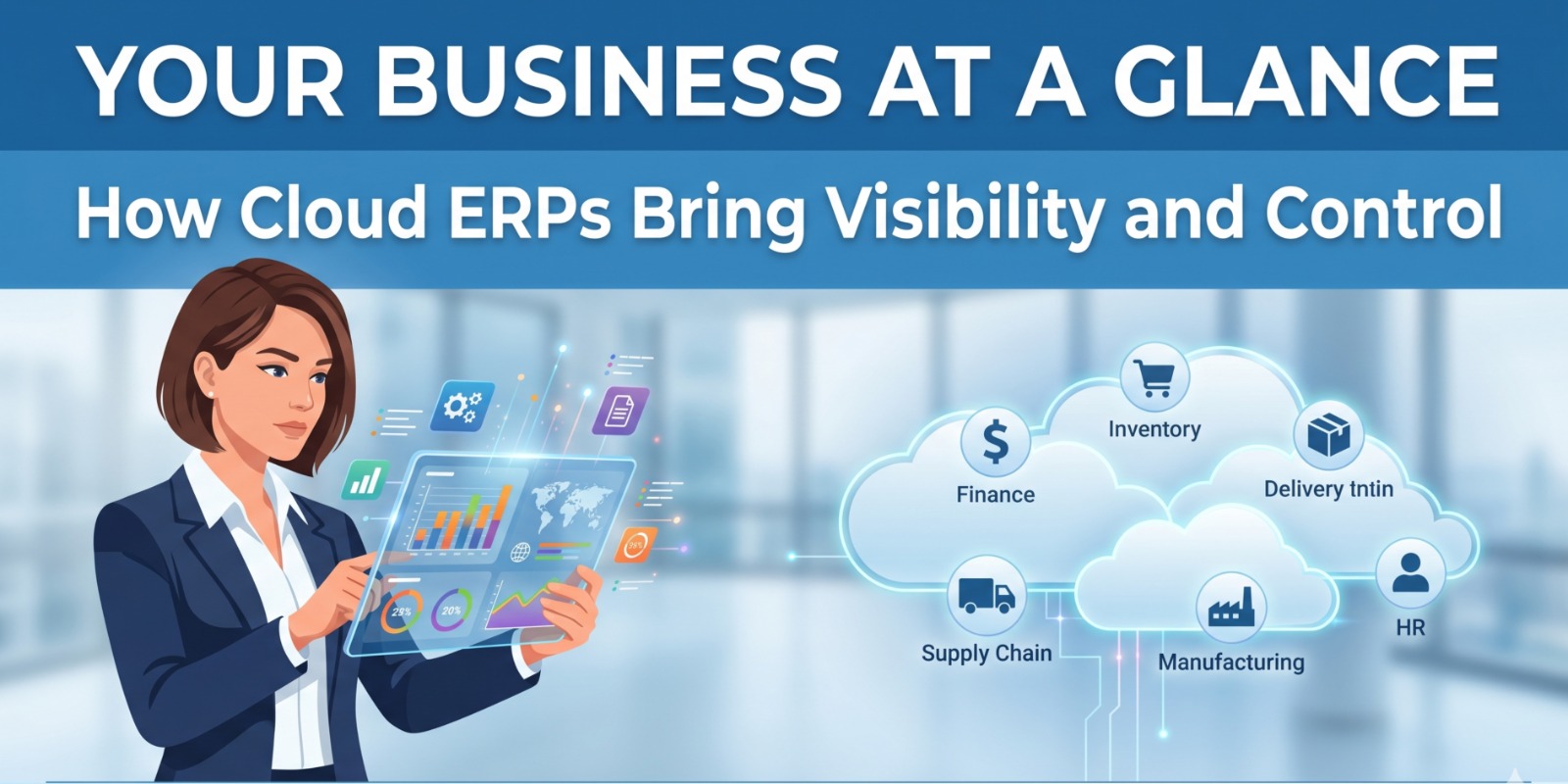
Cloud ERP shifts ERP from a fixed asset to a strategic service.
Key Advantages for GCC Businesses
| Capability | On-Premise ERP | Cloud ERP |
| Upfront cost | Very high | Low |
| Scalability | Limited | Instant |
| Multi-country ops | Complex | Native |
| Security updates | Manual | Automatic |
| Remote access | Restricted | Anywhere |
Why GCC CFOs and CEOs Prefer Cloud ERP
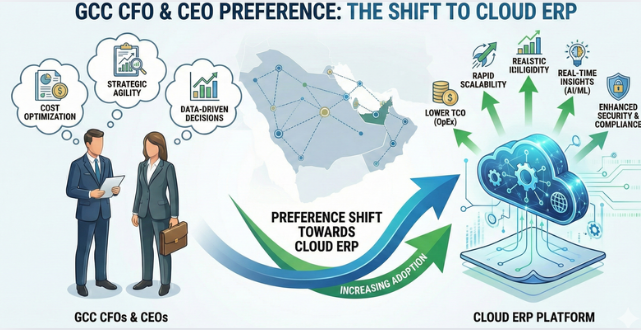
Predictable Cost Structure
Cloud ERP replaces capital expenditure with operating expenditure:
- No servers
- No hardware refresh
- Pay only for users and modules
This is attractive to GCC CFOs focused on cash flow and ROI.
Faster Decision-Making
Cloud ERP provides:
- Real-time dashboards
- Consolidated multi-country reporting
- Live inventory and cash-flow visibility
Executives no longer wait for end-of-month reports.
Why Odoo Is Gaining Strong Traction in the GCC
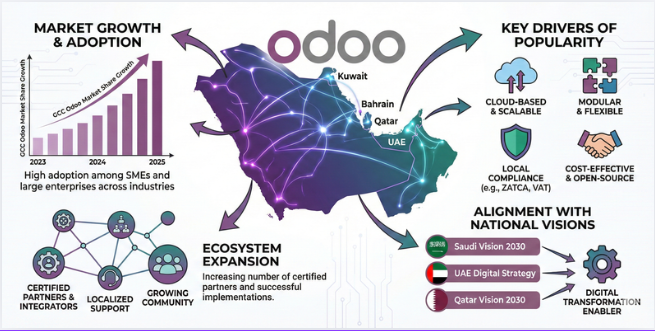
Among cloud ERP platforms, Odoo stands out in the GCC because it aligns closely with regional business needs.
1. Modular Cloud ERP
GCC businesses can start with:
- Accounting
- Sales
- Inventory
And later expand into:
- HR & Payroll
- Manufacturing
- POS
- eCommerce
No forced complexity on day one.
2. GCC-Ready Compliance
Odoo supports:
- UAE VAT
- KSA ZATCA-ready workflows
- Multi-currency and multi-company accounting
- Arabic and English interfaces
This localization is critical in the region.
3. Multi-Country Control from One System
A single Odoo cloud instance can manage:
- UAE operations
- Saudi operations
- Consolidated financial reporting
Without separate ERP deployments.
Real-Life GCC Case Study
Scenario: Regional Trading Group (UAE + KSA)
Before Cloud ERP
- Separate accounting systems
- Manual consolidation
- Delayed compliance updates
- High IT overhead
After Moving to Cloud ERP (Odoo)
- Unified cloud system
- Real-time consolidated reports
- Faster VAT and e-invoicing compliance
- Reduced IT dependency
Business Impact (Within 6 Months)
- 35% reduction in operational overhead
- Faster month-end closing
- Improved audit readiness
- Better cross-country visibility
Cloud ERP and Data Security: A GCC Concern
One common concern in the GCC is data security. In practice, cloud ERP is often more secure than on-premise systems:
- Enterprise-grade data centers
- Regular security audits
- Encrypted data
- Disaster recovery built-in
Most mid-sized GCC companies cannot match this level of security internally.
Strategic Impact: Cloud ERP as a Growth Enabler
Cloud ERP is not just an IT decision—it is a business strategy.
It enables:
- Faster market entry
- Easier mergers and acquisitions
- Better compliance management
- Scalable operations without system re-architecture
In fast-moving GCC markets, agility is a competitive advantage.
Final Takeaway
GCC businesses are moving to Cloud ERP because the region demands:
- Speed
- Scalability
- Compliance
- Cost efficiency
Traditional ERP systems slow growth. Cloud ERP accelerates it.
For many GCC organizations, Odoo represents a practical, scalable, and region-ready cloud ERP choice—one that supports today’s operations and tomorrow’s expansion.
Ready to Evaluate Cloud ERP for Your GCC Business?
If your ERP struggles with multi-country operations, compliance updates, or rising IT costs, it may be time to reassess.
Book a Cloud ERP consultation and see how modern GCC businesses are running operations—without infrastructure headaches.




Post Comment