

Table of Contents
Growth Becomes Hard When Visibility Is Low

Many businesses do not struggle because they lack effort. They struggle because leaders cannot clearly see what is happening inside the company.
Sales may be growing, but cash flow feels tight. Inventory may look healthy, but key products go out of stock. Teams stay busy, yet deadlines keep slipping. Managers ask for reports, but by the time those reports arrive, the numbers are already outdated.
This is a common problem in modern business. Information is scattered across spreadsheets, emails, departments, and disconnected software. When leaders cannot see the full picture, decisions become slower, risk increases, and growth becomes harder to manage.
That is why more companies are moving to cloud ERP systems like Odoo, Zoho, and similar platforms. They do not just store data. They bring visibility, structure, and control across the entire organization.
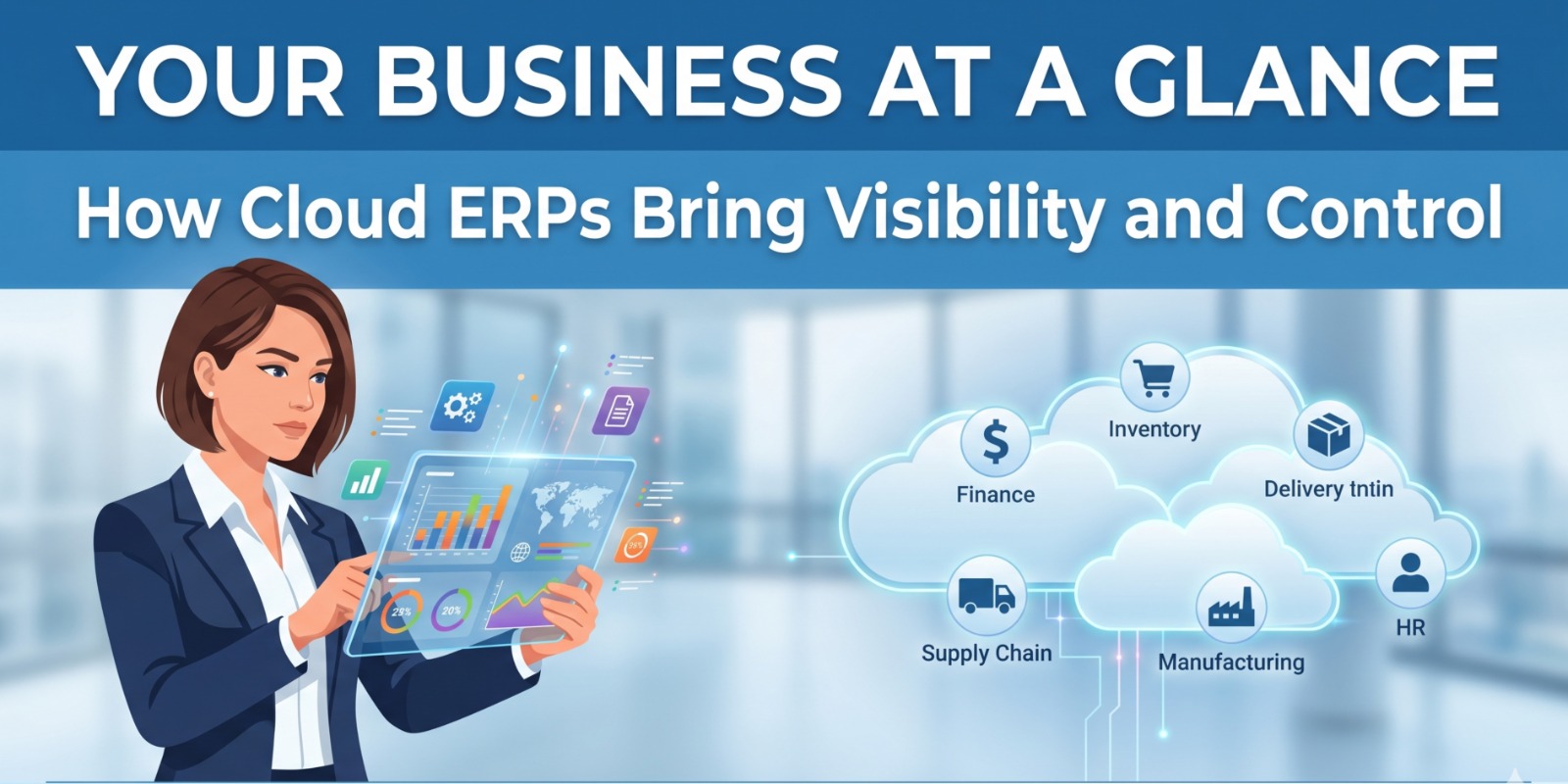
In simple terms, cloud ERP helps you see your business at a glance.
What Business Visibility Really Means
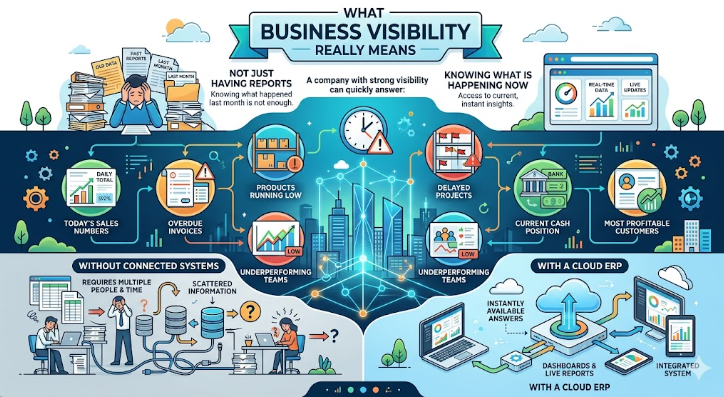
Business visibility is not just having reports. It means knowing what is happening now, not what happened last month.
A company with strong visibility can quickly answer questions like:
- What are today’s sales numbers?
- Which invoices are overdue?
- Which products are running low?
- Which projects are delayed?
- Which teams are underperforming?
- What is our current cash position?
- Which customers are most profitable?
Without connected systems, getting these answers may require several people, multiple spreadsheets, and too much time.
With a cloud ERP, these answers can often be available instantly through dashboards and live reports.
The Hidden Cost of Poor Visibility
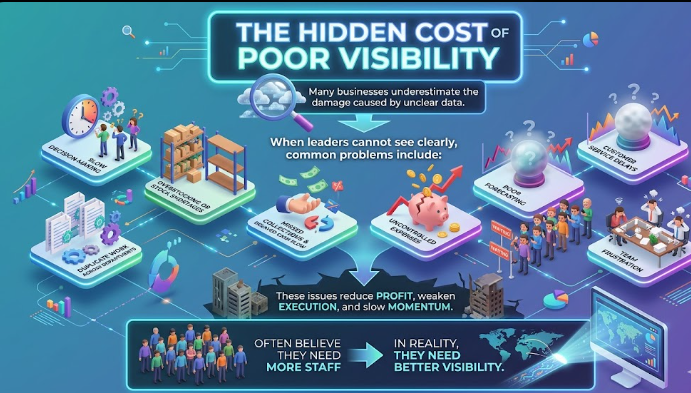
Many businesses underestimate the damage caused by unclear data.
When leaders cannot see what is happening clearly, common problems include:
- Slow decision-making
- Overstocking or stock shortages
- Missed collections and delayed cash flow
- Duplicate work across departments
- Uncontrolled expenses
- Poor forecasting
- Customer service delays
- Team frustration
These issues do not always look dramatic at first. But over time, they reduce profit, weaken execution, and slow momentum.
Often, businesses believe they need more staff. In reality, they need better visibility.
How Cloud ERP Changes the Game
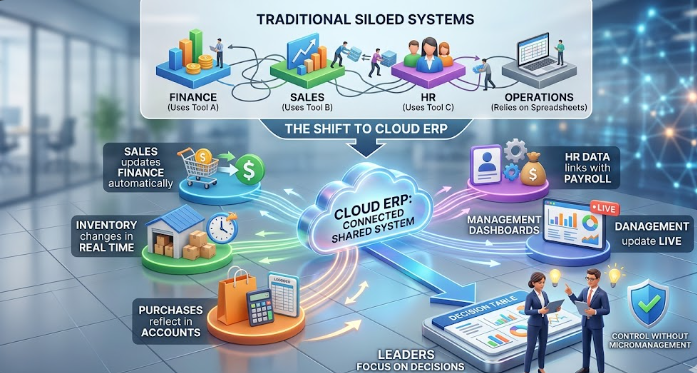
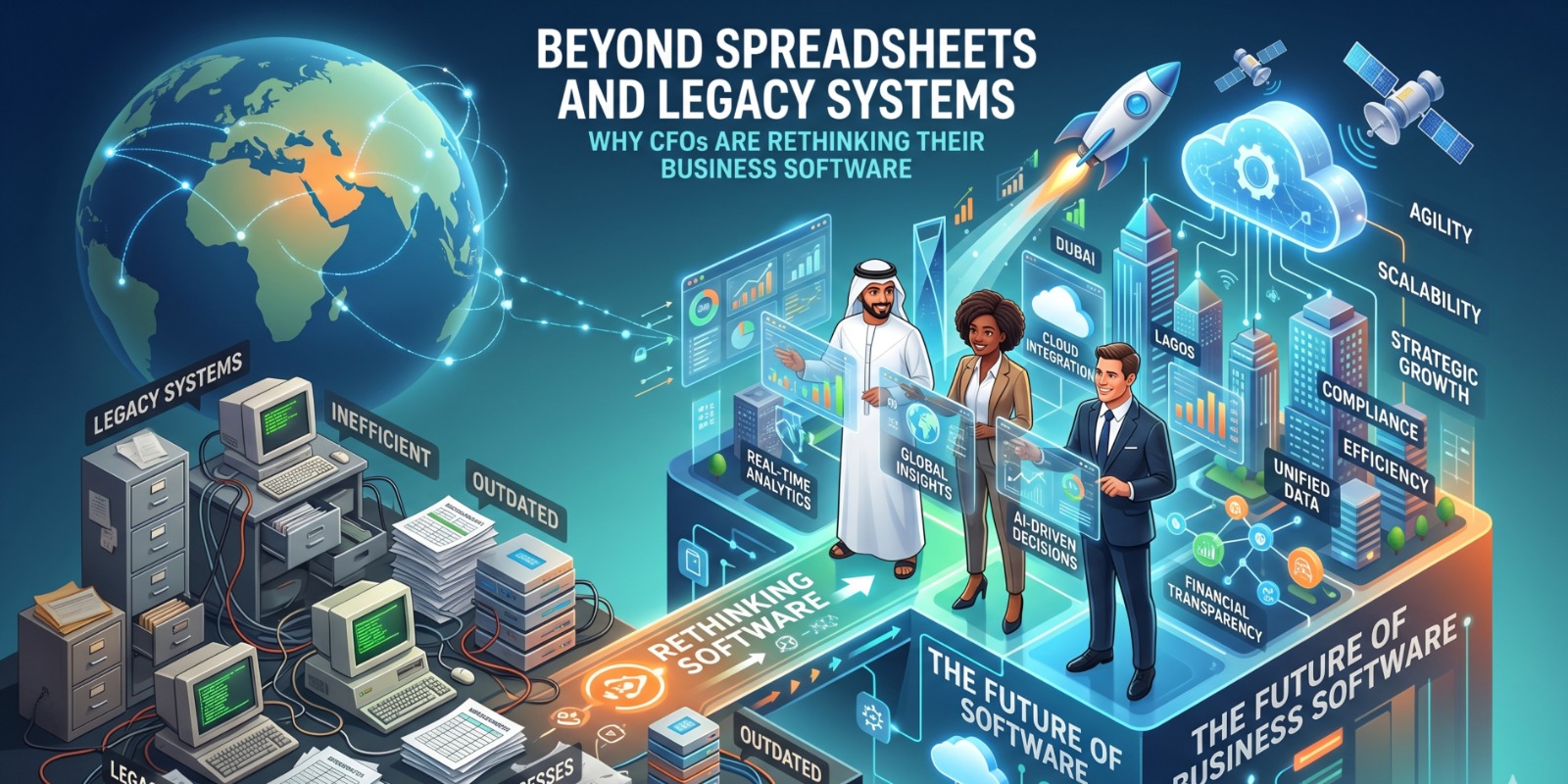
Traditional systems often operate in silos. Finance uses one tool. Sales uses another. HR uses something else. Operations rely on spreadsheets.
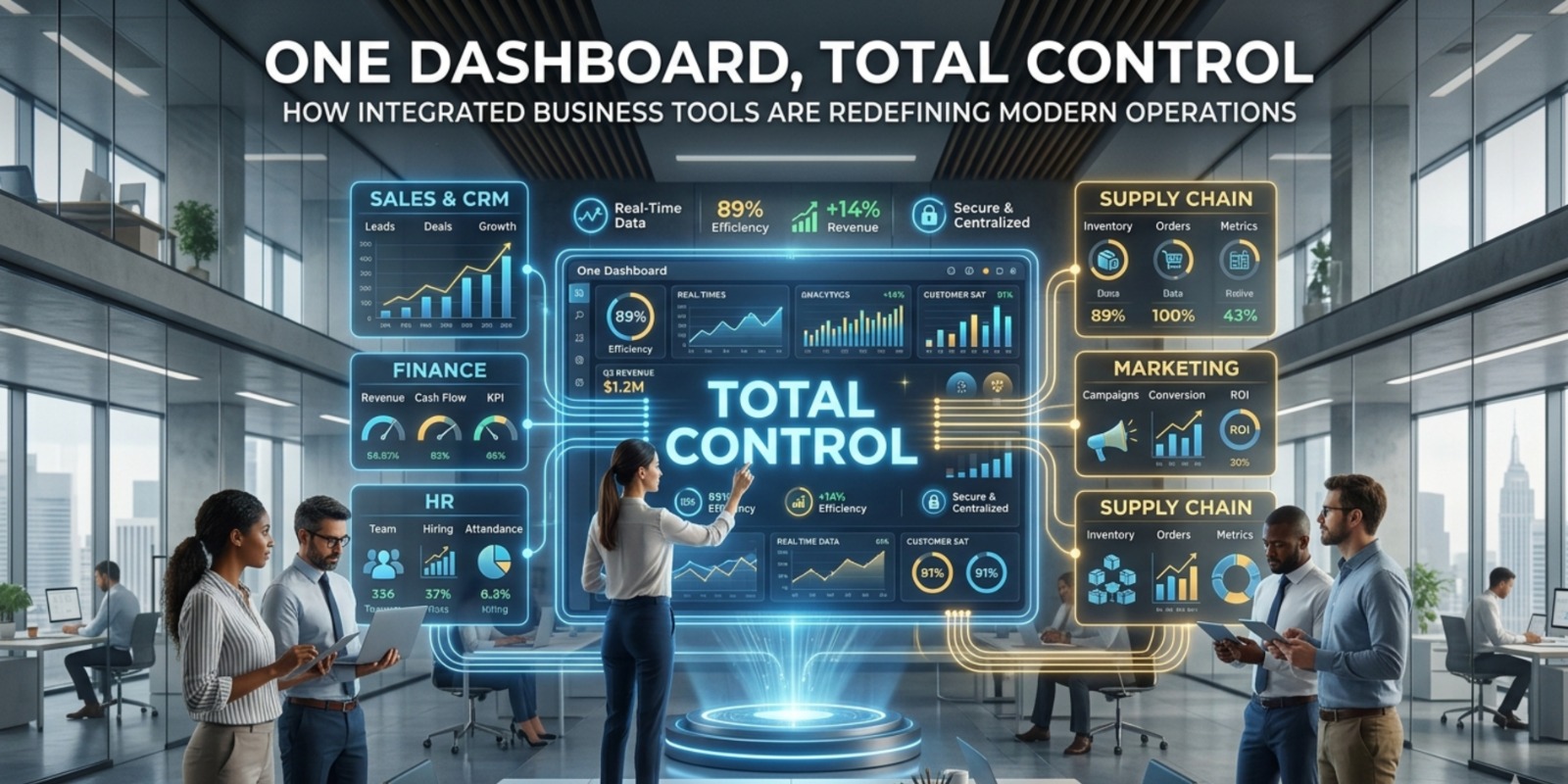
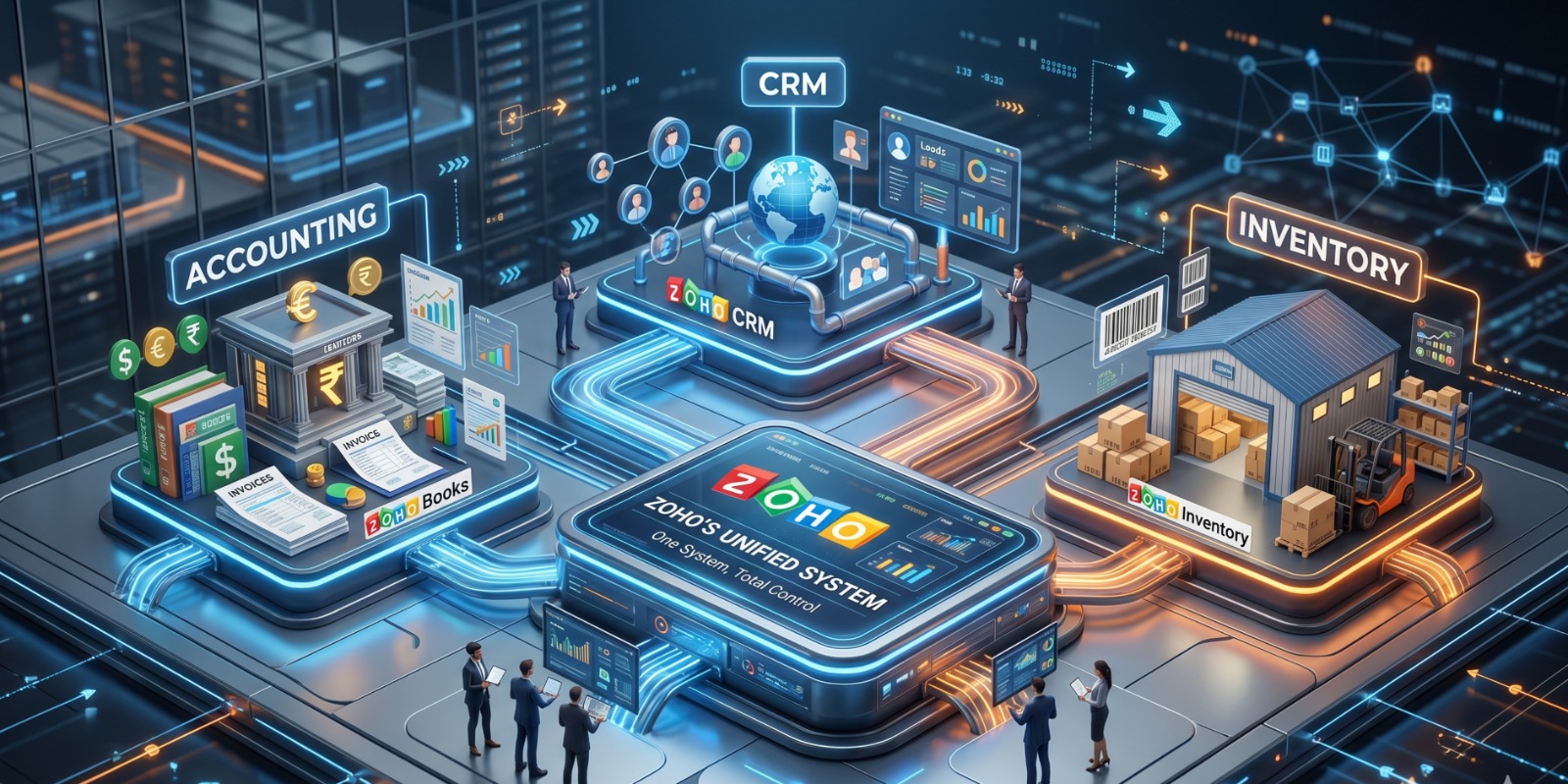
Cloud ERP connects these functions into one shared system.
That means:
- Sales updates finance automatically
- Inventory changes in real time
- Purchases reflect in accounts
- HR data links with payroll
- Management dashboards update live
Instead of chasing information, leaders can focus on decisions.
This shift creates control without micromanagement.
Visibility for Leadership Teams
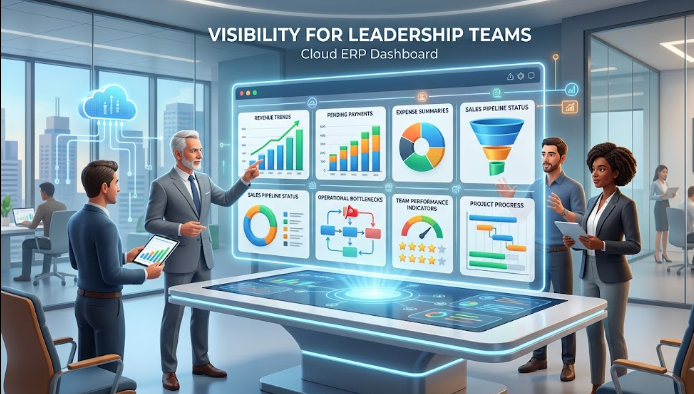
For owners, CEOs, directors, and managers, time matters. They should not spend hours collecting updates from different departments.
Cloud ERP dashboards can provide leadership with a clean snapshot of the business:
- Revenue trends
- Pending payments
- Expense summaries
- Sales pipeline status
- Operational bottlenecks
- Team performance indicators
- Project progress
This allows leaders to identify issues early instead of reacting late.
Good management becomes easier when information is clear.
Case Study: Trading Company Regains Control
A mid-sized trading business with branches in two cities was growing quickly but facing internal confusion.
The company had:
- Separate accounting software
- Excel-based inventory tracking
- Manual sales reporting
- Delayed management meetings due to missing numbers
- Frequent stock mismatches
As the business expanded, control began to weaken.
After implementing a cloud ERP system, the company achieved major improvements within six months:
Results:
- Daily sales dashboards available instantly
- Stock levels visible across both branches
- Faster invoice tracking and collections
- Monthly reporting reduced from 8 days to 2 days
- Better purchasing decisions through trend analysis
The biggest change was confidence. Leadership finally had one version of the truth.
Why Cloud Matters More Than Ever
Older systems often depend on local servers, manual backups, and office-only access. That model no longer fits how businesses operate today.
Modern companies need:
- Remote access
- Multi-location collaboration
- Mobile dashboards
- Automatic updates
- Secure cloud backups
- Real-time decision-making
Cloud ERP delivers this flexibility.
Whether a manager is in the office, at home, traveling, or visiting a client, they can still monitor the business and act quickly.
That level of access has become a competitive advantage.
Control Without Complexity
Some business owners avoid ERP because they fear complexity.
This concern is understandable. Older ERP systems were expensive, rigid, and difficult to use.
Modern cloud ERPs are different. They are designed to be more practical, scalable, and user-friendly.
Businesses can start with core modules such as:
- Finance
- CRM
- Inventory
- Purchasing
- HR
- Reporting
Then expand gradually as needed.
This gives companies control without overwhelming teams.
Signs Your Business Needs Better Visibility
If any of these sound familiar, your business may be ready for a cloud ERP:
- Reports take too long to prepare
- Different departments show different numbers
- Owners constantly ask for updates
- Stock issues happen unexpectedly
- Collections feel unmanaged
- Team productivity is unclear
- Growth feels messy behind the scenes
- Too much dependence on spreadsheets
These are signals that systems need to evolve.
Visibility Improves Culture Too
Better systems do more than improve reporting.
They improve workplace culture.
When teams have clear processes and reliable information:
- Fewer arguments over numbers
- Faster approvals
- Better accountability
- Less confusion
- Stronger collaboration
- Reduced stress during month-end or audits
Employees perform better when systems support them.
That means ERP is not only a technology investment. It is an operational and people investment.
Choosing the Right Cloud ERP
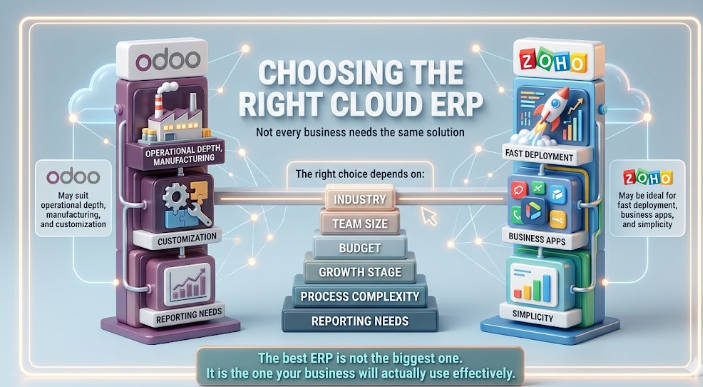
Not every business needs the same solution.
For some companies, Odoo may suit operational depth, manufacturing, and customization. For others, Zoho may be ideal for fast deployment, business apps, and simplicity.
The right choice depends on:
- Industry
- Team size
- Budget
- Growth stage
- Process complexity
- Reporting needs
The best ERP is not the biggest one. It is the one your business will actually use effectively.
Final Thoughts: What You Can See, You Can Improve
Many businesses operate with talent, effort, and ambition—but limited visibility.
That creates unnecessary risk.
When leaders can clearly see sales, cash flow, inventory, operations, and team performance in one place, better decisions follow naturally.
That is the real value of cloud ERP systems.
They help you move from guessing to knowing. From reacting to leading. From confusion to control.
Your business does not just need more activity.
It needs clarity at a glance.



Post Comment