

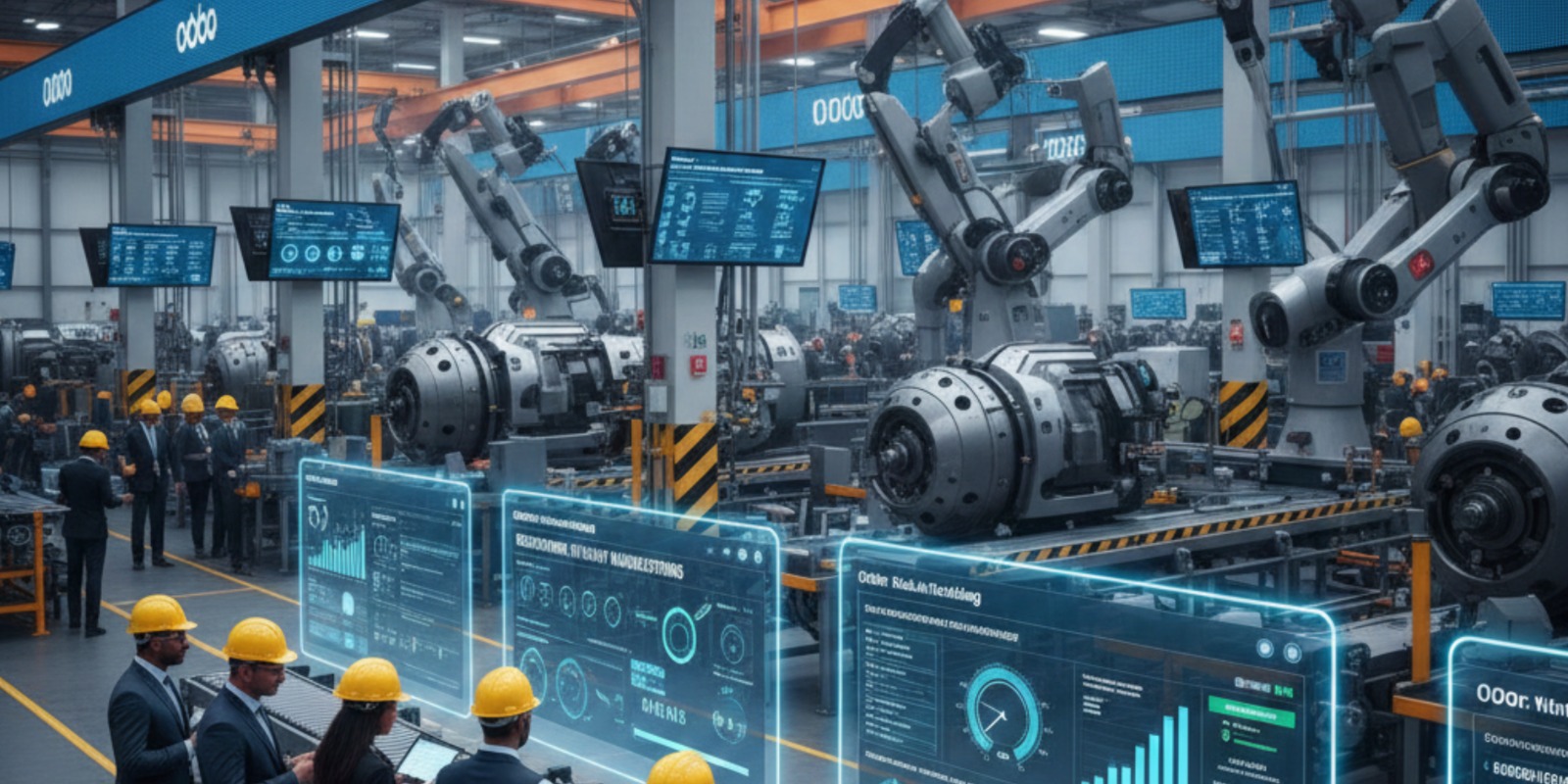
From Reactive Firefighting to Predictive Operational Control
Table of Contents
In industrial and heavy manufacturing, downtime is not a minor inconvenience — it is a direct financial event. Every unplanned machine stoppage disrupts production schedules, inflates labor cost, delays shipments, and compresses margins. For operations managers and maintenance teams, the challenge is persistent: How do we detect issues before they escalate and respond in real time instead of reacting hours later?
Traditional shop floor management systems often rely on manual logging, delayed reporting, and fragmented data between maintenance, production, and inventory modules. The absence of real-time visibility creates operational blind spots. Modern manufacturers are shifting toward integrated ERP-driven shop floor monitoring, and Odoo is emerging as a practical solution to close that visibility gap.
The Hidden Cost of Downtime
Downtime impacts manufacturing performance across multiple layers:
- Lost production output
- Idle workforce hours
- Emergency maintenance expenses
- Delayed customer deliveries
- Lower equipment lifespan
Operational Impact Snapshot
| Downtime Driver | Immediate Effect | Long-Term Impact |
| Equipment failure | Production halt | Revenue loss |
| Delayed maintenance | Higher repair cost | Asset degradation |
| Manual reporting | Slow decision-making | Repeated failures |
| Disconnected systems | Poor coordination | Low OEE |
For heavy manufacturing plants operating continuous production cycles, even one hour of unplanned downtime can translate into thousands of dollars in loss.
Why Traditional Systems Fail Operations Teams
Legacy ERP or standalone maintenance tools often operate in silos. Production teams log issues separately. Maintenance teams respond based on manual tickets. Procurement is notified only after part shortages occur.
Traditional Downtime Flow
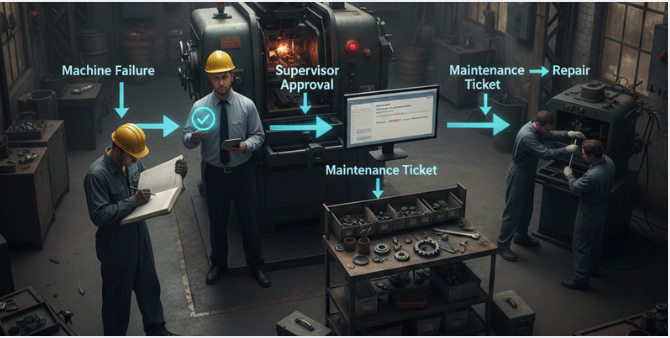
This reactive chain introduces time lag at every step. There is no consolidated dashboard providing live production and equipment health visibility.
Real-Time Shop Floor Monitoring with Odoo
Odoo integrates Manufacturing (MRP), Maintenance, Inventory, and Quality modules into a unified operational framework. This enables operations and maintenance teams to view machine status, work orders, spare part availability, and maintenance schedules in one interface.
Modern Monitoring Flow in Odoo
Machine Status Data
↓
Work Order Tracking
↓
Maintenance Alerts (Preventive & Corrective)
↓
Spare Parts Availability Check
↓
Real-Time Operations Dashboard
Instead of reacting after breakdowns, teams receive automated alerts based on maintenance intervals and usage data.
Key Features for Operations & Maintenance Teams
| Feature | Operational Benefit |
| Live Work Order Tracking | Immediate production visibility |
| Preventive Maintenance Scheduling | Reduced unexpected breakdowns |
| IoT Integration Capability | Real-time equipment data capture |
| Spare Parts Inventory Sync | Faster repair turnaround |
| OEE Dashboard | Performance measurement clarity |
The integration between production and maintenance modules eliminates interdepartmental delays.
Comparative View: Legacy vs Odoo Shop Floor Monitoring
| Parameter | Traditional Setup | Odoo Integrated ERP |
| Downtime Reporting | Manual | Automated & Real-time |
| Maintenance Planning | Reactive | Preventive & Scheduled |
| Spare Part Coordination | Disconnected | Inventory-Linked |
| Production Visibility | Delayed | Live Dashboard |
| OEE Tracking | External tools | Built-in Analytics |
The difference lies in response time. Odoo compresses the gap between detection and action.
Case Study: Heavy Equipment Manufacturer
A mid-sized heavy equipment manufacturing plant operating CNC machines and assembly lines, experienced:
- Average 14% downtime rate
- Manual maintenance logs
- Frequent spare part shortages
- Delayed production reporting
After implementing Odoo shop floor monitoring:
- Downtime reduced to 8% within six months
- Preventive maintenance compliance increased by 40%
- Spare part availability improved through automated reordering
- OEE improved by 18%
The transformation was driven by real-time work order visibility combined with maintenance automation.
Performance KPI Improvement
| KPI | Before Odoo | After Odoo |
| Downtime Rate | 14% | 8% |
| Preventive Maintenance Compliance | 52% | 92% |
| Mean Time to Repair (MTTR) | High | Reduced by 25% |
| OEE | 63% | 81% |
Operations leaders gained daily dashboard access instead of waiting for weekly summary reports.
Architecture Overview
IoT / Manual Machine Input
↓
Odoo MRP Module
↓
Maintenance Module
↓
Inventory (Spare Parts)
↓
Executive Dashboard (OEE, Downtime, MTTR)
This closed-loop architecture ensures equipment health data directly influences maintenance and procurement decisions.
Strategic Advantages for Industrial Plants
- Reduced unplanned downtime
- Lower maintenance cost
- Improved production schedule reliability
- Better cross-functional coordination
- Data-driven capital expenditure decisions
For maintenance teams, Odoo reduces firefighting scenarios. For operations leaders, it provides predictable output metrics.
The Shift Toward Predictive Manufacturing
Heavy manufacturing is increasingly aligning with Industry 4.0 principles. Real-time monitoring, machine connectivity, and centralized dashboards are becoming baseline requirements rather than differentiators.
Odoo’s modular framework allows integration with IoT gateways and advanced analytics tools. This opens the path toward predictive maintenance and data-driven operational planning.
Executive Perspective
Downtime is not just a technical issue; it is a profitability metric. Plants that rely on delayed reporting and manual maintenance logs operate in a reactive mode. Those leveraging integrated ERP monitoring systems gain operational control.
For industrial manufacturers seeking to reduce downtime, improve OEE, and align maintenance with production goals, Odoo offers a scalable and practical platform.
The question for operations leaders is straightforward:
Are you monitoring your shop floor in real time — or discovering problems after production stops?





Post Comment