
Table of Contents
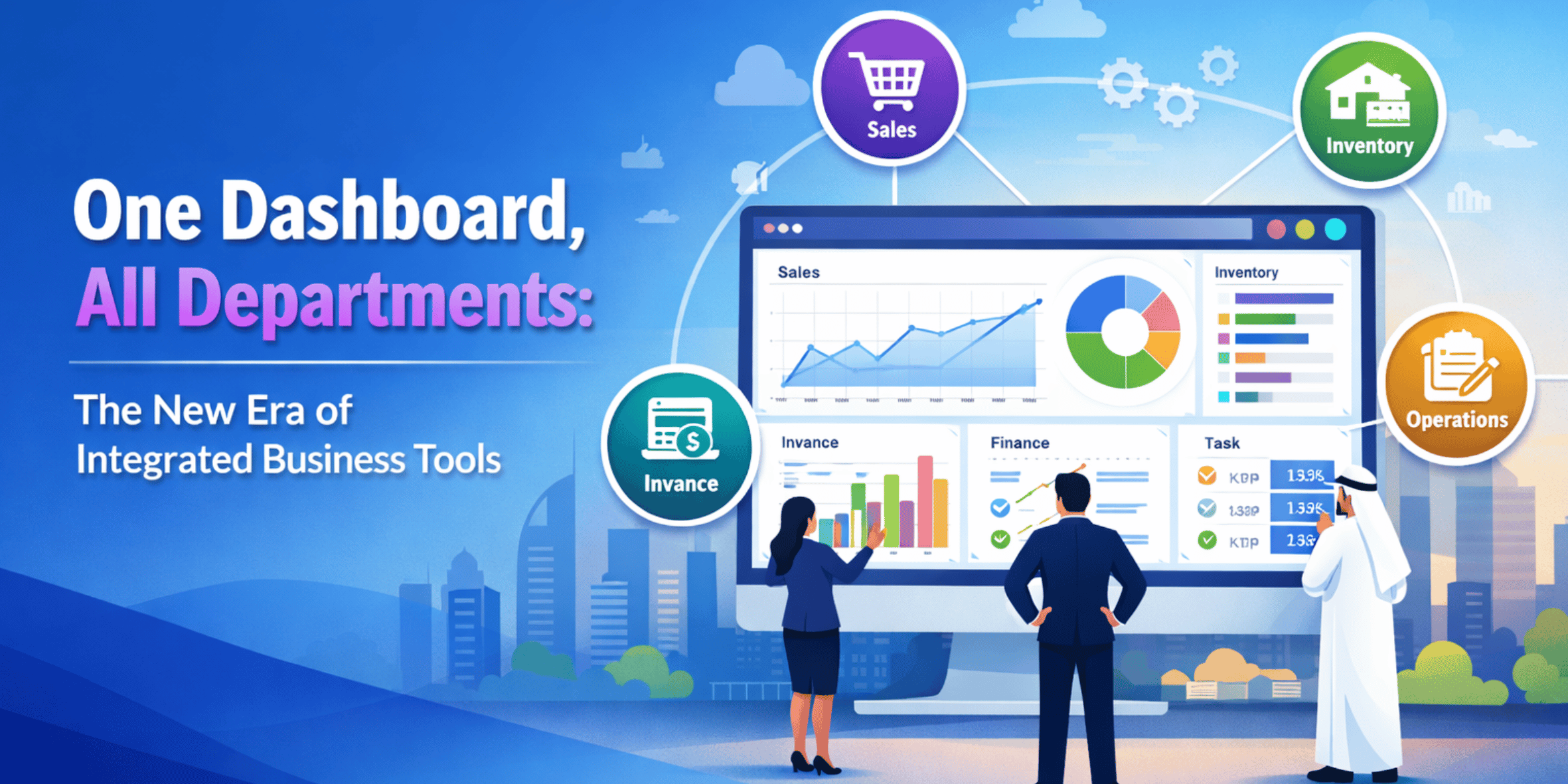
Businesses across the UAE are evolving rapidly. Whether it’s trading companies in Dubai, retail chains in Abu Dhabi, manufacturing units in Sharjah, or service providers across the GCC, organizations are scaling faster than ever. But as businesses grow, complexity increases. Sales, finance, inventory, HR, procurement, and operations begin operating in silos. Each department uses its own tools, reports, and workflows. Leadership spends more time gathering information than making decisions. This is where modern integrated business dashboards are transforming how companies operate.
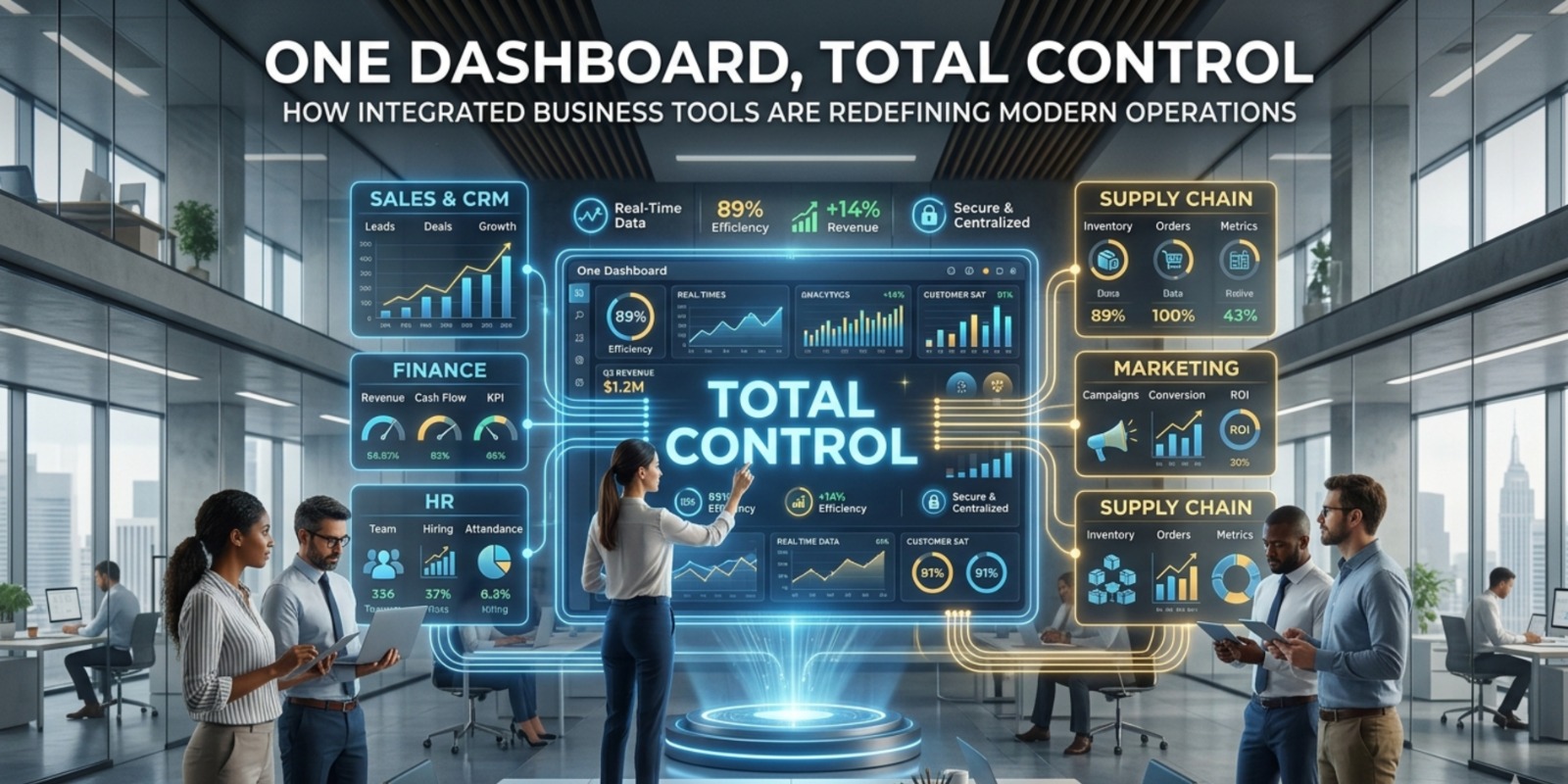
The new era of business management is built around a single, unified dashboard — one place where leadership can view sales, inventory, finance, operations, and performance in real time. Instead of switching between multiple systems, executives gain instant visibility into what’s happening across the organization. This shift is especially important for UAE businesses managing multi-branch operations, cross-border trading, and fast-moving customer demand.
The Traditional Challenge: Departmental Silos
Many small to large businesses still operate using disconnected tools. Sales teams use CRM software, finance uses accounting tools, warehouse teams manage stock in spreadsheets, and management relies on manually prepared reports. This fragmented approach creates data delays, inconsistencies, and operational inefficiencies.
Typical challenges include:
- Sales confirms orders without checking stock
- Finance invoices based on outdated pricing
- Procurement over-orders due to lack of visibility
- Management receives delayed reports
- Inventory mismatches between branches
- Manual approval processes slow operations
- No real-time KPI tracking
These problems multiply as business volume increases.
What “One Dashboard” Really Means
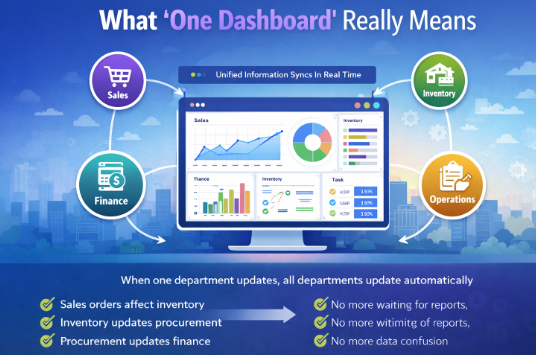
A unified dashboard is not just a reporting screen. It is a centralized operational command center that connects all departments. Every action performed in one department automatically updates across the system. Sales orders affect inventory. Inventory affects procurement. Procurement affects finance. Finance updates profitability dashboards instantly.
This creates a connected business environment where decisions are based on live data instead of assumptions.
Example of Unified Dashboard Visibility
From one dashboard, leadership can see:
- Total sales today, this week, this month
- Pending quotations and conversion rates
- Inventory availability across warehouses
- Low stock alerts and replenishment needs
- Outstanding invoices and cash flow status
- Purchase orders and supplier performance
- Project status and operational workload
- Employee productivity metrics
- Profitability by product or department
All in real time.
Why This Matters for UAE Businesses
The UAE market is highly competitive and fast-moving. Businesses deal with:
- Multi-location operations
- Import/export trading
- Diverse customer segments
- Rapid inventory movement
- High transaction volumes
- Complex approval structures
Without a unified dashboard, decision-making becomes reactive instead of proactive.
For example, a trading company in Dubai may lose sales opportunities because inventory visibility is limited. A retail chain may overstock slow-moving items. A manufacturing company may experience delays due to poor production tracking. These are not operational failures — they are visibility failures.
Disconnected Tools vs Integrated Dashboard
| Business Area | Disconnected Tools | Unified Dashboard |
|---|---|---|
| Sales | Separate CRM reports | Live pipeline tracking |
| Inventory | Manual stock checks | Real-time visibility |
| Finance | Delayed accounting reports | Instant financial overview |
| Procurement | Reactive purchasing | Automated replenishment |
| Operations | Email coordination | Workflow automation |
| Management | Weekly reports | Live decision dashboard |
The difference is speed, accuracy, and control.
Real Business Scenario: UAE Trading Company
Consider a UAE-based trading business managing multiple warehouses. Before implementing an integrated dashboard, their leadership team relied on weekly reports. Sales data came from CRM, inventory from warehouse software, and finance from accounting tools. By the time reports were compiled, the information was already outdated.
After moving to a unified dashboard:
- Sales orders updated inventory instantly
- Low stock alerts triggered procurement
- Finance captured revenue automatically
- Profitability displayed in real time
- Management monitored branch performance live
The result was improved decision-making, reduced stockouts, and better operational efficiency.
Key Benefits of One Dashboard Across Departments
1. Real-Time Decision Making
Leadership gets live data instead of waiting for reports.
2. Improved Department Collaboration
Sales, finance, and operations work from the same data source.
3. Reduced Operational Errors
Automation eliminates manual data entry and duplication.
4. Better Financial Visibility
Revenue, expenses, and profitability tracked instantly.
5. Faster Business Response
Organizations react quickly to demand and supply changes.
6. Scalable for Growth
System supports expansion into multiple branches and regions.
What a Modern Integrated Dashboard Should Include
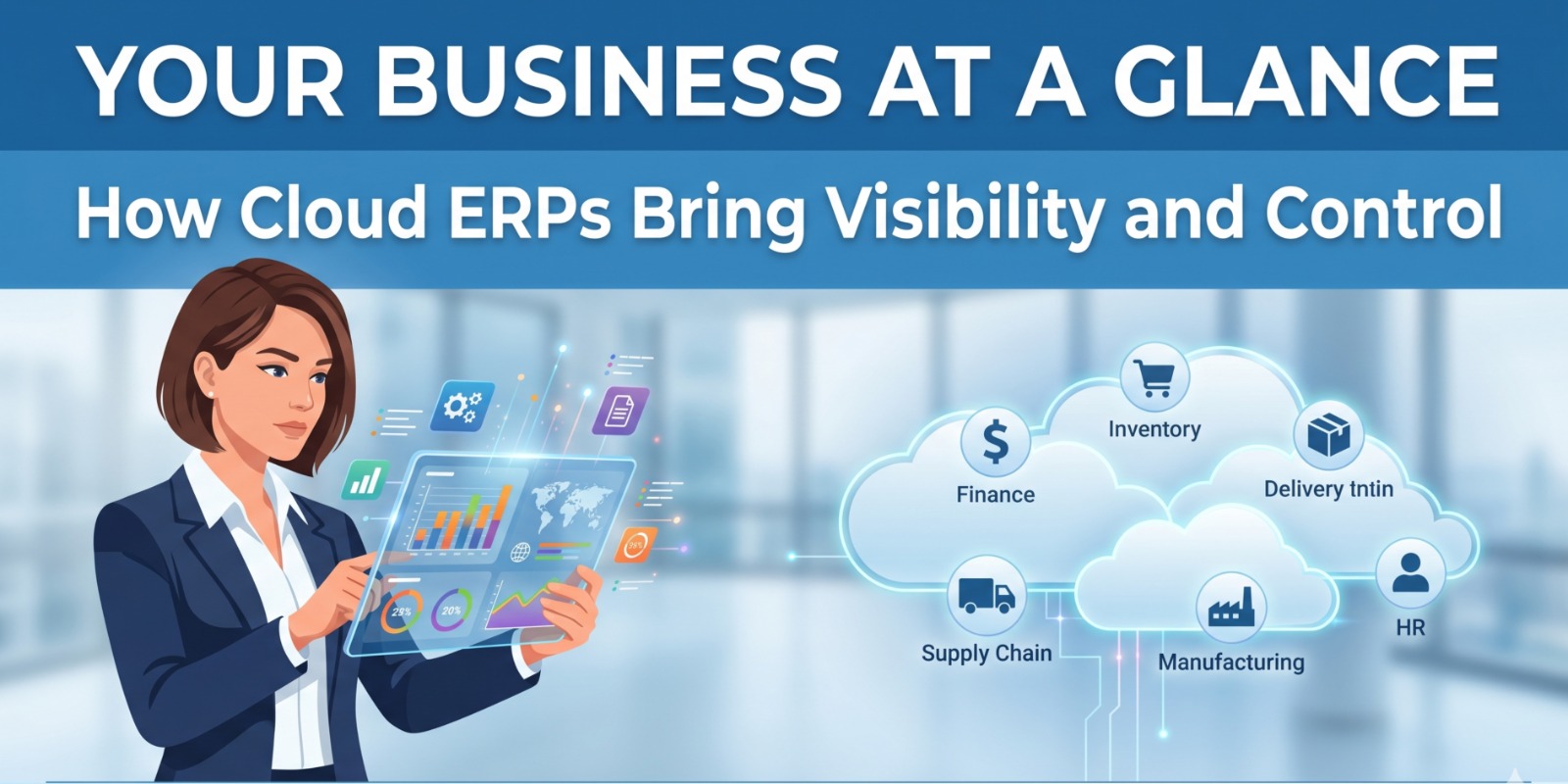
A professional integrated business dashboard should provide:
Sales Dashboard
- Pipeline overview
- Lead conversion
- Revenue tracking
Inventory Dashboard
- Stock levels
- Warehouse movement
- Low stock alerts
Finance Dashboard
- Cash flow
- Receivables & payables
- Profitability
Operations Dashboard
- Orders status
- Delivery tracking
- Workflow monitoring
Management Dashboard
- KPI tracking
- Department performance
- Business health overview
This level of visibility transforms how businesses operate.
From Data Chaos to Business Clarity
Without integration, businesses operate in reactive mode. Teams spend time collecting data, verifying reports, and resolving mismatches. Leadership decisions are delayed, and opportunities are missed. With a unified dashboard, businesses shift from operational confusion to strategic clarity.
Instead of asking:
What are today’s sales?
Do we have stock?
What is our profit?
Which branch is performing better?
Leadership already knows the answers instantly.
The Future of Business Management
The future of business management is not multiple tools — it is one connected platform. Organizations that adopt unified dashboards gain speed, accuracy, and visibility. Teams collaborate better, management makes faster decisions, and operations become predictable.
This is especially important in the UAE, where businesses must scale quickly while maintaining operational control.
Final Thoughts
A unified dashboard is no longer a luxury. It is becoming a necessity for modern businesses. Whether you are a growing SME or an established enterprise, visibility across departments is critical for sustainable growth.
One dashboard brings:
People together
Data together
Departments together
Decisions together
“One Dashboard, All Departments” is not just a concept — it is the new standard for integrated business operations.
Businesses that adopt this approach will move faster, operate smarter, and scale with confidence in the UAE’s competitive market.



Post Comment