

Why 2026 Is the Year to Move Your ERP to the Cloud
Table of Contents
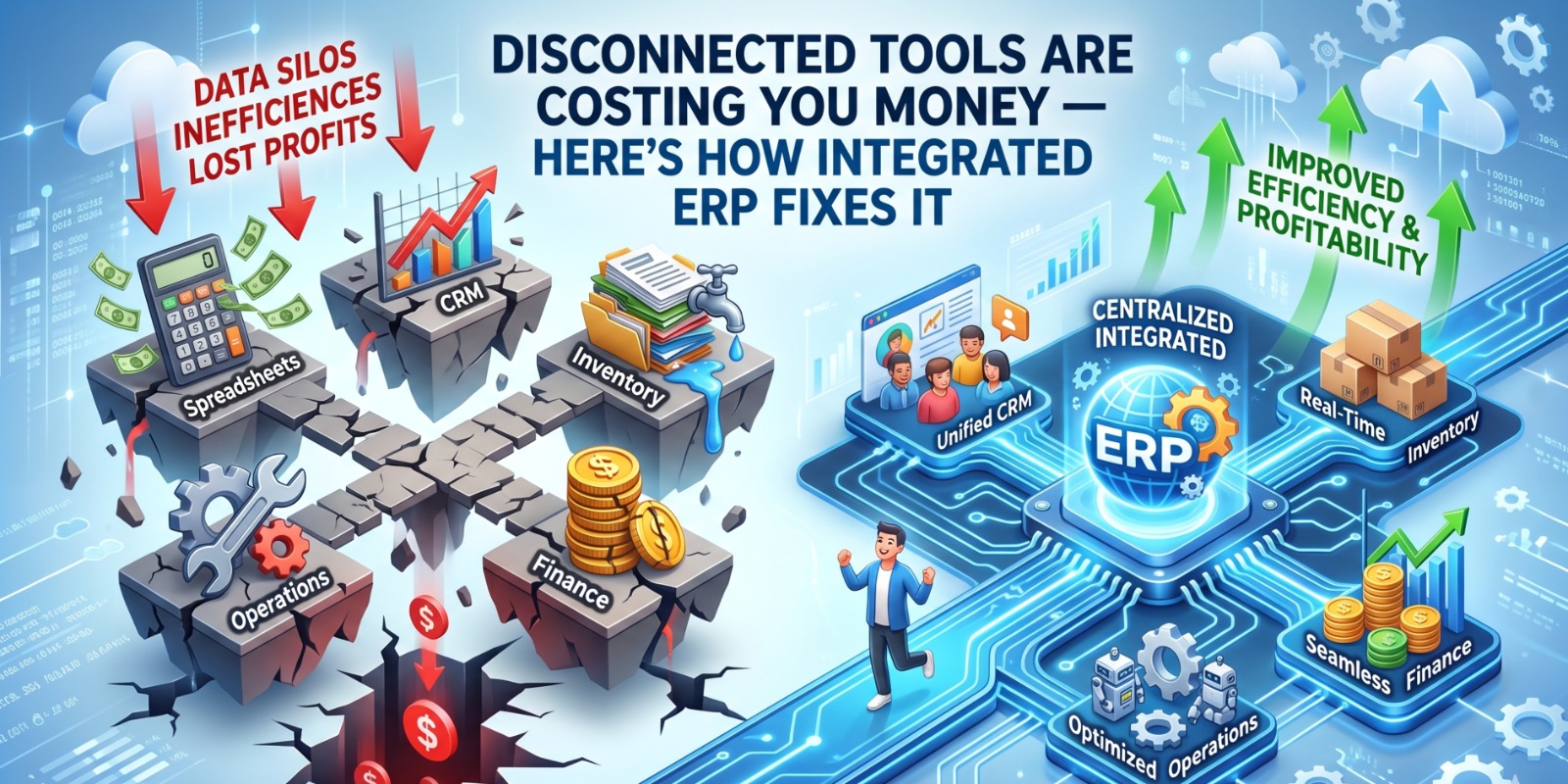
Manufacturing businesses today are under constant pressure to deliver faster, reduce operational costs, and maintain product quality. Yet many factories still operate with disconnected systems—spreadsheets for production planning, standalone inventory tools, manual procurement processes, and delayed reporting. These gaps create production delays, material shortages, and poor visibility across departments. A modern cloud-based ERP designed for manufacturing brings everything into one connected platform, allowing companies to plan accurately, track production in real time, and respond quickly to disruptions. As we move into 2026, cloud ERP is no longer just a technology upgrade—it has become a strategic requirement for manufacturers that want to stay competitive.
The Real Problem: Why Production Delays Keep Happening
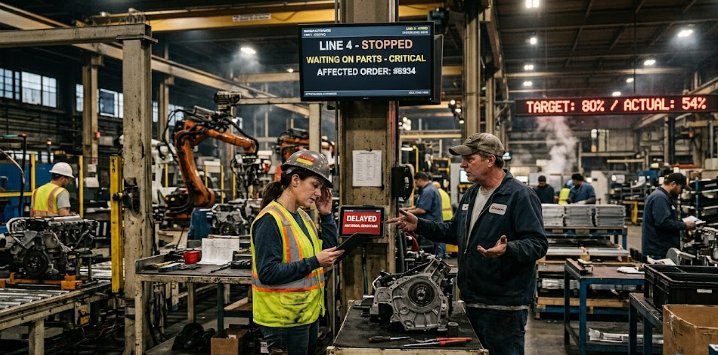
Production delays rarely come from one single issue. They usually result from multiple disconnected processes happening across departments. Sales teams confirm orders without checking production capacity. Procurement teams order raw materials late because demand visibility is unclear. Production managers rely on outdated spreadsheets. Inventory levels are inaccurate. Quality checks slow down dispatch because traceability is missing.
These challenges create a chain reaction:
- Late material availability
- Unplanned downtime
- Inefficient scheduling
- Excess inventory or stockouts
- Poor coordination between teams
- Delayed deliveries to customers
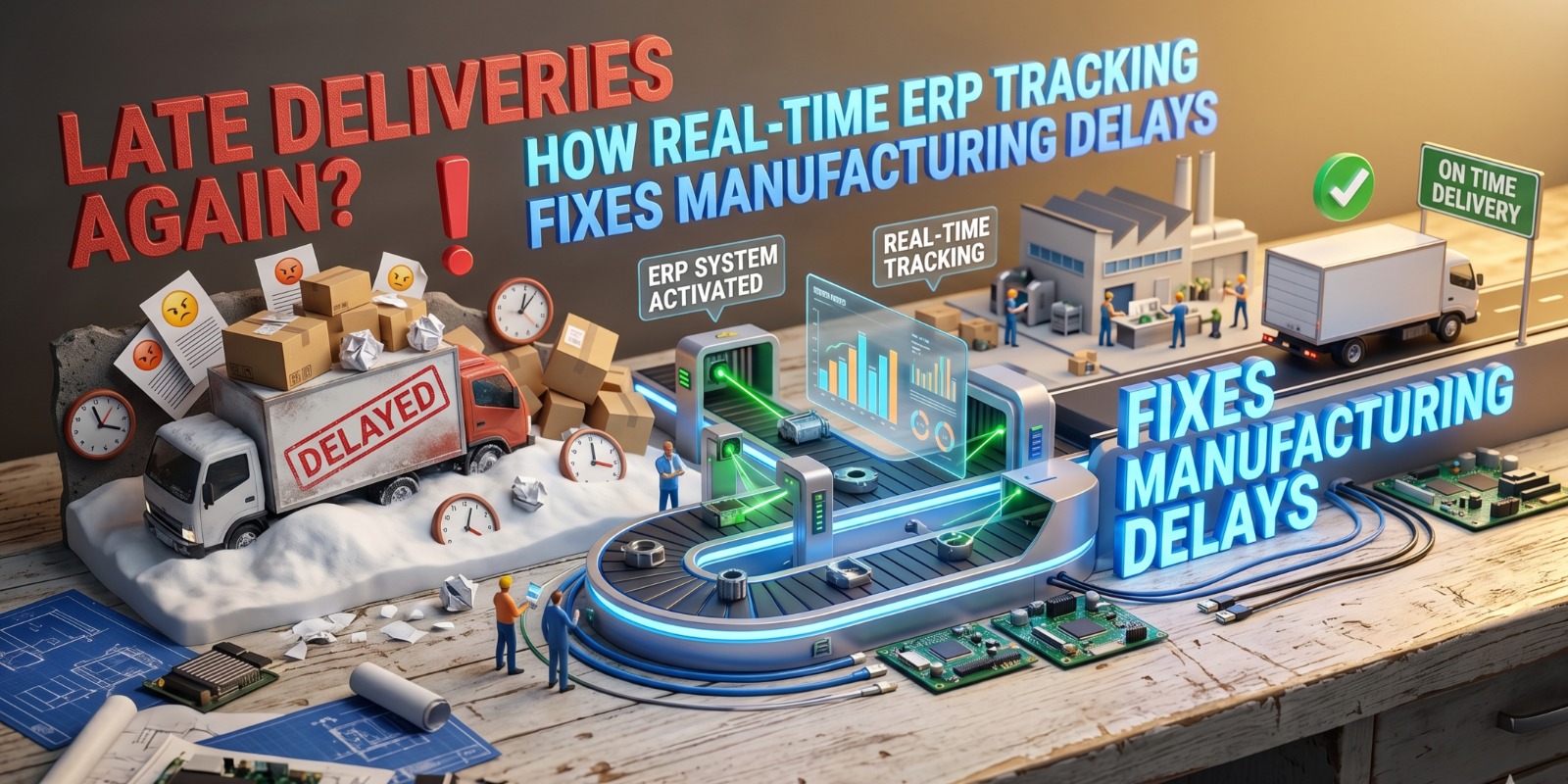
When systems don’t communicate, decisions are based on assumptions instead of real-time data. This is where a manufacturing ERP changes the entire workflow.
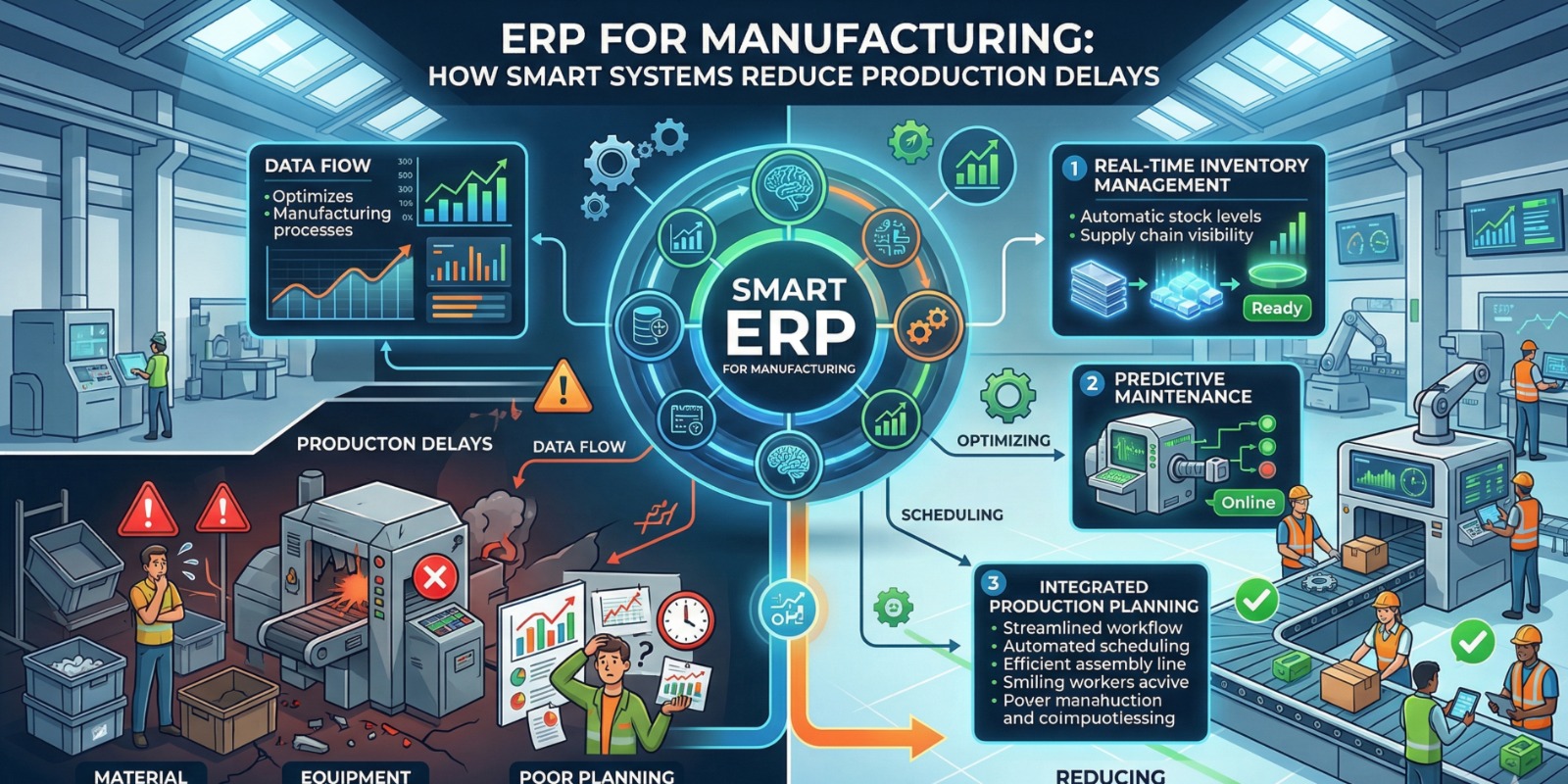
How Smart ERP Systems Reduce Production Delays
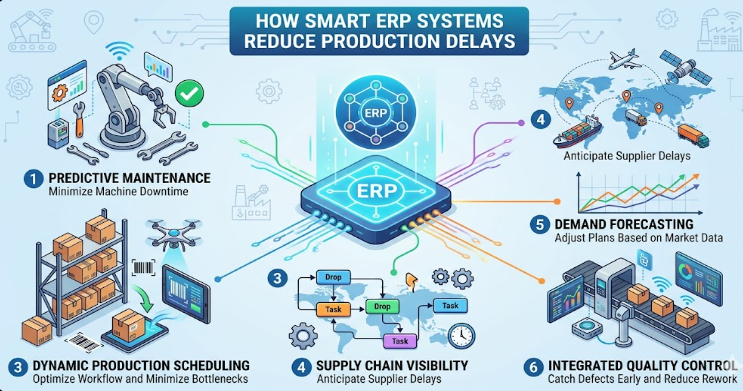
A manufacturing-focused ERP connects planning, procurement, inventory, and production into a single workflow. Instead of reacting to problems, businesses can predict and prevent delays before they happen.
1. Real-Time Production Planning
Modern ERP systems provide dynamic production planning based on actual demand, inventory availability, and machine capacity. This helps production managers schedule work orders accurately and avoid bottlenecks.
Benefits:
- Accurate production timelines
- Balanced workload across machines
- Reduced idle time
- Better utilization of resources
Instead of manual planning, the system automatically adjusts schedules when changes occur.
2. Smart Material Requirement Planning (MRP)
Material shortages are one of the biggest reasons for production delays. ERP systems calculate material requirements automatically based on sales orders, forecasts, and production plans.
What this enables:
- Automatic purchase planning
- No last-minute procurement
- Reduced emergency buying
- Optimized inventory levels
This ensures materials are available exactly when production needs them.
3. Shop Floor Visibility in Real Time
Cloud ERP systems allow teams to monitor production progress live. Managers can see:
- Work order status
- Machine utilization
- Production delays
- Operator performance
- Completed vs planned quantities
This transparency helps teams respond immediately instead of discovering issues at the end of the day.
4. Automated Work Orders & Routing
Manufacturing ERP systems define production routes and work centers. When a sales order is confirmed, the system automatically creates work orders and assigns them to the correct workstations.
This removes:
- Manual coordination
- Missed steps in production
- Scheduling confusion
- Dependency delays
Everything flows automatically from order to delivery.
5. Quality Control Without Slowing Production
Quality checks often delay dispatch when handled manually. ERP systems integrate quality checks directly into production steps.
This allows:
- In-process quality checks
- Automated approvals
- Traceability by batch or serial number
- Faster compliance reporting
Quality becomes part of the workflow instead of a separate bottleneck.
Why Cloud ERP Matters More in 2026
Manufacturing is changing quickly. Supply chains are dynamic, customer expectations are higher, and operations are becoming more distributed. Cloud ERP supports this shift by offering flexibility and real-time access from anywhere.
1. Access From Anywhere
Production teams, warehouse managers, and leadership can access dashboards remotely. This improves decision-making even across multiple factories.
2. Faster Implementation
Cloud ERP systems deploy faster than traditional on-premise software. Manufacturers can start seeing value in weeks instead of months.
3. Automatic Updates
Cloud ERP platforms receive regular updates with new features, security improvements, and performance enhancements without downtime.
4. Lower IT Maintenance
There is no need to manage servers, backups, or infrastructure. The cloud provider handles everything, allowing teams to focus on operations.
5. Scalable for Growth
Whether expanding production lines, opening new warehouses, or adding users, cloud ERP scales easily without system migration.
Before vs After: Manufacturing Without ERP vs With ERP
| Process | Without ERP | With Cloud ERP |
|---|---|---|
| Production Planning | Manual spreadsheets | Automated scheduling |
| Inventory Tracking | Inaccurate stock | Real-time visibility |
| Material Planning | Reactive purchasing | Smart MRP automation |
| Work Orders | Manual creation | Auto-generated workflows |
| Quality Control | Separate process | Integrated checks |
| Reporting | Delayed reports | Live dashboards |
| Delivery Timeline | Unpredictable | Accurate commitments |
Real Manufacturing Scenario
Consider a manufacturing company producing industrial components. Earlier, the team used spreadsheets for planning and manual tracking for inventory. Production frequently stopped because raw materials were unavailable. Delivery timelines were missed, and customers complained.
After implementing a cloud ERP:
- Sales orders automatically triggered production planning
- MRP generated purchase orders
- Inventory updated in real time
- Work orders tracked on shop floor
- Production delays reduced by 35%
- On-time delivery improved significantly
The biggest change was visibility. Teams could see problems early and act quickly.
Key Features Manufacturing Companies Should Look For in 2026
When selecting a manufacturing ERP, businesses should prioritize:
- Production planning & scheduling
- Material Requirement Planning (MRP)
- Bill of Materials management
- Work order automation
- Shop floor tracking
- Quality control workflows
- Batch & serial traceability
- Inventory & warehouse management
- Maintenance management
- Real-time dashboards
These capabilities ensure the ERP truly supports manufacturing operations.
The Business Impact of Moving to Cloud ERP
Manufacturers that adopt cloud ERP typically see:
- Reduced production delays
- Improved on-time delivery
- Lower inventory costs
- Better resource utilization
- Faster decision-making
- Improved customer satisfaction
- Scalable operations
- Increased profitability
Instead of firefighting daily issues, teams operate with clarity and control.
Why Waiting Is Risky
Manufacturers still using legacy systems face increasing challenges:
- Limited scalability
- Poor integration with automation
- Delayed reporting
- High maintenance costs
- Inflexible workflows
As competitors adopt smart ERP systems, businesses relying on manual processes fall behind in efficiency and delivery performance.
Conclusion
Production delays are rarely caused by machines alone—they are usually the result of disconnected planning, poor visibility, and manual coordination. A modern cloud ERP for manufacturing connects every process from order to delivery, enabling smarter planning, real-time monitoring, and automated workflows. As manufacturing continues to evolve in 2026, cloud ERP is becoming essential for companies that want faster production cycles, accurate delivery timelines, and scalable growth. Businesses that move now gain operational control, while those that delay risk falling behind in a competitive market.




Post Comment