

Table of Contents
When Delays Become a Pattern
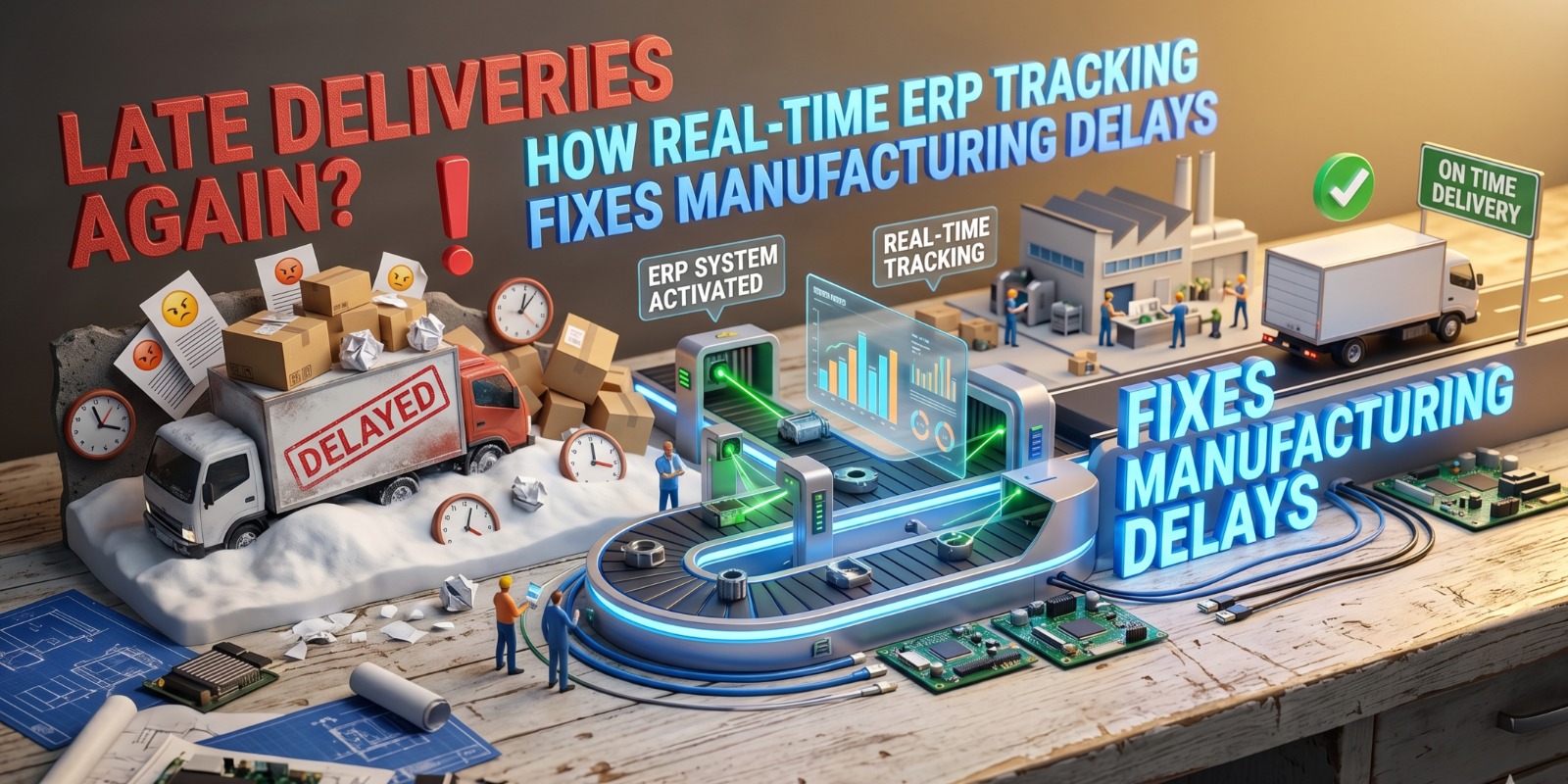
Late deliveries in manufacturing rarely happen because of a single mistake. They are usually the result of small inefficiencies piling up—missed updates, delayed approvals, inaccurate inventory data, or lack of coordination between departments. Many manufacturers accept delays as part of operations, but in reality, they are symptoms of a deeper problem: lack of visibility. When teams don’t have real-time insight into production, procurement, and logistics, decisions are made based on assumptions rather than facts. This is where modern ERP platforms like Odoo change the equation by introducing real-time tracking across the entire manufacturing lifecycle.
The Real Problem: Disconnected Production Flow
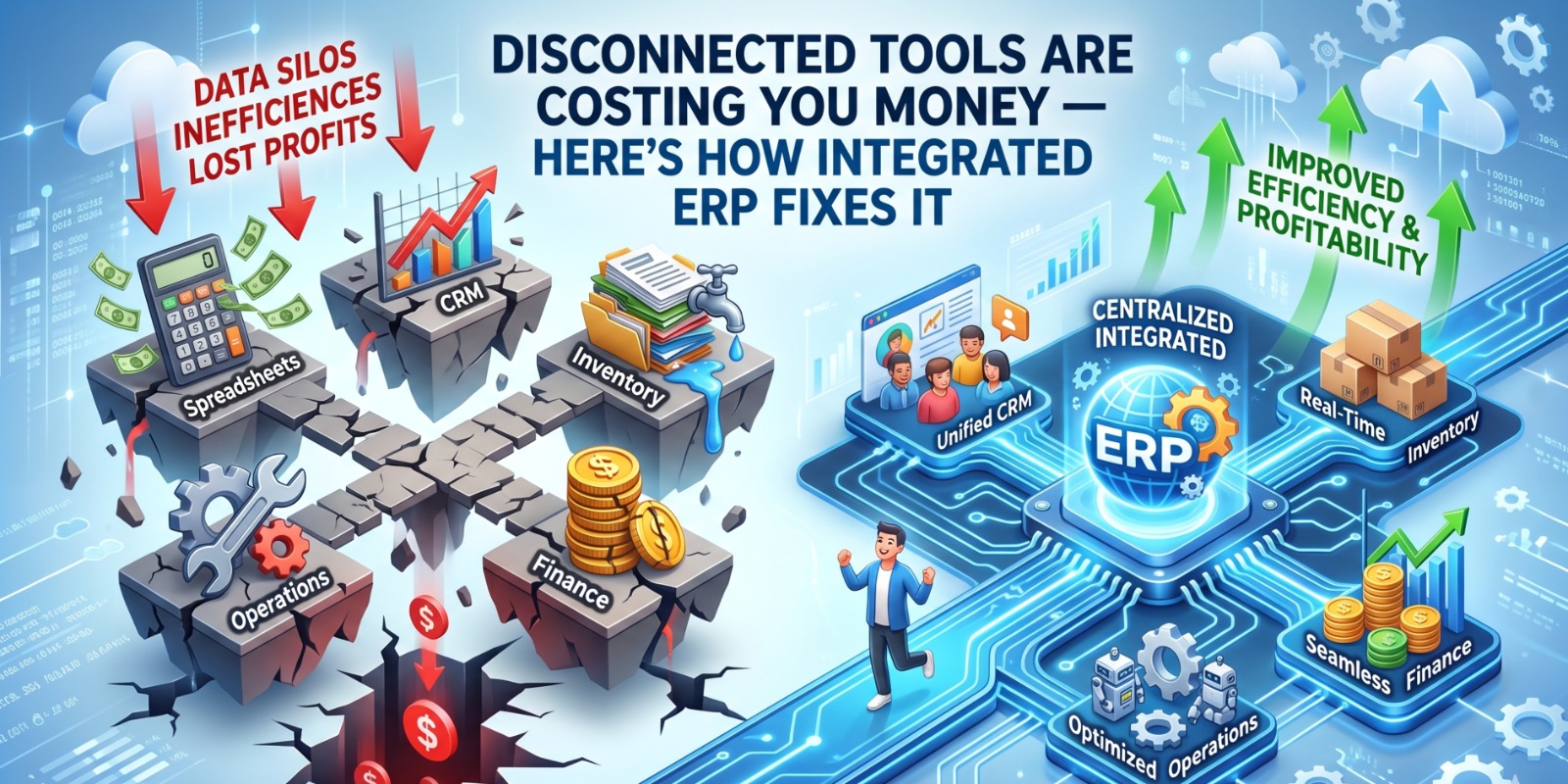
In a typical manufacturing setup using traditional systems, each department operates in isolation. Procurement manages raw materials, production handles work orders, and logistics deals with dispatch—often using separate tools or spreadsheets. This fragmentation leads to communication gaps. For example, production may schedule a batch without knowing that raw materials are delayed, or the sales team might commit to a delivery date without checking production capacity.
These disconnects create a domino effect. A small delay in procurement leads to production stoppage, which pushes delivery timelines, ultimately impacting customer satisfaction. Without a unified system, identifying the root cause becomes difficult, and businesses end up firefighting instead of fixing the process.
Lack of Real-Time Tracking: The Visibility Gap
One of the biggest challenges manufacturers face is the absence of real-time tracking. Traditional systems often rely on manual updates or end-of-day reporting. By the time an issue is identified, it’s already too late to take corrective action.
Real-time ERP tracking eliminates this lag. With systems like Odoo, every stage of production—from raw material availability to work order progress—is updated instantly. Managers can see exactly where a delay is happening and take immediate action, whether it’s reallocating resources, expediting procurement, or adjusting production schedules.
How Real-Time ERP Tracking Works
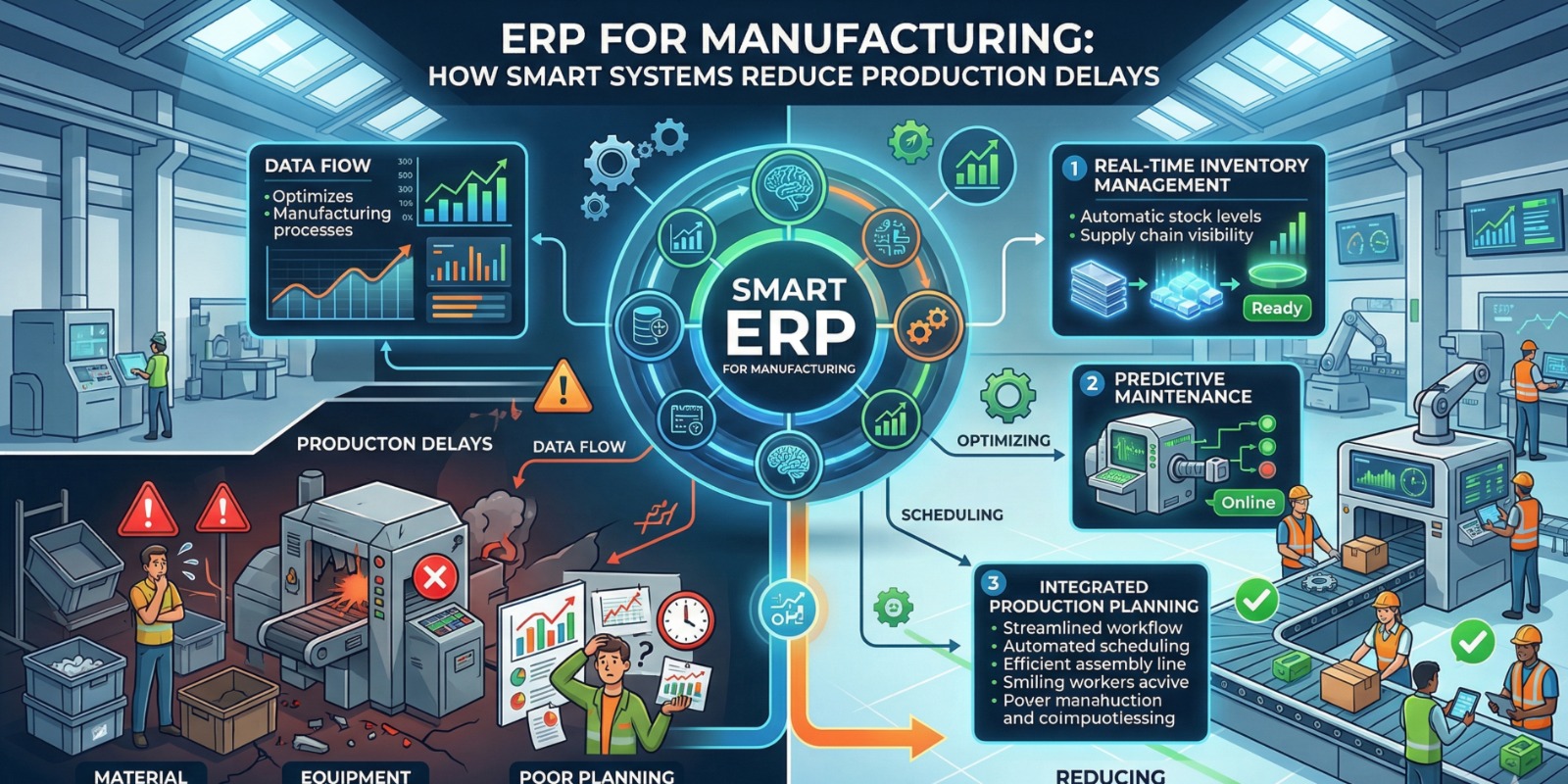
At its core, real-time ERP tracking connects every operational layer into a single system. When a sales order is confirmed, it automatically triggers production planning. Inventory levels are checked in real time, and if stock is insufficient, procurement requests are generated instantly. As production begins, work orders are tracked live, showing progress at each stage.
This interconnected flow ensures that no decision is made in isolation. Every action is based on current data, not outdated reports. The result is a synchronized operation where delays are identified early and addressed proactively.
Case Study: Mid-Sized Manufacturing Company Transformation
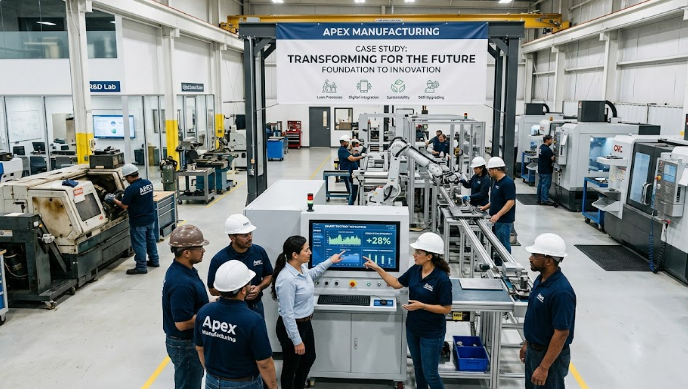
A mid-sized furniture manufacturer in the UAE was struggling with frequent delivery delays. Despite having a skilled workforce and steady demand, their operations were plagued by inefficiencies. Orders were often delayed by 5–7 days, leading to customer complaints and lost business.
Challenges Identified:
- Manual production scheduling using spreadsheets
- No real-time visibility into inventory levels
- Frequent stockouts are causing production stoppages
- Poor coordination between sales and production teams
The company implemented Odoo to streamline operations.
What Changed:
- Sales orders were directly linked to production planning
- Inventory levels were updated in real time
- Automated alerts were set for low stock
- Work orders were tracked live on dashboards
Results Achieved:
- Delivery delays reduced by 60% within three months
- Production efficiency improved by 35%
- Inventory accuracy increased significantly
- Customer satisfaction scores improved
This transformation was not driven by adding more resources but by improving visibility and coordination through real-time tracking.
Key Benefits of Real-Time ERP in Manufacturing
1. Proactive Issue Resolution
Instead of reacting to delays after they occur, businesses can identify bottlenecks as they happen. For example, if a machine breakdown affects production, the system highlights the delay immediately, allowing managers to reschedule tasks or allocate backup resources.
2. Accurate Production Planning
Real-time data ensures that production schedules are based on actual inventory and capacity. This reduces overcommitment and ensures that delivery timelines are realistic.
3. Improved Inventory Management
With live inventory tracking, businesses can avoid stockouts and overstocking. Automated reorder rules ensure that materials are available when needed, preventing production interruptions.
4. Enhanced Team Collaboration
When all departments work on a single system, communication improves significantly. Sales, production, and logistics teams have access to the same data, reducing misunderstandings and aligning efforts.
Traditional Systems vs Real-Time ERP
| Aspect | Traditional Systems | Real-Time ERP (Odoo) |
|---|---|---|
| Data Updates | Manual / Delayed | Instant / Automated |
| Production Visibility | Limited | End-to-End |
| Inventory Accuracy | Often inconsistent | Real-time |
| Delay Detection | Reactive | Proactive |
| Decision Making | Assumption-based | Data-driven |
This comparison highlights why many manufacturers are shifting towards ERP systems that offer real-time capabilities.
The Strategic Impact: From Delays to Reliability
Late deliveries don’t just affect operations—they impact brand reputation and customer trust. In competitive markets, reliability becomes a key differentiator. Businesses that consistently deliver on time build stronger relationships with customers and gain a competitive edge.
Real-time ERP tracking transforms manufacturing from a reactive process into a controlled, predictable system. Instead of constantly dealing with delays, businesses can focus on optimizing performance and scaling operations.
Conclusion: Fix the System, Not the Symptoms
If your business is experiencing frequent delays, the solution is not to push teams harder or extend working hours. The real issue lies in the system itself. Without real-time visibility and integration, even the most efficient teams will struggle to meet deadlines.
By adopting platforms like Odoo, manufacturers can eliminate blind spots, streamline operations, and ensure timely deliveries. The shift is not just about technology—it’s about gaining control over your entire production process.
In the end, on-time delivery is not a matter of effort; it’s a result of having the right system in place.




Post Comment