

Table of Contents
When Demand Grows Faster Than the Factory
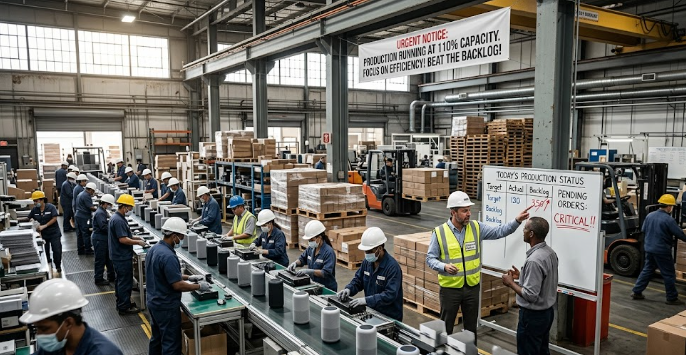
In the automotive components industry, production speed is not the only measure of success. Consistency, quality, on-time delivery, inventory control, and machine utilization all play an equal role. A factory may have skilled teams, strong machines, and confirmed orders—yet still struggle to meet output targets because internal systems are slowing everything down.
This is a common challenge for many auto parts and engineering manufacturers. As customer demand increases, manual planning methods, disconnected departments, and delayed shop-floor visibility begin to hurt performance.
That is where Odoo can create measurable impact.
For production heads, throughput is everything. It affects revenue, customer confidence, overtime costs, and future capacity. Odoo helps manufacturers improve throughput not by pushing people harder, but by helping operations run smarter.
Understanding the Real Problem: Throughput Is Often a Systems Issue
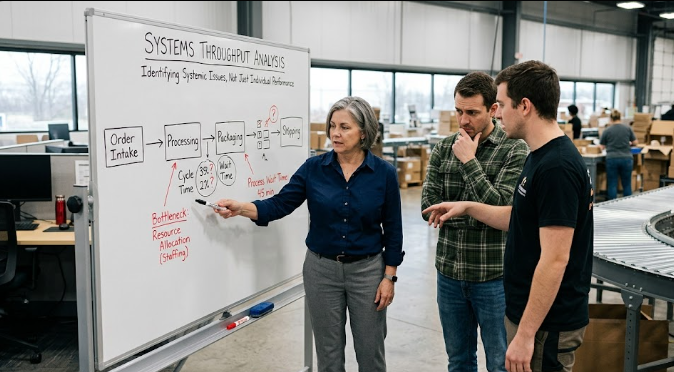
Many factories assume low throughput is caused by labor shortages or machine limitations. In reality, throughput losses often come from planning gaps and poor coordination.
Typical issues include:
- Raw material delays
- Unclear production priorities
- Excessive machine idle time
- Rework due to quality misses
- Manual production updates
- Slow approvals for procurement
- Inaccurate stock data
- No real-time progress tracking
Even small delays repeated daily can reduce monthly output significantly.
When teams do not have the same information at the same time, production slows quietly.
The Manufacturer’s Situation
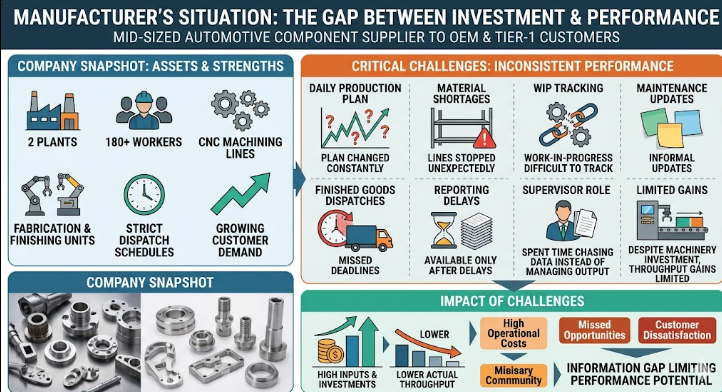
Let us consider a mid-sized automotive component manufacturer supplying machined and fabricated parts to OEM and Tier-1 customers.
The company had:
- 2 plants
- 180+ workers
- CNC machining lines
- Fabrication and finishing units
- Strict dispatch schedules
- Growing customer demand
Yet performance was inconsistent.
Major Challenges:
- Daily production plan changed constantly
- Material shortages stopped lines unexpectedly
- WIP was difficult to track
- Maintenance updates were informal
- Finished goods dispatches missed deadlines
- Reports were available only after delays
- Production supervisors spent time chasing data instead of managing output
Despite investing in machinery, throughput gains remained limited.
Why They Chose Odoo
The company needed one connected platform linking planning, inventory, procurement, maintenance, quality, and production.
They selected Odoo because it offered:
- Manufacturing workflows
- Inventory visibility
- Purchase integration
- Shop-floor traceability
- Maintenance modules
- Real-time dashboards
- Flexible customization for plant operations
Most importantly, it could scale with the business without forcing overly complex processes.
What Was Implemented
The implementation focused on practical production control, not unnecessary complexity.
Key Modules Introduced:
- Manufacturing Orders
- Bill of Materials (BOM)
- Work Centers
- Production Scheduling
- Inventory & Warehouse Management
- Procurement Automation
- Maintenance Tracking
- Quality Checkpoints
- Management Dashboards
Each department moved to one shared system.
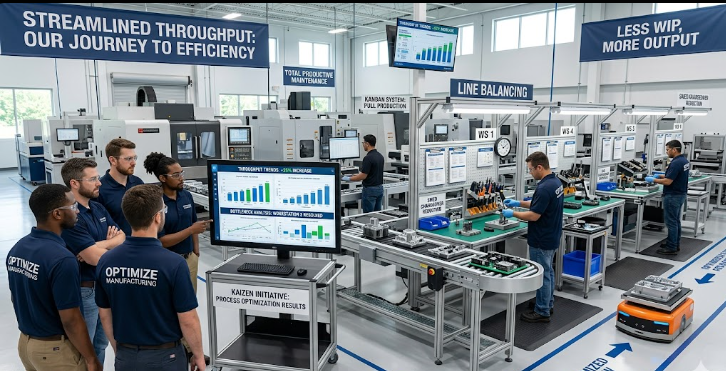
How Throughput Improved on the Shop Floor
1. Better Production Planning
Earlier, planners relied heavily on spreadsheets and calls. Changes created confusion.
With Odoo:
- Orders were prioritized centrally
- Capacity planning improved
- Work centers received clear job queues
- Supervisors saw updated schedules instantly
This reduced waiting time between jobs.
2. Material Availability Before Production Starts
Earlier, lines sometimes stopped because one component was missing.
With Odoo:
- Raw material levels became visible in real time
- Reorder rules triggered purchasing early
- Reservation logic ensured material for scheduled jobs
This helped reduce avoidable stoppages.
3. Faster WIP Movement
Work-in-progress often gets stuck between stages.
With Odoo:
- Job status was updated stage by stage
- Bottlenecks became visible quickly
- Supervisors could rebalance workload across lines
This improved flow across machining, inspection, and dispatch stages.
4. Machine Downtime Control
Previously, machine issues were managed informally.
With Odoo Maintenance:
- Breakdown logs were recorded
- Preventive maintenance schedules were created
- Repeated issues became visible through reports
Machine availability improved steadily.
Case Study Results: First 6 Months
After six months of disciplined adoption, the manufacturer reported clear gains.
Operational Improvements:
- Throughput increased by 18%
- Material-related stoppages reduced by 32%
- On-time dispatch performance improved from 81% to 95%
- WIP visibility improved significantly
- Overtime dependency reduced
- Planning time dropped sharply
Management Impact:
Production heads received live dashboards instead of waiting for next-day reports.
That meant faster decisions during the shift—not after the damage was done.
Why Production Heads Benefited Most
For production leaders, the biggest challenge is usually not effort—it is lack of visibility.
Without live information, they are forced to react late.
With Odoo, production heads gained:
- Output vs target tracking
- Machine utilization view
- Delay alerts
- Pending orders visibility
- Material shortage signals
- Dispatch readiness reports
Instead of firefighting daily, they could focus on improving plant performance.
Financial Impact Beyond Output
Higher throughput is not just an operations metric. It affects profitability directly.
Improved throughput helped the company:
- Produce more without adding major headcount
- Reduce penalty risk for delayed dispatches
- Lower emergency purchases
- Reduce rework losses
- Improve customer trust and repeat orders
This is why ERP projects in manufacturing should never be seen as IT expenses alone.
They are operational growth investments.
Signs Your Plant May Need Similar Change
If your factory faces these issues, systems may be limiting throughput:
- Machines wait for material
- Teams rely on Excel planning
- Dispatches slip regularly
- WIP status is unclear
- Daily review meetings are based on guesswork
- Supervisors chase updates all day
- Output depends on overtime
These are process signals—not people problems.
Why Odoo Works for Manufacturing Growth
Many manufacturers hesitate to modernize because they fear disruption.
But modern ERP systems like Odoo can be introduced in phases:
- Start with inventory and production
- Add maintenance next
- Add quality and dashboards later
- Expand to finance, HR, CRM if needed
This phased approach reduces risk and increases adoption.
Final Thoughts: Throughput Comes from Control
Factories rarely lose output because people are not working hard enough.
They lose output because systems do not support the work properly.
Disconnected planning, poor visibility, delayed procurement, and hidden bottlenecks quietly reduce capacity every day.
That is why more manufacturers are turning to Odoo.
It gives production heads what they need most:
Clarity. Control. Coordination.
And when those three improve, throughput usually follows.





Post Comment